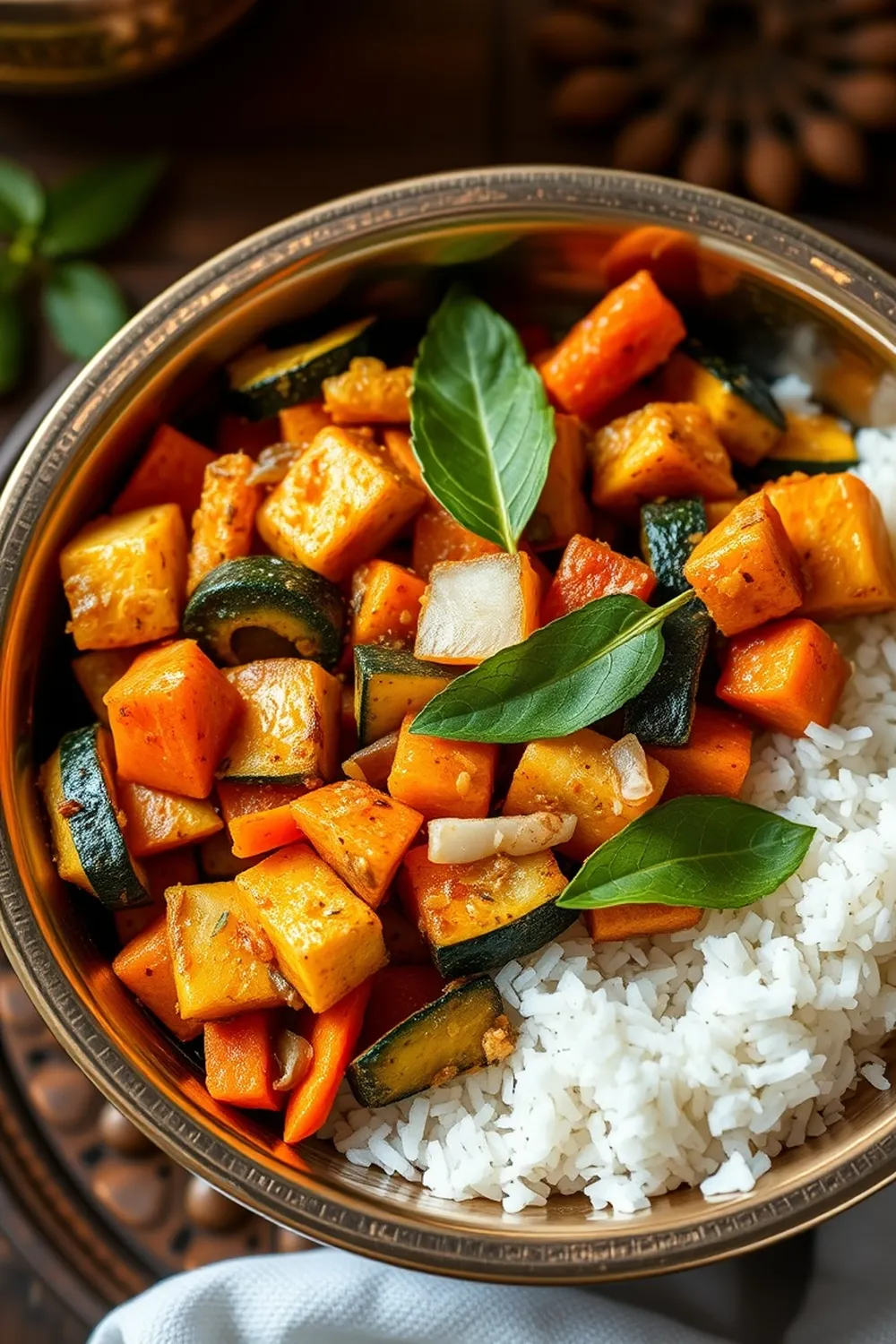
- Parboil potatoes, carrots, and beans in water until 50% cooked. Add peas and cook until 80% done. Drain and set aside.
- Heat ghee in a pan. Toast whole spices (cardamom, bay leaf, cinnamon, peppercorns, star anise, cloves) for 2 minutes.
- Add sliced onions and green chilies. Sauté until onions soften. Stir in ginger-garlic paste and cook until aromatic.
- Add chopped tomatoes and cook until mushy. Mix in turmeric, chili powder, and fennel powder. Sauté until darkened.
- Add parboiled vegetables and yogurt. Mix well. Season with salt and cook for 2 minutes. Set aside.
- Rinse basmati rice until the water runs clear. Boil in turmeric-salted water for 10 minutes until 80% cooked. Drain and rinse with cold water.
- Prepare dum layer: Fry sliced onions until crispy. Fry cashews and raisins in the same ghee. Reserve the ghee.
- Layer vegetable masala in a pot. Top with half the fried onions, nuts, herbs, and garam masala. Spread rice over it.
- Add remaining fried items, herbs, and spices. Drizzle with reserved ghee, rosewater, and pineapple essence (if using).
- Seal pot tightly. Cook on medium-low heat for 15-20 minutes. Let rest for 15 minutes. Gently fluff and serve hot.
- Calories:450 kcal25%
- Energy:1882 kJ22%
- Protein:10 g28%
- Carbohydrates:60 mg40%
- Sugar:8 mg8%
- Salt:400 g25%
- Fat:20 g20%
Last Updated on 6 months ago by Neha Deshmukh
Vegetable Biryani Recipe – Rosewater & Pineapple Flavored Indian Rice
Hey everyone! If you’re anything like me, the aroma of a good biryani instantly transports you to a celebration. This Vegetable Biryani is a special one – it’s packed with flavour, beautifully fragrant, and has a little something extra with the addition of rosewater and pineapple essence. I first made this for a family gathering and it was a huge hit! It’s a bit of a process, but trust me, the end result is SO worth it.
Why You’ll Love This Recipe
This isn’t your average vegetable biryani. We’re taking things up a notch with a delicate floral note from rosewater and a subtle tropical sweetness from pineapple essence. It’s a beautiful balance of savoury and sweet, and the ‘dum’ cooking method (we’ll get to that!) makes the rice incredibly fluffy and flavorful. Plus, it’s a fantastic way to get your veggies in!
Ingredients
Here’s what you’ll need to create this aromatic masterpiece:
- 2 potatoes, medium sized
- 2 carrots, medium sized
- 2 cups chopped French beans
- 1 cup frozen green peas
- 1 tbsp ghee (clarified butter)
- 2 cardamom pods
- 1 bay leaf
- 1 pc cinnamon stick
- 6-10 peppercorns
- 1 star anise
- 2 cloves
- 1 large onion, sliced
- 4 green chillies, slit
- 1 tbsp ginger-garlic paste
- 2 medium tomatoes, chopped
- ½ tsp turmeric powder
- ½ tsp red chilli powder
- ½ tsp Kashmiri chilli powder (for colour – optional!)
- ½ tsp fennel powder
- 3 tbsp yogurt, plain
- 2 cups basmati rice
- 3 tbsp ghee (yes, more ghee!)
- 2 small onions, thinly sliced for frying
- 8-10 cashew nuts
- 10-15 raisins
- 3 tbsp chopped coriander leaves
- 3 tbsp chopped mint leaves
- 2 tsp garam masala
- 1 tsp pineapple essence (optional, but recommended!)
- 1 tbsp rosewater
Ingredient Notes
Let’s talk ingredients! A few things make this biryani sing:
- Basmati Rice: This is key. Basmati has a lovely aroma and long grains that stay separate. Don’t substitute with other rice types if you can help it.
- Ghee: Ghee adds a richness and flavour that butter just can’t match. It’s traditional in Indian cooking for a reason!
- Whole Spices: Don’t skimp on the whole spices! Cardamom, bay leaf, cinnamon, star anise, and cloves create a beautiful aromatic base. Toasting them really wakes up their flavours.
- Rosewater: A little goes a long way! It adds a delicate floral aroma. You can find it at most Indian grocery stores or online.
- Pineapple Essence: This might sound unusual, but it adds a subtle sweetness and tropical twist that complements the spices beautifully. Again, optional, but I highly recommend it!
Step-By-Step Instructions
Alright, let’s get cooking!
- Par-boil the Veggies: Start by par-boiling your potatoes, carrots, and French beans in water until they’re about 50% cooked. Add the peas during the last few minutes to cook them to about 80% done. Drain and set aside. We don’t want mushy veggies!
- Bloom the Spices: Heat 1 tbsp of ghee in a heavy-bottomed pot (a Dutch oven works great!). Add the cardamom, bay leaf, cinnamon, peppercorns, star anise, and cloves. Toast for about 2 minutes until fragrant. This is where the magic begins!
- Sauté the Aromatics: Add the sliced onions and green chillies to the pot. Sauté until the onions soften and turn golden brown. Stir in the ginger-garlic paste and cook for another minute until fragrant.
- Build the Masala: Add the chopped tomatoes and cook until they become mushy. Now, add the turmeric powder, red chilli powder, Kashmiri chilli powder (if using), and fennel powder. Sauté until the masala darkens and the oil starts to separate.
- Combine Veggies & Yogurt: Add the par-boiled vegetables and yogurt to the pot. Mix well to coat everything in the masala. Season with salt and cook for 2 minutes. Set this vegetable masala aside.
- Prepare the Rice: Rinse the basmati rice until the water runs clear. Boil it in turmeric-salted water for about 10 minutes, until it’s 80% cooked. Drain and rinse with cold water to stop the cooking process.
- Fry the Toppings: Time for the crispy bits! Heat 3 tbsp of ghee in a separate pan. Fry the thinly sliced onions until golden brown and crispy. Remove and set aside. In the same ghee, fry the cashew nuts and raisins until golden. Set aside.
- Layer it Up!: In your heavy-bottomed pot, start layering. First, spread the vegetable masala. Top with half of the fried onions, nuts, coriander, mint, and garam masala. Then, gently spread the partially cooked rice over the top.
- Final Touches: Add the remaining fried onions, nuts, herbs, and garam masala. Drizzle with the reserved ghee, rosewater, and pineapple essence (if using).
- Dum Cooking: This is the crucial step! Seal the pot tightly with a lid (you can use dough to seal it if you want to be extra careful). Cook on medium-low heat for 15-20 minutes. Then, turn off the heat and let it rest for another 15 minutes. Gently fluff the biryani with a fork and serve hot.
Expert Tips
- Don’t overcook the rice! It will continue to cook during the ‘dum’ process.
- Use a heavy-bottomed pot to prevent the biryani from sticking and burning.
- Be patient with the ‘dum’ cooking. This is what makes the biryani so flavorful and fluffy.
Variations
- Vegan Adaptation: Substitute the ghee with vegetable oil and the yogurt with a plant-based yogurt alternative.
- Gluten-Free Adaptation: This recipe is naturally gluten-free!
- Spice Level Adjustment: For a milder biryani, reduce the amount of green chillies and chilli powder. For a spicier biryani, add more! My friend, Priya, loves to add a pinch of cayenne pepper for extra heat.
- Festival Adaptations: This biryani is perfect for special occasions like Eid or Diwali. You can add a few saffron strands to the rice for a more festive touch.
Serving Suggestions
Serve this Vegetable Biryani hot with a side of raita (yogurt dip) and a simple salad. It’s also delicious with papadums (Indian crispy crackers).
Storage Instructions
Leftover biryani can be stored in an airtight container in the refrigerator for up to 3 days. Reheat gently in the microwave or on the stovetop.
FAQs
- What type of rice is best for biryani? Basmati rice is the gold standard! Its aroma and long grains make all the difference.
- Can I make this biryani ahead of time? You can prepare the vegetable masala and par-boil the rice ahead of time. But the ‘dum’ cooking should be done just before serving for the best results.
- What is ‘dum’ cooking and why is it important? ‘Dum’ cooking is a slow cooking method where the pot is sealed and cooked on low heat. This allows the flavours to meld together and the rice to cook perfectly.
- Can I use other vegetables in this biryani? Absolutely! Feel free to add cauliflower, peas, mushrooms, or any other vegetables you like.
- How can I adjust the sweetness of the biryani? If you prefer a less sweet biryani, reduce or omit the pineapple essence.
Enjoy making this delicious Vegetable Biryani! I hope it brings as much joy to your table as it does to mine. Let me know how it turns out in the comments below!


Neha Deshmukh
Neha holds a B.A. in History with a focus on Indian and world history, including ancient, medieval, and modern periods. At RecipesOfIndia.org — the world’s largest database of Indian recipes — she combines her love for food and history by exploring how India’s past has shaped its culinary traditions.