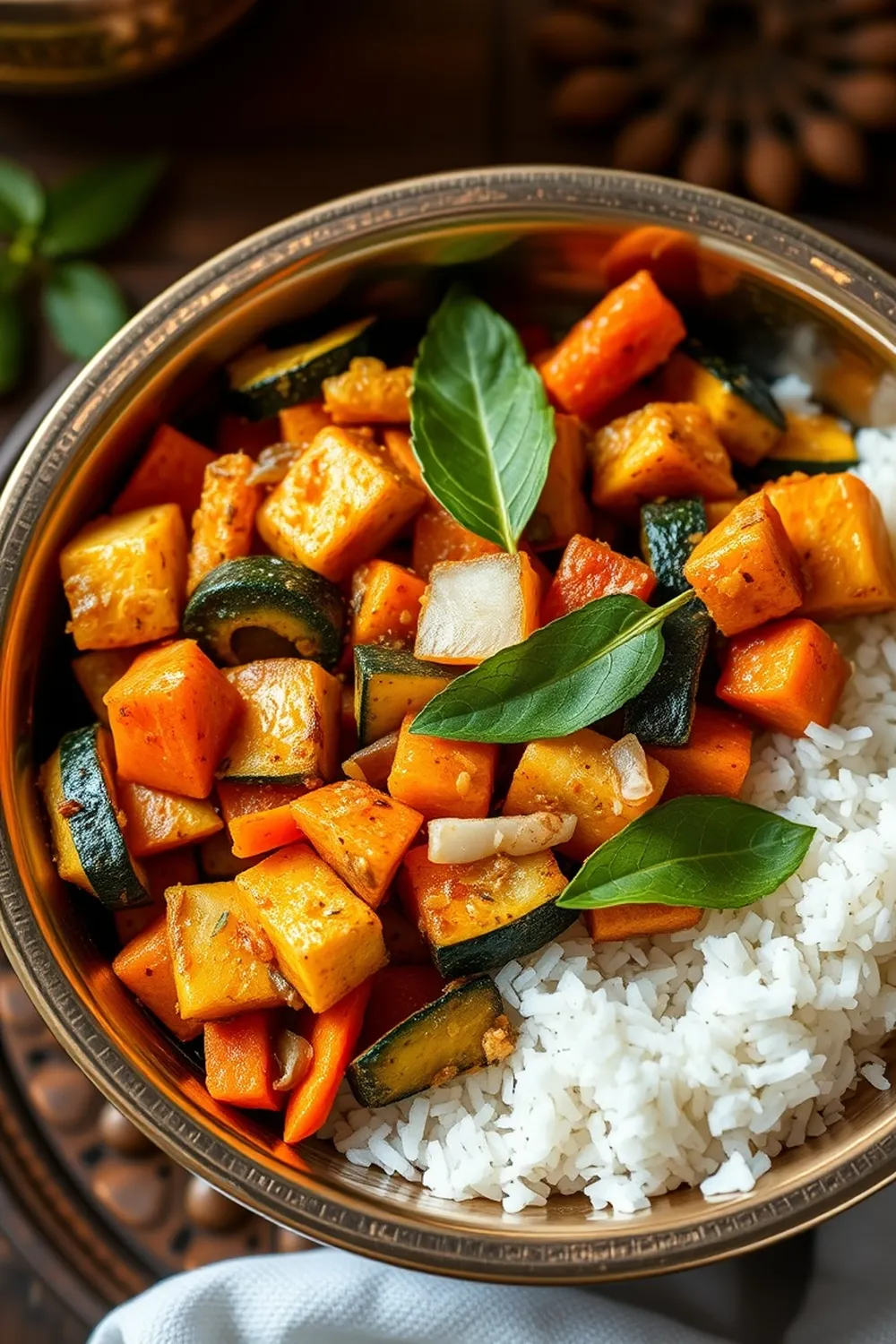
- Grind grated coconut and fennel seeds into a smooth paste with water.
- Heat coconut oil in a pan. Splutter mustard seeds and sauté curry leaves.
- Add sliced onions and cook until softened. Stir in ginger and green chilies.
- Mix in chopped tomatoes and cook until mushy. Add coriander powder, turmeric powder, and red chili powder. Cook for 5 minutes.
- Add coconut paste and 1 cup of water. Bring to a boil.
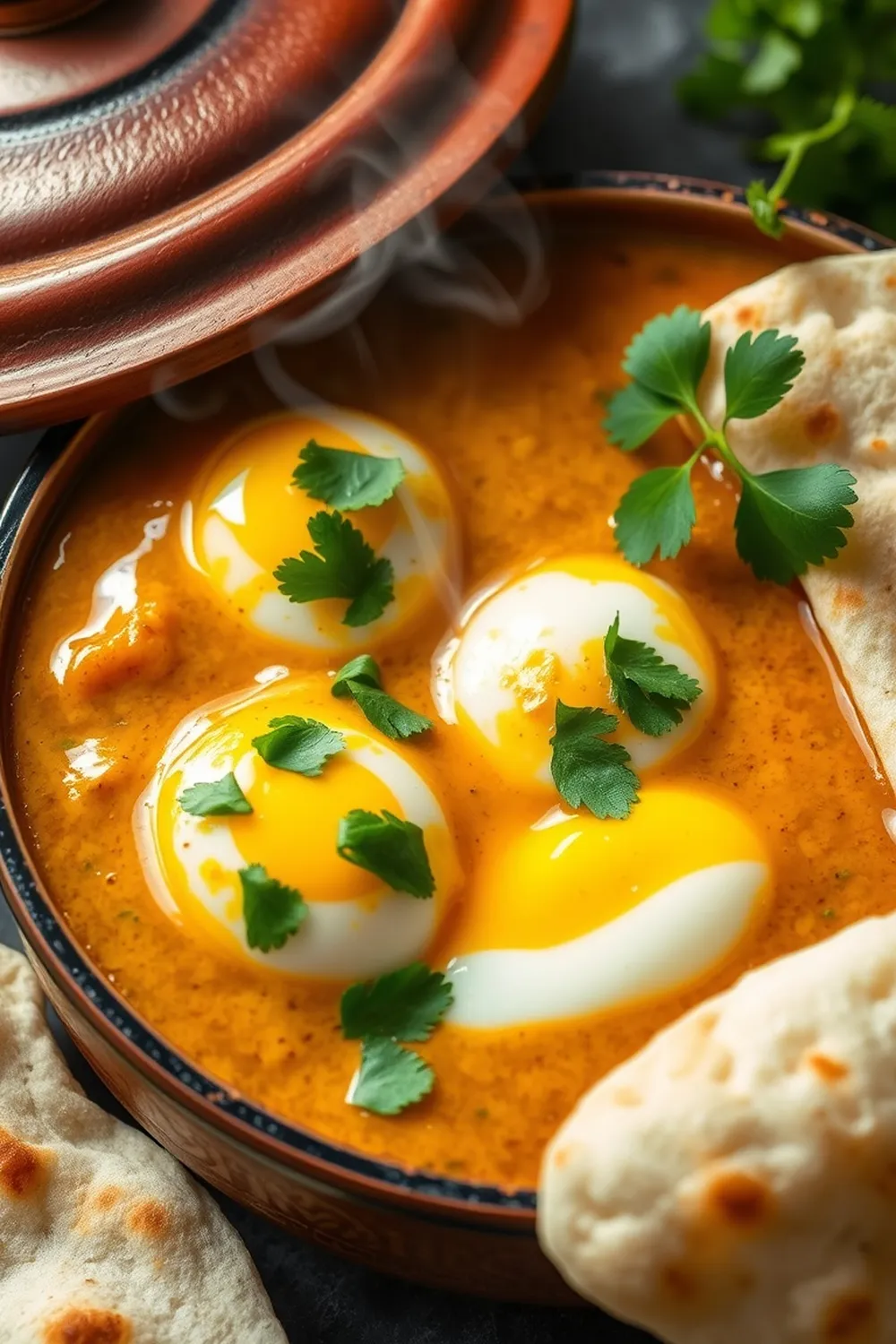
- Crack eggs directly into the gravy, gently scrambling them into the mixture. Cook until the eggs are done.
- Sprinkle garam masala and garnish with coriander leaves. Serve hot with pathiris.
- Calories:350 kcal25%
- Energy:1464 kJ22%
- Protein:15 g28%
- Carbohydrates:20 mg40%
- Sugar:5 mg8%
- Salt:400 g25%
- Fat:25 g20%
Last Updated on 6 months ago by Neha Deshmukh
Kerala Egg Curry Recipe – Coconut & Fennel Spiced Delight
Hey everyone! Today, I’m sharing a recipe that’s close to my heart – a fragrant and flavorful Kerala Egg Curry. This isn’t just any egg curry; it’s a beautiful blend of coconut, fennel, and those incredible Kerala spices that just transport you straight to the coast. I first made this when I was trying to recreate a dish my grandmother used to make, and honestly, it took a few tries to get it just right. But trust me, it’s worth the effort!
Why You’ll Love This Recipe
This Kerala Egg Curry is a delightful explosion of flavors. It’s creamy, subtly sweet from the coconut, and has a lovely warmth from the spices. It’s also surprisingly quick to make – perfect for a weeknight meal when you’re craving something a little special. Plus, it’s a fantastic way to experience the unique culinary traditions of Kerala!
Ingredients
Here’s what you’ll need to create this delicious curry:
- 1 tbsp coconut oil
- 1 tsp mustard seeds
- 1 sprig curry leaves
- 1 onion, sliced
- 1 inch ginger, pounded
- 2 green chillies, sliced
- 1 tomato, chopped
- 1 tsp coriander powder
- 0.25 tsp turmeric powder
- 0.25 tsp red chilli powder
- 4 small eggs
- 0.25 tsp garam masala powder
- Salt to taste
- Coriander leaves for garnish
- 0.75 cup grated coconut
- 0.75 tsp fennel seeds
Ingredient Notes
Let’s talk about a few key ingredients to really elevate this dish:
- Coconut Oil: Don’t skimp on the coconut oil! It’s the foundation of the flavor. Using a good quality coconut oil really makes a difference.
- Fennel Seeds: These little seeds add a subtle sweetness and anise-like aroma that’s so characteristic of Kerala cuisine. Lightly toasting them before grinding enhances their flavor even more.
- Kerala Spices: The combination of coriander, turmeric, and chilli powder is classic Kerala. Feel free to adjust the chilli powder to your liking.
- Curry Leaf Usage: Fresh curry leaves are a must! They add a unique citrusy aroma. Don’t worry if a few splutter in the hot oil – that’s a good sign!
Step-By-Step Instructions
Alright, let’s get cooking!
- First, let’s make the coconut-fennel paste. Grind the grated coconut and fennel seeds into a smooth paste with a little water. Set this aside – it’s the heart of our curry.
- Now, heat the coconut oil in a pan over medium heat. Once hot, add the mustard seeds and let them splutter. Then, toss in the curry leaves and let them sizzle for a few seconds.
- Add the sliced onions and cook until they’re soft and golden brown. This usually takes about 5-7 minutes. Next, stir in the pounded ginger and sliced green chillies and cook for another minute until fragrant.
- Add the chopped tomatoes and cook until they become mushy and softened. Now, sprinkle in the coriander powder, turmeric powder, and red chilli powder. Cook for about 5 minutes, stirring frequently, until the spices are well combined and fragrant.
- Pour in the coconut paste and 1 cup of water. Bring the mixture to a boil, then reduce the heat and let it simmer for about 10 minutes, allowing the flavors to meld together beautifully.
- Gently crack the eggs directly into the gravy, spacing them apart. Let them cook undisturbed for a few minutes, then gently scramble them into the mixture. Cook until the eggs are cooked through to your liking.
- Finally, sprinkle with garam masala powder and garnish with fresh coriander leaves. Serve hot with pathiri or rice!
Expert Tips
- Don’t overcrowd the pan when scrambling the eggs. Give them space to cook evenly.
- If the gravy gets too thick, add a little more water.
- Taste and adjust the seasoning as needed. Salt is your friend!
Variations
- Spice Level: For a milder curry, reduce the amount of red chilli powder. For a spicier kick, add a pinch of cayenne pepper or use more green chillies.
- Regional Variations: Coastal Kerala curries often use more coconut, while inland versions might incorporate more tamarind for a tangy flavor.
- Egg Preferences: My friend, Priya, always uses free-range organic eggs for this recipe, saying it makes a noticeable difference in the flavor. Feel free to do the same!
Serving Suggestions
This Kerala Egg Curry is traditionally served with pathiri (a type of Kerala flatbread). But if you can’t find it, it’s equally delicious with rice, appam, or even roti. A side of simple vegetable thoran (stir-fry) complements it perfectly.
Storage Instructions
Leftovers can be stored in an airtight container in the refrigerator for up to 3 days. Reheat gently on the stovetop or in the microwave.
FAQs
1. What type of coconut oil is best for this Kerala Egg Curry?
Virgin coconut oil is ideal, as it has a richer coconut flavor. But regular coconut oil works just fine too!
2. Can I make the coconut-fennel paste ahead of time?
Absolutely! You can make the paste a day or two in advance and store it in the refrigerator.
3. What is a good substitute for pathiri if I can’t find it?
Appam or even a simple roti will work beautifully. Rice is also a fantastic option.
4. How can I adjust the spice level of this curry?
Reduce or increase the amount of red chilli powder. You can also add a pinch of cayenne pepper for extra heat.
5. Can this recipe be adapted for hard-boiled eggs?
Yes, you can! Add halved or quartered hard-boiled eggs to the gravy during the last 5 minutes of cooking.
6. Is this dish traditionally made with a specific type of egg?
Traditionally, any small to medium-sized eggs were used. Nowadays, people use whatever eggs are readily available, but many prefer free-range eggs for their richer flavor.
Enjoy making this Kerala Egg Curry! I hope it brings a little bit of Kerala sunshine to your kitchen. Let me know how it turns out in the comments below!



Neha Deshmukh
Neha holds a B.A. in History with a focus on Indian and world history, including ancient, medieval, and modern periods. At RecipesOfIndia.org — the world’s largest database of Indian recipes — she combines her love for food and history by exploring how India’s past has shaped its culinary traditions.