- Heat ghee in a thick-bottomed pan. Add basmati rice and sauté on low heat for 30 seconds until fragrant.
- Pour pre-boiled milk into the pan and stir to combine. Bring to a boil, then simmer on low heat.
- Cover partially and cook until the rice is tender (about 40-45 minutes), stirring occasionally to prevent scorching.
- Add sugar and stir until dissolved. Simmer for 8-10 minutes until the payasam thickens to the desired consistency.
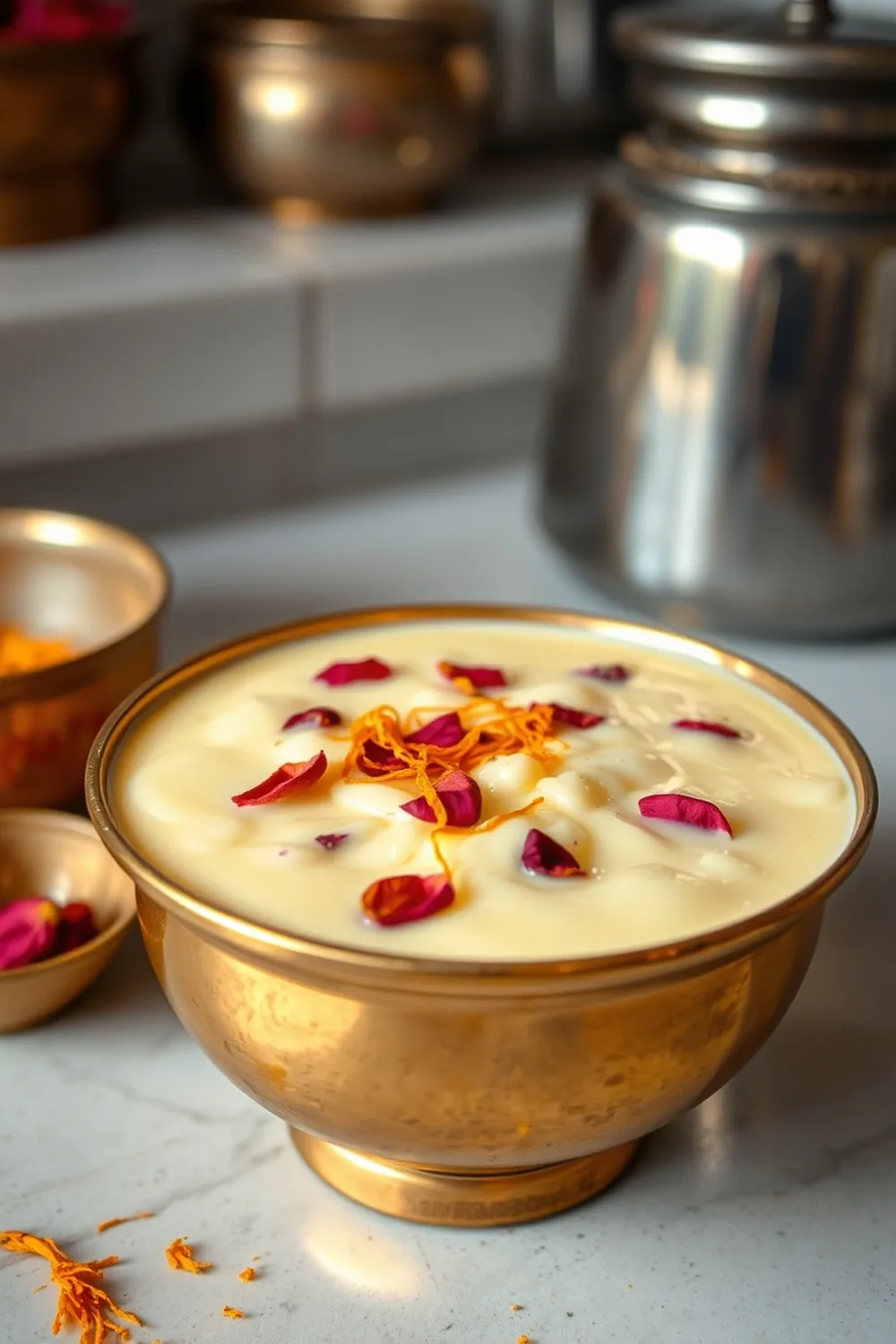
- Serve hot or chilled, garnished with rose petals, saffron, or nuts.
- Calories:300 kcal25%
- Energy:1255 kJ22%
- Protein:8 g28%
- Carbohydrates:45 mg40%
- Sugar:25 mg8%
- Salt:100 g25%
- Fat:10 g20%
Last Updated on 6 months ago by Neha Deshmukh
Basmati Rice Payasam Recipe – Traditional Indian Milk Pudding
Hey everyone! If you’re anything like me, you have a soft spot for a warm, comforting dessert. And honestly, few things hit the spot quite like a creamy, fragrant bowl of Payasam. This Basmati Rice Payasam is a classic for a reason – it’s simple, incredibly delicious, and feels like a warm hug in a bowl. I first made this for Diwali a few years ago, and it’s been a family favourite ever since! Let’s get cooking, shall we?
Why You’ll Love This Recipe
This isn’t just any milk pudding. This Basmati Rice Payasam is special. It’s subtly sweet, beautifully aromatic, and has a lovely, creamy texture. It’s perfect for celebrations, or just a cozy night in. Plus, it’s surprisingly easy to make, even if you’re new to Indian desserts. You’ll love how the delicate flavour of basmati rice shines through, making this payasam truly irresistible.
Ingredients
Here’s what you’ll need to create this delightful treat:
- 3 tablespoons basmati rice (approximately 30g)
- 1 tablespoon ghee (approximately 15ml)
- 1 liter full-fat milk
- 4 tablespoons sugar (approximately 50g)
Ingredient Notes
Let’s talk ingredients! Getting these right makes all the difference.
- Basmati Rice: Don’t skimp on the quality here. Basmati rice is key for that lovely fragrance and delicate texture. It cooks up fluffy and absorbs the milk beautifully. I prefer aged basmati for the best results.
- Full-Fat Milk: Trust me on this one – full-fat milk is essential. It gives the payasam its richness and creamy consistency. Lower-fat milk just won’t deliver the same luxurious texture.
- Ghee: Ghee adds a beautiful nutty flavour that complements the rice and milk perfectly. You can substitute with butter if you don’t have ghee, but ghee really elevates the flavour.
Now, a quick note on names! Payasam goes by many names across India. In North India, it’s often called Kheer. In some parts of South India, you’ll hear it referred to as Payasa. It’s all the same delicious dessert, just with a different name depending on the region!
Step-By-Step Instructions
Alright, let’s get down to business! Here’s how to make this dreamy payasam:
- First, heat the ghee in a thick-bottomed pan over medium-low heat. This prevents sticking and ensures even cooking.
- Add the basmati rice to the ghee and sauté for about 30 seconds. You’ll start to smell that lovely fragrance – that’s a good sign!
- Pour in the full-fat milk and stir well to combine. Bring the mixture to a gentle boil, then reduce the heat to low.
- Now comes the patience part! Cover the pan partially and let it simmer for 40-45 minutes, stirring occasionally. This is important to prevent the rice from sticking to the bottom.
- Once the rice is tender and the milk has thickened slightly, add the sugar. Stir until the sugar is completely dissolved.
- Continue to simmer for another 8-10 minutes, stirring frequently, until the payasam reaches your desired consistency. It will thicken a bit more as it cools.
And that’s it! You’ve just made a beautiful, traditional Basmati Rice Payasam.
Expert Tips
Here are a few things I’ve learned over the years to make this recipe even better:
- Stir, Stir, Stir: Seriously, don’t skip the stirring! It prevents sticking and ensures a creamy texture.
- Low and Slow: Simmering on low heat is key. It allows the flavours to meld together beautifully.
- Adjust Sweetness: Feel free to adjust the amount of sugar to your liking.
Variations
Want to switch things up? Here are a few ideas:
- Vegan Adaptation: Swap the ghee for plant-based butter and use your favourite plant-based milk (cashew or almond milk work well!).
- Sugar-Free Option: Use a sugar substitute like stevia or erythritol to make a healthier version.
- Spice Level: Add a pinch of cardamom powder during the last 5 minutes of cooking for a warm, aromatic flavour. My grandmother always added a tiny bit of nutmeg too!
- Festival Adaptations: During Pongal or Onam, you can add a few strands of saffron for a vibrant colour and flavour. For Diwali, a sprinkle of chopped nuts is always a welcome addition.
Serving Suggestions
Payasam is delicious served warm or chilled. I love to garnish it with a few rose petals, a sprinkle of saffron strands, or some chopped nuts like almonds or pistachios. It’s also lovely with a side of fruit!
Storage Instructions
Leftover payasam can be stored in an airtight container in the refrigerator for up to 3 days. It might thicken slightly upon cooling, so you can add a splash of milk when reheating.
FAQs
Let’s answer some common questions:
1. What type of rice is best for Payasam?
Basmati rice is the gold standard! Its fragrance and texture are perfect for this dessert.
2. Can I make Payasam ahead of time?
Absolutely! Payasam actually tastes even better the next day after the flavours have had a chance to meld.
3. How do I prevent the Payasam from sticking to the bottom of the pan?
Use a thick-bottomed pan and stir frequently, especially during the simmering process.
4. What are some traditional garnishes for Payasam?
Rose petals, saffron strands, chopped nuts (almonds, pistachios, cashews), and a sprinkle of cardamom are all popular choices.
5. Can I use condensed milk instead of full-fat milk?
While you can use condensed milk, it will significantly change the flavour and texture. It will be much sweeter and less creamy. I recommend sticking with full-fat milk for the best results.
Enjoy making this classic Indian dessert! I hope it brings you as much joy as it brings my family. Happy cooking!


Neha Deshmukh
Neha holds a B.A. in History with a focus on Indian and world history, including ancient, medieval, and modern periods. At RecipesOfIndia.org — the world’s largest database of Indian recipes — she combines her love for food and history by exploring how India’s past has shaped its culinary traditions.