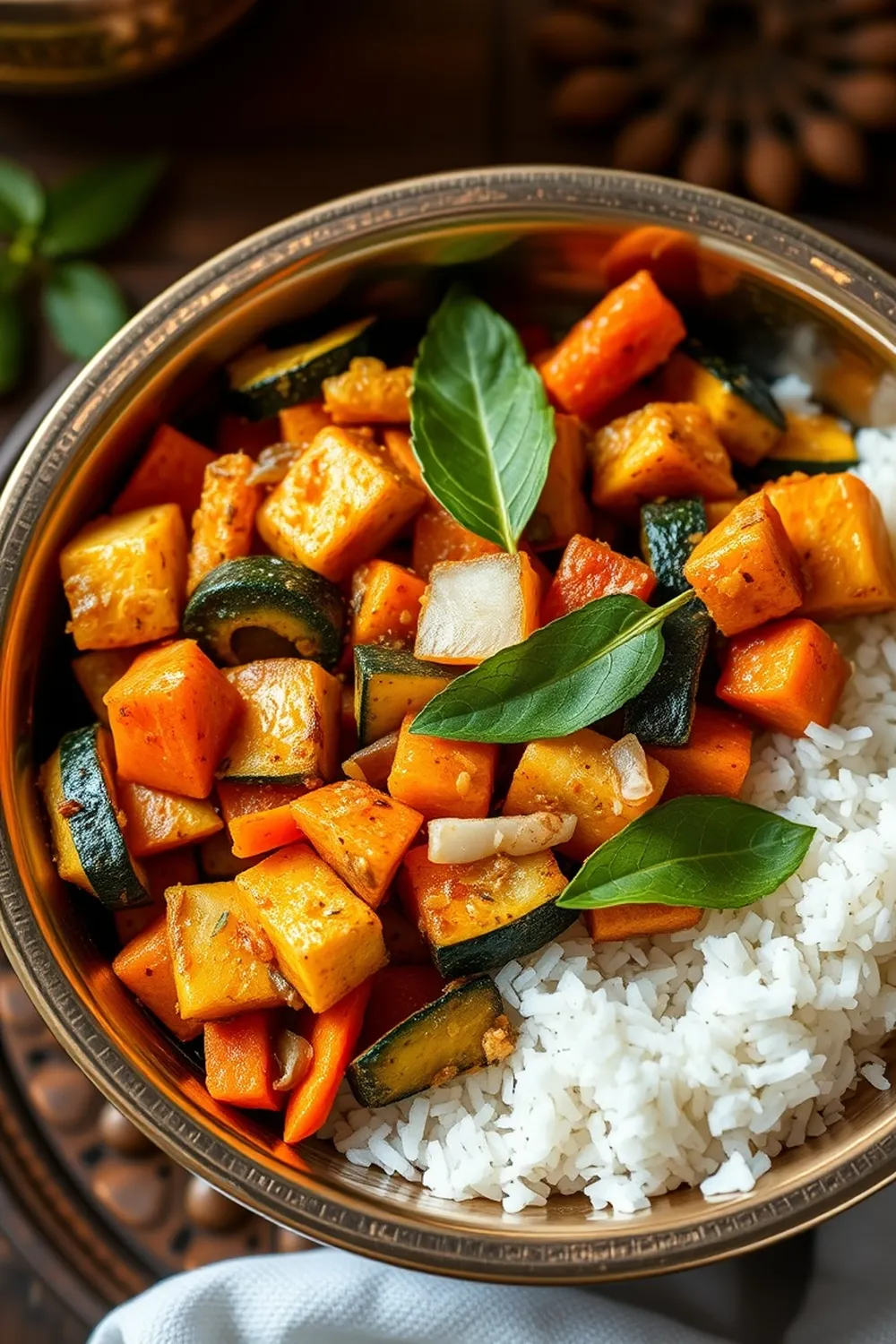
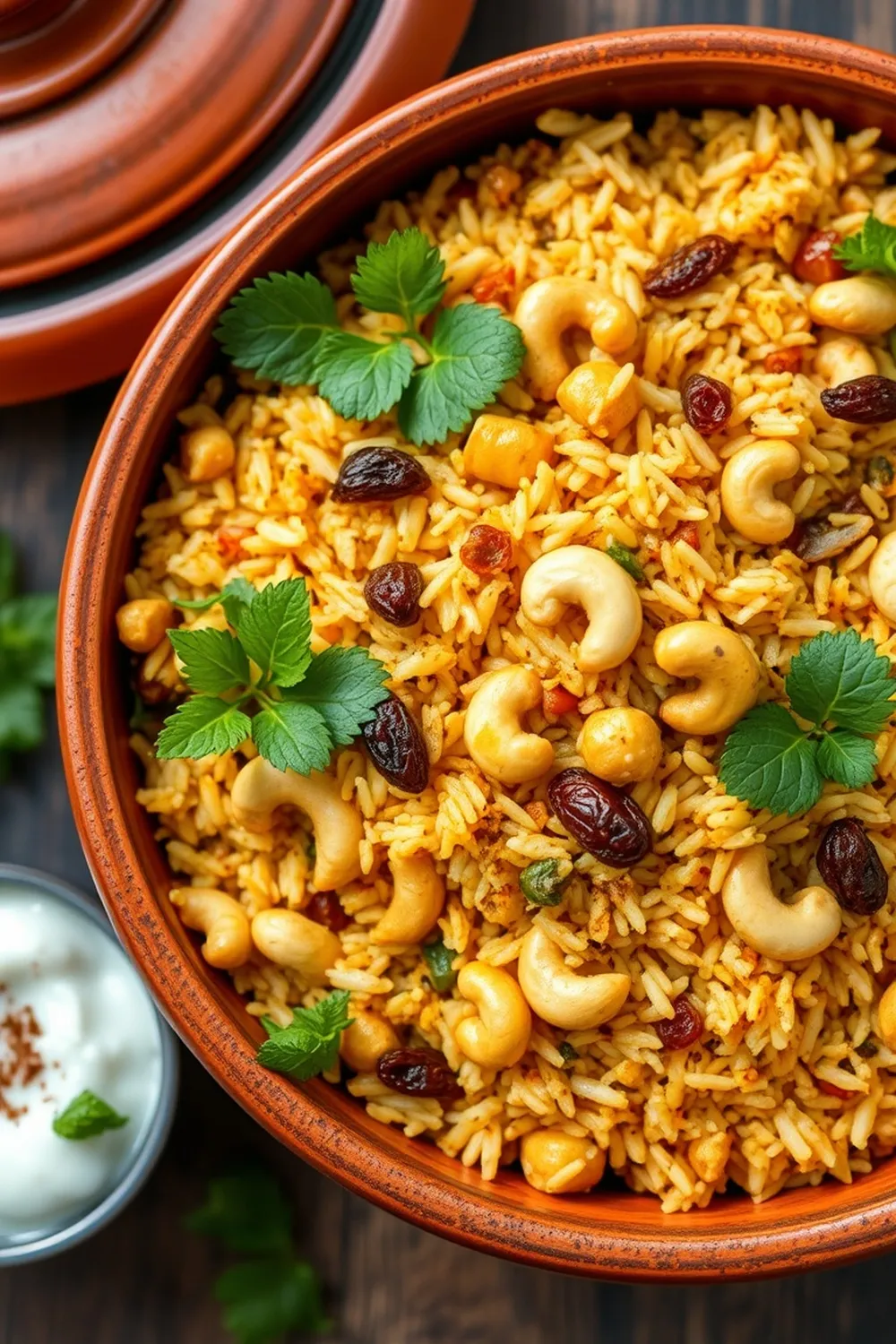
- Heat ghee in a pressure cooker. Add bay leaf, cinnamon, cloves, star anise, cardamom pods, cumin, and fennel. Sauté until aromatic.
- Add chopped onions and sauté until translucent. Mix in ginger-garlic paste and slit green chilies.
- Stir in tomato puree and cook on medium heat until oil separates from the mixture.
- Add turmeric, red chili powder, biryani masala, and salt. Sauté for 2 minutes to cook the spices.
- Add cubed carrots, peas, mint, and coriander leaves. Sauté for 1 minute.
- Pour in coconut milk and water. Mix well.
- Drain soaked basmati rice and add to the cooker. Stir gently to combine.
- Close the pressure cooker lid and cook on medium flame for 2 whistles.
- Let the pressure release naturally. Fluff the biryani gently with a fork before serving.
- Calories:350 kcal25%
- Energy:1464 kJ22%
- Protein:6 g28%
- Carbohydrates:55 mg40%
- Sugar:5 mg8%
- Salt:800 g25%
- Fat:12 g20%
Last Updated on 6 months ago by Neha Deshmukh
Vegetable Biryani Recipe – Coconut Milk & Spiced Basmati Rice
Introduction
Oh, biryani. Just the word conjures up images of fragrant rice, tender vegetables, and a symphony of spices, doesn’t it? It’s the celebratory dish in so many Indian homes, and for good reason! I remember the first time I attempted biryani – it felt a little daunting, honestly. But once I got the hang of it, it became a regular in my kitchen. This Vegetable Biryani recipe, with its creamy coconut milk and aromatic spices, is a personal favorite. It’s relatively easy, incredibly flavorful, and always a crowd-pleaser. Let’s get cooking!
Why You’ll Love This Recipe
This isn’t your average veggie biryani. The coconut milk adds a beautiful richness and subtle sweetness that balances the spices perfectly. It’s a one-pot wonder, meaning fewer dishes to wash (always a win!). Plus, it’s packed with goodness from all those colorful vegetables. Honestly, it’s comfort food at its finest.
Ingredients
Here’s what you’ll need to create this delicious Vegetable Biryani:
- 1 tbsp ghee / clarified butter (about 15ml)
- 1 bay leaf / tej patta
- 5 cloves / lavang
- 1 inch cinnamon / dalchini
- 1 star anise
- 2 pods cardamom / elachi
- 1 tsp cumin / jeera (about 5g)
- ½ – ¾ tsp fennel / saunf (about 2-3g)
- 1 onion, finely chopped
- 1 tsp ginger garlic paste (about 5ml)
- 1 green chilli, slit
- 1 cup tomato puree (about 240ml)
- ½ – 1 tsp Kashmiri red chilli powder / lal mirch powder (adjust to taste, about 2-5g)
- 1 tsp biryani masala
- 1 tsp salt (about 6g)
- 1 cup cubed carrot (about 150g)
- 2 tbsp peas / matar (about 30g)
- 1 tbsp coriander leaves, finely chopped
- 1 cup coconut milk (about 240ml)
- 2 tbsp mint / pudina, finely chopped
- 1 cup water (about 240ml)
- 1 cup basmati rice, soaked for 20 minutes (about 195g)
Ingredient Notes
Let’s talk ingredients! Ghee is traditional and adds a lovely flavor, but you can use vegetable oil if you prefer. The spices are key here. Don’t skimp! Bay leaf, cinnamon, cloves, star anise, cardamom, cumin, and fennel create that signature biryani aroma.
Biryani masala is a blend you can find at most Indian grocery stores, or you can make your own. I sometimes add a pinch of garam masala too, for extra warmth. Coconut milk is what sets this biryani apart – it adds a beautiful creaminess. Full-fat coconut milk works best for richness.
Vegetable biryani variations are common across India. In some regions, they use potatoes and cauliflower. Others add beans or mushrooms. Feel free to experiment!
Step-By-Step Instructions
Alright, let’s get cooking!
- Heat the ghee in a pressure cooker over medium heat. Once melted, add the bay leaf, cinnamon, cloves, star anise, cardamom pods, cumin, and fennel seeds. Sauté for about 30-60 seconds, until fragrant. You’ll know it’s ready when your kitchen starts to smell amazing!
- Add the chopped onion and sauté until translucent, about 5-7 minutes. Then, mix in the ginger-garlic paste and slit green chilli. Cook for another minute until fragrant.
- Stir in the tomato puree and cook on medium heat for about 5-8 minutes, until the oil starts to separate from the mixture. This is important – it means the tomatoes are cooked down properly.
- Add the turmeric powder, red chilli powder, biryani masala, and salt. Sauté for 2 minutes, stirring constantly, to cook the spices and prevent them from burning.
- Add the cubed carrots, peas, mint, and coriander leaves. Sauté for just a minute to lightly coat them in the spice mixture.
- Pour in the coconut milk and water. Mix well to combine everything.
- Drain the soaked basmati rice and gently add it to the pressure cooker. Stir gently – you don’t want to break the rice grains.
- Close the pressure cooker lid and cook on medium flame for 2 whistles.
- Let the pressure release naturally. This is important! Don’t force it open. Once the pressure is released, fluff the biryani gently with a fork before serving.
Expert Tips
- Soaking the rice is crucial for fluffy biryani. Don’t skip this step!
- Don’t overcook the vegetables. They should still have a slight bite.
- Be gentle when stirring the rice. You want to keep the grains intact.
- Allowing the pressure to release naturally results in the most flavorful and perfectly cooked biryani.
Variations
- Add more veggies: My kids love it when I throw in some potatoes, cauliflower, or beans.
- Make it richer: A tablespoon of yogurt added with the coconut milk adds a lovely tang.
- Brown the onions: For a deeper flavor, caramelize the onions a bit longer.
Vegan Adaptation
Easy peasy! Simply substitute the ghee with vegetable oil. That’s it! This biryani is naturally vegan-friendly otherwise.
Gluten-Free Adaptation
This recipe is naturally gluten-free! Just double-check that your biryani masala blend doesn’t contain any gluten-containing ingredients.
Spice Level Adjustment
- Mild: Use ½ tsp Kashmiri red chilli powder.
- Medium: Use 1 tsp Kashmiri red chilli powder.
- Hot: Add a pinch of cayenne pepper along with 1 tsp Kashmiri red chilli powder.
Festival Adaptations
Biryani is perfect for festivals! Serve it with raita (yogurt dip), a side of mirchi ka salan (chilli curry), and some papadums for a complete festive meal. It’s a showstopper at Diwali, Eid, or any special occasion.
Serving Suggestions
Serve hot, garnished with extra coriander leaves and a squeeze of lemon juice. Raita is a must-have accompaniment – it cools down the palate. A simple onion and tomato salad also works beautifully.
Storage Instructions
Leftover biryani can be stored in an airtight container in the refrigerator for up to 3 days. Reheat gently in the microwave or on the stovetop. It actually tastes even better the next day as the flavors meld together!
FAQs
What type of rice is best for biryani?
Basmati rice is the gold standard for biryani. Its long grains and delicate aroma are perfect.
Can I make this biryani without a pressure cooker?
Yes! You can make it in a heavy-bottomed pot. It will take longer to cook (about 45-60 minutes), and you’ll need to keep a close eye on it to prevent sticking.
How can I adjust the spice level of this vegetable biryani?
Adjust the amount of red chilli powder to your liking. You can also add a pinch of cayenne pepper for extra heat.
What vegetables can I substitute in this recipe?
Feel free to use your favorite vegetables! Potatoes, cauliflower, beans, mushrooms, and peas all work well.
How do I prevent the rice from sticking to the bottom of the pressure cooker?
Make sure the pressure cooker is clean and well-oiled. Also, avoid stirring the rice too much.
Can this biryani be made ahead of time?
You can prepare the spice mixture and chop the vegetables ahead of time. However, it’s best to cook the biryani just before serving for the best texture and flavor.



Neha Deshmukh
Neha holds a B.A. in History with a focus on Indian and world history, including ancient, medieval, and modern periods. At RecipesOfIndia.org — the world’s largest database of Indian recipes — she combines her love for food and history by exploring how India’s past has shaped its culinary traditions.