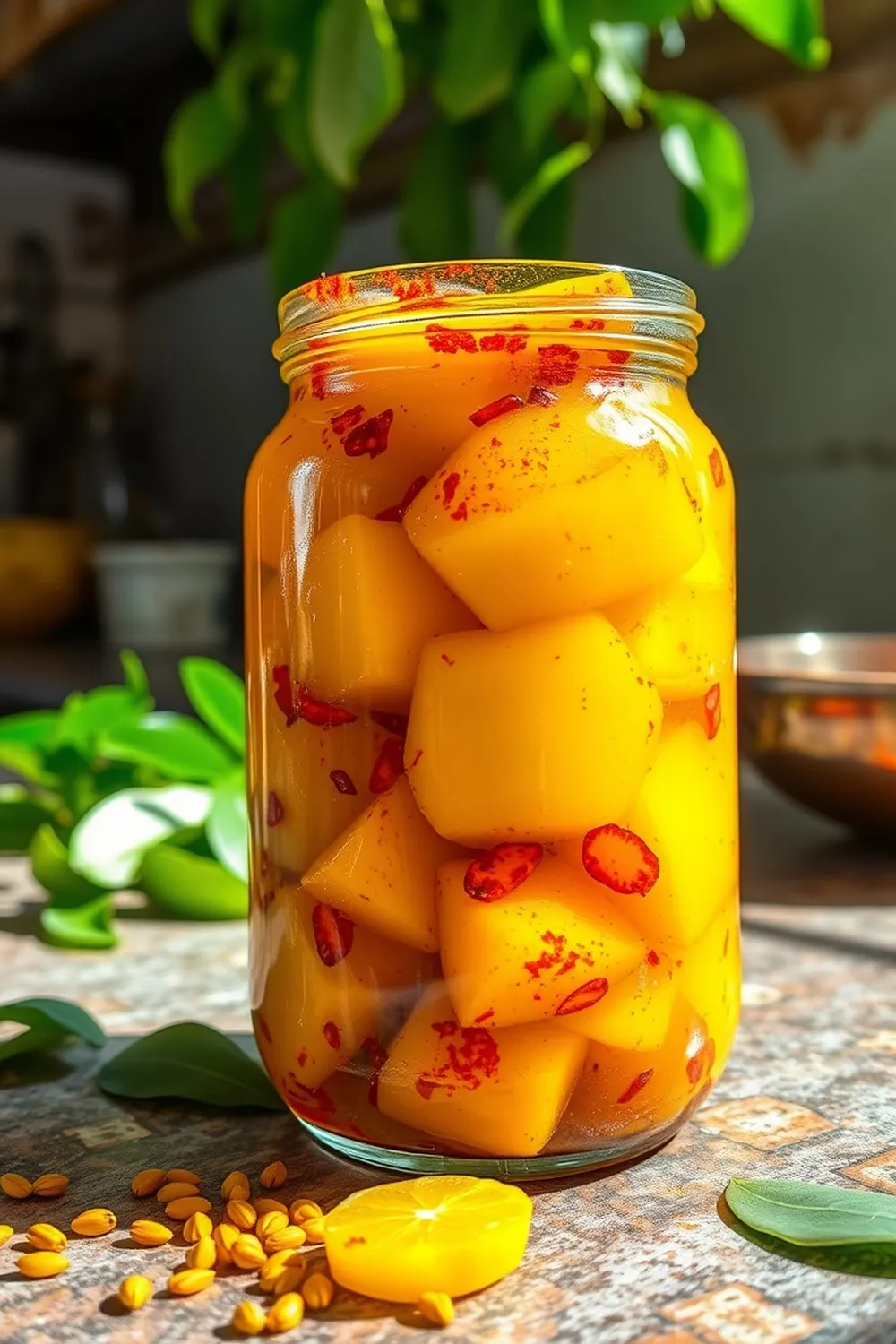
- Bring 4 cups of water to a boil in a saucepan. Add whole lemons, cover, and simmer for 15-20 minutes, or until the skins soften.
- Remove lemons from water and pat dry with a kitchen towel. Trim the ends and cut into bite-sized pieces, removing any seeds.
- Heat oil in a pan over medium heat. Add mustard seeds and dried red chilies. When the seeds pop, add green chilies, garlic, and curry leaves. Fry until the garlic is golden brown and crisp.
- Turn off the heat. Mix in chili powder, turmeric powder, salt, asafoetida (hing), and fenugreek powder. Stir for 1 minute.
- Add the lemon pieces and any accumulated juice to the spice mix. Toss to coat the lemons thoroughly.
- Let cool to room temperature. Transfer to an airtight jar and allow to mature for at least 15 days before use. Refrigerate after opening.
- Calories:30 kcal25%
- Energy:125 kJ22%
- Protein:0.5 g28%
- Carbohydrates:3 mg40%
- Sugar:1 mg8%
- Salt:150 g25%
- Fat:2 g20%
Last Updated on 5 months ago by Neha Deshmukh
Authentic Lemon Pickle Recipe – Indian Style Ginger & Chili
Hey everyone! If you’ve ever tasted a truly good Indian pickle, you know it’s more than just a condiment – it’s a burst of flavour, a little bit of sunshine in a jar, and a tradition passed down through generations. Today, I’m sharing my family’s recipe for Lemon Pickle, a vibrant and zingy delight that’s surprisingly easy to make at home. I first made this when I was trying to recreate my grandmother’s version, and after a few attempts, I finally got it just right! It’s been a family favourite ever since.
Why You’ll Love This Recipe
This Lemon Pickle (Nimbu ka Achar, as we call it) is special. It’s not overly complicated, but the flavour is incredible. The combination of tangy lemons, fiery chilies, aromatic gingerly oil, and a blend of warming spices creates a pickle that’s both refreshing and deeply satisfying. It’s perfect with dal-chawal, roti, or even just a simple yogurt meal. Plus, the process of making it is so rewarding – the anticipation as it matures is half the fun!
Ingredients
Here’s what you’ll need to create this delicious pickle:
- 5 lemons, medium-sized
- 1 tablespoon salt (approx. 15g)
- 3 tablespoons chili powder (approx. 30g)
- 2 cloves garlic, minced
- 1 green chili, finely chopped
- 1 sprig curry leaves (approx. 10-12 leaves)
- 1 teaspoon fenugreek powder (approx. 5g)
- 1 teaspoon turmeric powder (approx. 5g)
- 1 teaspoon asafetodia (hing) (approx. 3g)
- 1 teaspoon mustard seeds (approx. 7g)
- 2 red chilies (halved)
- ½ cup gingerly oil (approx. 120ml) – more on this below!
- 4 cups water (approx. 960ml)
Ingredient Notes
Let’s talk ingredients – a few things can really make or break a good pickle!
- Gingerly Oil: This is key. Gingerly oil (also known as sesame oil) is traditionally used in Indian pickles, especially in the South. It has a unique nutty flavour and helps preserve the pickle beautifully. You can find it at most Indian grocery stores. If you absolutely can’t find it, you can use a neutral oil like sunflower oil, but the flavour won’t be quite the same.
- Lemons: I prefer using Kagzi lemons for this recipe – they have a thinner skin and are less acidic. However, you can use any variety of lemon available to you. Meyer lemons are also a great choice! Regional variations exist; some families prefer the zestiness of a Lisbon lemon.
- Asafetodia (Hing): Don’t skip this! Asafetodia has a pungent smell in its raw form, but it adds a wonderful umami flavour to the pickle and aids in digestion. It’s almost essential for a truly authentic taste.
- Chili Varieties: Feel free to adjust the chili according to your spice preference. I use a mix of green chilies and dried red chilies for a balanced heat. Kashmiri chilies will give you a vibrant colour with milder heat, while bird’s eye chilies will pack a serious punch!
- Fenugreek Powder: Fenugreek adds a slightly bitter, maple-like flavour that complements the other spices beautifully. A little goes a long way, so don’t overdo it.
Step-By-Step Instructions
Alright, let’s get pickling!
- Soften the Lemons: First, bring 4 cups of water to a boil in a saucepan. Add the whole lemons, cover, and let them steam for 15-20 minutes, or until the skins start to soften. This helps them absorb the spices better.
- Prepare the Lemons: Once cooled slightly, pat the lemons dry with a kitchen towel. Trim off the ends and cut them into bite-sized pieces, carefully removing any seeds.
- Temper the Spices: Heat the gingerly oil in a pan over medium heat. Add the mustard seeds and red chilies. When the mustard seeds start to pop (be careful, they can splatter!), add the green chili, minced garlic, and curry leaves. Fry until the garlic and curry leaves are golden brown and crispy.
- Bloom the Spices: Turn off the heat and add the chili powder, turmeric powder, salt, asafetodia, and fenugreek powder to the pan. Stir well for about a minute – this helps bloom the spices and release their flavours.
- Combine & Coat: Add the lemon pieces (and any juice that has accumulated) to the spice mixture. Toss everything together really well, ensuring that each lemon piece is thoroughly coated with the spices.
- Mature & Store: Let the pickle cool completely to room temperature. Then, transfer it to a clean, airtight glass jar. Let it mature for at least 15 days (the longer, the better!) before using. Refrigerate after opening.
Expert Tips
- Sterilize your jar: Before adding the pickle, make sure your glass jar is thoroughly sterilized to prevent any unwanted bacteria from growing.
- Use a non-reactive spoon: When stirring the pickle, use a wooden or plastic spoon to avoid any reactions with the spices.
- Sunbathing (Optional): Traditionally, pickles were often sun-dried for a few hours during the maturation process. This helps enhance the flavour and preservation.
Variations
Want to switch things up? Here are a few ideas:
- Vegan Adaptation: This recipe is naturally vegan! Just double-check your asafetodia (hing) to ensure it doesn’t contain any hidden ingredients.
- Spice Level Adjustment: If you prefer a milder pickle, reduce the amount of chili powder and green chilies. For a spicier kick, add more! My friend, Priya, loves to add a pinch of cayenne pepper for extra heat.
- Regional Variations: North Indian lemon pickles often include mango powder (amchur) for extra tanginess. South Indian versions might incorporate a bit of jaggery (gur) for a touch of sweetness.
- Festival Adaptations: This pickle is a popular addition to Makar Sankranti and Lohri feasts in many Indian households.
Serving Suggestions
This Lemon Pickle is incredibly versatile! Here are a few ways to enjoy it:
- With dal-chawal (lentils and rice) – a classic combination!
- As a side dish with roti or paratha.
- With yogurt for a cooling and flavourful snack.
- As a condiment for sandwiches or wraps.
Storage Instructions
Store the pickle in an airtight glass jar in a cool, dark place. Once opened, refrigerate to maintain its freshness. Properly stored, this pickle can last for several months, even up to a year!
FAQs
Let’s answer some common questions:
Q: What type of lemons are best for making pickle?
A: Kagzi lemons are ideal, but any variety will work. Meyer lemons are also a great choice.
Q: How do I know if the pickle is fermented correctly?
A: You’ll notice the lemons softening and the oil becoming slightly cloudy. The flavour will also deepen and become more complex over time.
Q: Can I adjust the spice level of this pickle?
A: Absolutely! Feel free to adjust the amount of chili powder and green chilies to your liking.
Q: What is the role of Asafetodia (Hing) in this recipe?
A: Asafetodia adds a unique umami flavour and aids in digestion. It’s a key ingredient for an authentic taste.
Q: How long does this pickle last, and how should I store it?
A: Properly stored, this pickle can last for several months, even up to a year. Store it in an airtight glass jar in a cool, dark place, and refrigerate after opening.
Q: Can I use a different oil instead of Gingerly oil?
A: While gingerly oil is traditional and adds a unique flavour, you can use a neutral oil like sunflower oil if you can’t find it.
Enjoy making this delicious Lemon Pickle! I hope it brings a little bit of Indian sunshine to your table. Let me know how it turns out in the comments below!


Neha Deshmukh
Neha holds a B.A. in History with a focus on Indian and world history, including ancient, medieval, and modern periods. At RecipesOfIndia.org — the world’s largest database of Indian recipes — she combines her love for food and history by exploring how India’s past has shaped its culinary traditions.