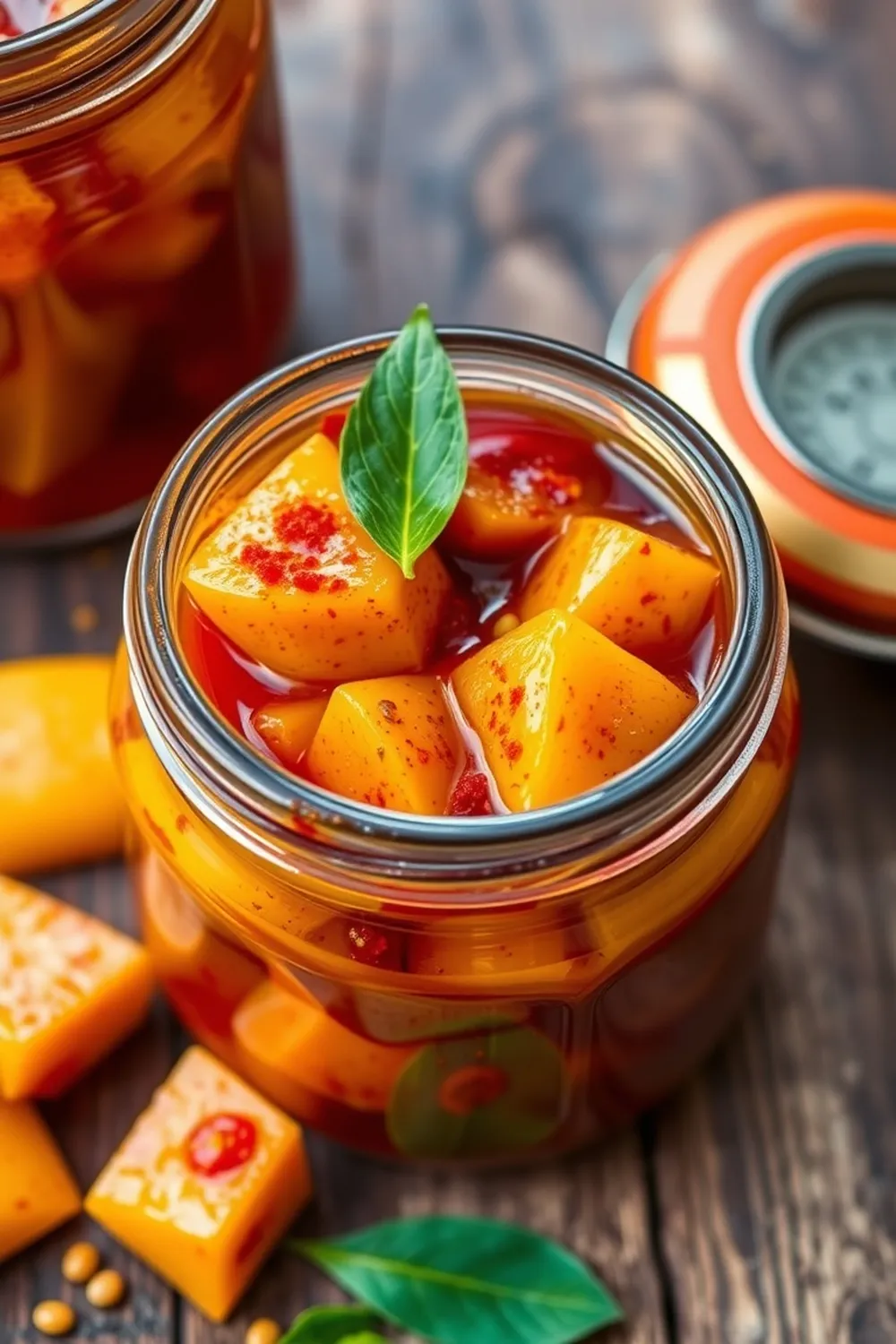
- Peel and cut unripe mangoes into 1-inch cubes, avoiding the hard inner pit. Discard the pit and any loose seeds.
- Toss mango pieces with salt and turmeric. Cover and rest overnight in the refrigerator to reduce sourness.
- Drain mangoes in a strainer, then spread on a clean kitchen towel and sun-dry for 2-3 days, or until mostly dry (not 8 hours).
- Heat oil in a skillet. Add mustard seeds and allow them to pop, then add asafoetida. Let cool completely.
- Stir jaggery into the cooled oil until dissolved, then combine with the dried mangoes, pickle masala, and salt.
- Pack the mixture tightly into a clean, dry glass jar using gloves. Cover the jar with a clean cheesecloth secured with a rubber band for 3-4 days.
- Mix the pickle daily with a clean, dry spoon until the oil rises to the top. Seal the jar tightly and refrigerate for year-long storage.
- Calories:220 kcal25%
- Energy:920 kJ22%
- Protein:2 g28%
- Carbohydrates:25 mg40%
- Sugar:15 mg8%
- Salt:500 g25%
- Fat:15 g20%
Last Updated on 5 months ago by Neha Deshmukh
Authentic Mango Pickle Recipe – Traditional Indian Aam Ka Achar
Okay, let’s be real. Is there anything that screams ‘India’ quite like a good mango pickle? Aam ka achar, as we lovingly call it, is a staple in almost every Indian household. It’s that one thing my grandmother always had a jar of, and honestly, it’s a taste of home I crave constantly. Today, I’m sharing my family’s recipe – a little bit of patience, a whole lot of flavour, and a jar of sunshine to brighten up any meal.
Why You’ll Love This Recipe
This isn’t just a mango pickle recipe; it’s the mango pickle recipe I’ve perfected over the years. It’s tangy, spicy, and a little bit sweet – everything a good pickle should be! Plus, making your own allows you to control the ingredients and spice level, tailoring it exactly to your liking. Trust me, once you’ve tasted homemade, you’ll never go back to store-bought.
Ingredients
Here’s what you’ll need to create this magic:
- Unripe green mangoes
- Mustard seeds
- Asafoetida (hing)
- Turmeric powder
- Salt
- K-Pra pickle masala
- Jaggery
- Neutral oil (sesame/mustard/avocado)
Ingredient Notes
Let’s talk ingredients, because getting these right makes all the difference!
Unripe Green Mangoes: Choosing the Right Variety
You want mangoes that are firm to the touch and completely green. Avoid any with a hint of yellow. Totapuri mangoes are fantastic for pickling because of their shape and firm flesh, but any firm, sour variety will work.
Mustard Seeds: Black vs. Yellow – What to Use?
Traditionally, black mustard seeds are used for their stronger, more pungent flavour. Yellow mustard seeds are milder. I personally prefer black, but you can use a mix if you like! About 2 tablespoons (20g) is a good starting point.
Asafoetida (Hing): Quality and Regional Variations
Asafoetida, or hing, has a… unique smell! Don’t let that put you off. It adds a wonderful savoury depth to the pickle. Look for good quality hing – it should be a reddish-brown colour. Different regions use different types, so feel free to use what you’re familiar with. A pinch (about 1/2 teaspoon or 2g) is all you need.
K-Pra Pickle Masala: Understanding This Key Spice Blend
K-Pra is a South Indian pickle masala blend, and it’s the secret weapon in this recipe. It contains a mix of spices like fenugreek, cumin, coriander, and chilli powder. You can find it at Indian grocery stores or online. If you can’t find it, you can try making your own blend, but K-Pra really does add a special touch. About 3-4 tablespoons (30-40g) is perfect.
Neutral Oil: Sesame, Mustard, or Avocado Oil – Which is Best?
The oil acts as a preservative and carries the flavours. Traditionally, mustard oil is used, especially in North India, for its pungent flavour. Sesame oil is a great alternative, and avocado oil works well too if you prefer a milder taste. You’ll need about 1 cup (240ml).
Jaggery: Types and Substitutions
Jaggery adds a lovely sweetness that balances the sourness of the mangoes. You can use dark or light jaggery, depending on your preference. If you don’t have jaggery, you can substitute with brown sugar, but the flavour won’t be quite the same. About 1/2 cup (100g) is ideal.
Step-By-Step Instructions
Alright, let’s get pickling!
- First, wash and peel the unripe mangoes. Cut them into 1-inch (2.5cm) cubes, trying to get as much flesh as possible, including the hard inner pit (discarding any loose seeds, of course!).
- Now, toss those mango pieces with a generous amount of salt and a teaspoon of turmeric powder. This helps draw out moisture and adds flavour. Cover and let them rest overnight – this is key to reducing the sourness.
- The next day, drain the mangoes in a strainer. Then, spread them out on an old kitchen towel and let them dry in the sun (or a well-ventilated area) for about 8 hours. You want them to lose most of their moisture.
- While the mangoes are drying, let’s make the masala oil. Heat the oil in a skillet over medium heat. Add the mustard seeds and wait for them to pop – it’s quite satisfying! Then, mix in the asafoetida. Cool this completely.
- Once the oil is cool, stir in the jaggery until it dissolves. Then, add the dried mangoes, K-Pra pickle masala, and a little more salt to taste. Mix everything really well, ensuring the mangoes are coated in the masala.
- Now, the important part: packing! Using clean, dry hands (or gloves – trust me, this is messy!), pack the mixture tightly into a clean, dry glass jar. Leave about an inch of space at the top. Cover the jar with a layer of cheesecloth secured with a rubber band.
- Let the jar sit in a cool, dry place for 3-4 days. Mix the pickle daily with a clean, dry spoon. You’ll notice oil starts to rise to the top – that’s a good sign!
- Once the oil covers the mangoes completely, seal the jar tightly and refrigerate. This pickle will taste even better after a week or two, as the flavours meld together.
Expert Tips
- Dry those mangoes! Seriously, this is the most important step. If they’re not dry enough, the pickle will spoil.
- Use clean, dry utensils. Water is the enemy of pickle preservation.
- Be patient. Good pickle takes time.
Variations
- Vegan Adaptation: Ensure your K-Pra masala doesn’t contain any animal-derived ingredients.
- Spice Level Adjustment: Add more chilli powder to the K-Pra masala for a spicier pickle. My friend, Priya, loves to add a few chopped green chillies directly to the jar!
- Regional Variations: North Indian pickles often use more mustard oil and fenugreek. South Indian pickles tend to be spicier and use curry leaves. Gujarati pickles are often sweeter.
- Festival Adaptations: This pickle is especially popular during Diwali, Ugadi, and Baisakhi.
Serving Suggestions
Aam ka achar goes with everything. Seriously. Rice and dal, roti, paratha, even a simple bowl of yogurt. It’s the perfect accompaniment to any Indian meal.
Storage Instructions
Store the pickle in a cool, dark place (refrigerator is best). It should last for a year or even longer if properly stored.
FAQs
How do I know if my mangoes are ripe enough for pickle making?
They shouldn’t be ripe at all! They need to be completely green and firm.
What does asafoetida (hing) add to the pickle, and can I skip it?
It adds a unique savoury flavour. You can skip it, but the pickle won’t be quite as complex.
Why is it important to dry the mangoes before pickling?
Drying removes moisture, which prevents mold growth and helps preserve the pickle.
How can I prevent mold from growing in my mango pickle?
Ensure the mangoes are thoroughly dried, use clean utensils, and make sure the oil completely covers the mangoes.
What is the shelf life of homemade mango pickle, and how do I ensure it lasts?
It can last for a year or more if stored properly in a cool, dark place.
Can I adjust the sweetness level in this recipe?
Absolutely! Adjust the amount of jaggery to your liking.


Neha Deshmukh
Neha holds a B.A. in History with a focus on Indian and world history, including ancient, medieval, and modern periods. At RecipesOfIndia.org — the world’s largest database of Indian recipes — she combines her love for food and history by exploring how India’s past has shaped its culinary traditions.