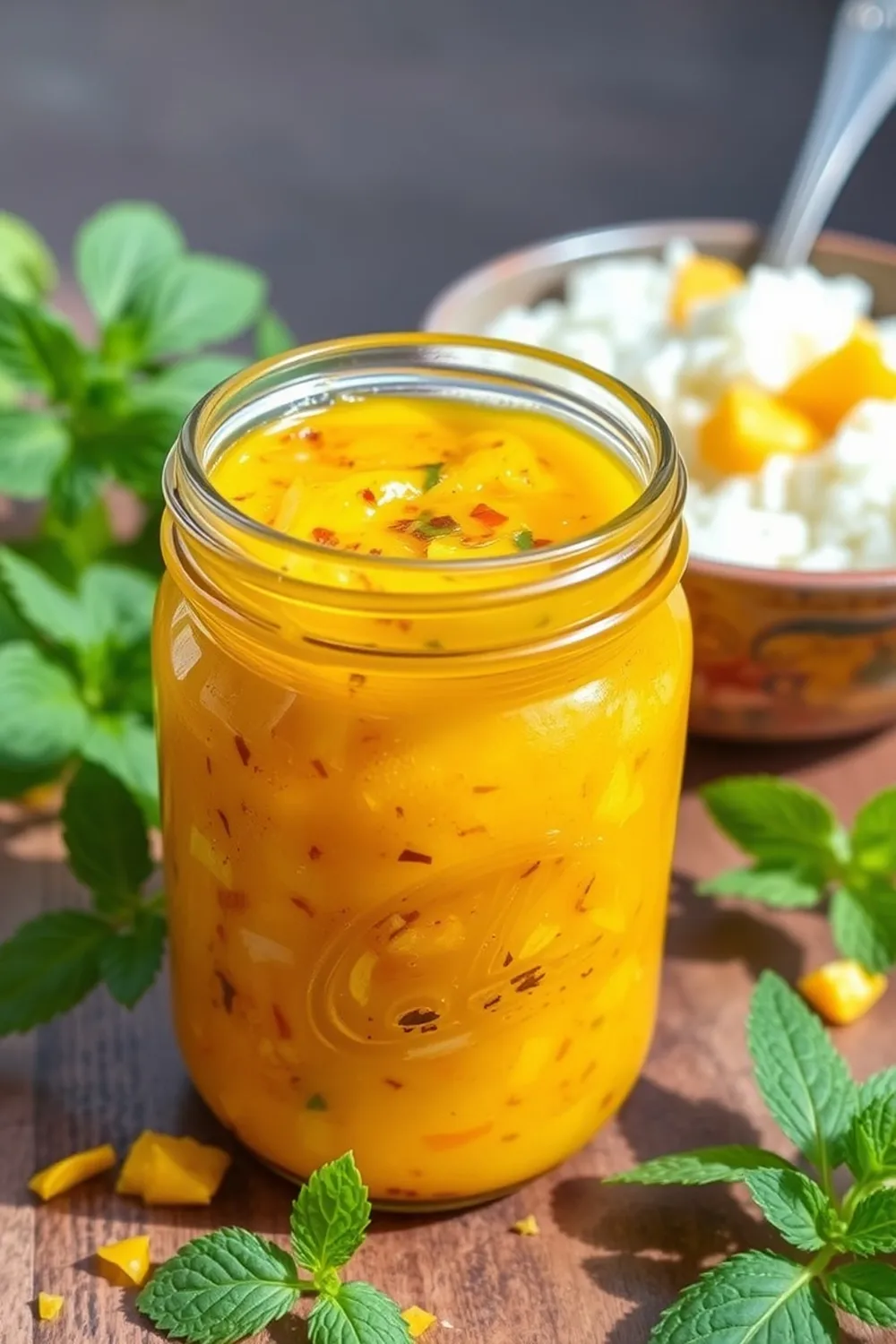
- Trim edges and peel the skin from raw mangoes. Grate finely.
- Dry roast fenugreek seeds until golden brown. Grind into a coarse powder.
- Heat 1.5 tbsp oil in a pan. Temper mustard seeds and hing (asafoetida).
- Add grated mango. Sauté for 5-7 minutes until the moisture evaporates.
- Mix turmeric powder, chili powder, and salt. Cook for 1-2 minutes until combined.
- Add the remaining oil gradually while stirring continuously.
- Stir in fenugreek powder and jaggery. Cook until the oil separates from the mixture.
- Cool completely before storing in an airtight container.
- Calories:45 kcal25%
- Energy:188 kJ22%
- Protein:0.5 g28%
- Carbohydrates:4 mg40%
- Sugar:2 mg8%
- Salt:120 g25%
- Fat:3 g20%
Last Updated on 6 months ago by Neha Deshmukh
Authentic Raw Mango Chutney Recipe – Fenugreek & Sesame Oil
Introduction
Oh, the vibrant tang of raw mangoes! This chutney instantly transports me back to my grandmother’s kitchen, filled with the aroma of spices and the happy chatter of family. It’s a flavor that just screams summer in India, and honestly, no meal feels complete without a little dollop of this sweet, spicy, and utterly addictive raw mango chutney. I’m so excited to share my family’s recipe with you – it’s been passed down for generations, and I promise, it’s easier to make than you think!
Why You’ll Love This Recipe
This isn’t just any mango chutney. The combination of raw mangoes, fragrant fenugreek, and nutty sesame oil creates a truly unique flavor profile. It’s the perfect balance of sweet, sour, spicy, and savory. Plus, it’s incredibly versatile – amazing with Indian meals, cheese and crackers, or even spread on a sandwich. You’ll love how this chutney brightens up any dish!
Ingredients
Here’s what you’ll need to whip up a batch of this deliciousness:
- 3 medium raw mangoes (about 500g)
- 4 tablespoons sesame oil (60ml)
- 2 tablespoons red chili powder (20g)
- 0.5 teaspoon turmeric powder (2.5g)
- 0.25 teaspoon fenugreek seeds (1.25g)
- 2 pinches hing (asafoetida)
- 1 teaspoon jaggery powder (5g)
- Salt to taste
Ingredient Notes
Let’s talk ingredients – getting these right makes all the difference!
Raw Mangoes: Selecting the Right Variety
Choosing the right raw mangoes is key. You want ones that are firm to the touch, but give slightly when pressed. Avoid mangoes that are bruised or have blemishes. Totapuri or Rajapuri varieties work wonderfully, but any firm, sour raw mango will do.
Fenugreek Seeds: The Unique Flavor Profile
Don’t skip the fenugreek seeds! They add a subtle bitterness and a wonderful aroma that’s so characteristic of Indian cuisine. Roasting them really brings out their flavor.
Sesame Oil: Regional Variations & Benefits
Sesame oil is traditional in this recipe, and it lends a beautiful nutty flavor. In some regions, mustard oil is used – feel free to experiment! Sesame oil is also known for its health benefits, being rich in antioxidants.
Hing (Asafoetida): A Traditional Touch
Hing might smell a little…interesting on its own, but trust me, it adds a savory depth that you won’t find anywhere else. It’s a staple in Indian cooking and aids digestion too!
Jaggery: Sweetness & Texture
Jaggery adds a lovely caramel-like sweetness and a slightly grainy texture. You can substitute with brown sugar if you can’t find jaggery, but the flavor won’t be quite the same.
Step-By-Step Instructions
Alright, let’s get cooking!
- First, give your raw mangoes a good wash. Trim the edges and peel the skin. Then, grate them finely – a box grater works perfectly.
- Next, take your fenugreek seeds and dry roast them in a pan over medium heat until they turn golden brown. Be careful not to burn them! Once cooled, grind them into a coarse powder.
- Now, heat 1.5 tablespoons of sesame oil in a pan over medium heat. Once hot, add the mustard seeds. When they start to splutter, add the hing.
- Add the grated mango to the pan and sauté for about 5 minutes, until most of the moisture has evaporated.
- Time for the spices! Mix in the turmeric powder, chili powder, and salt. Cook for another 2-3 minutes, stirring constantly, until everything is well combined.
- Now, gradually add the remaining sesame oil, a little at a time, while continuously stirring. This is important – it helps the chutney cook evenly and prevents it from sticking.
- Stir in the fenugreek powder and jaggery. Continue to cook, stirring constantly, until the oil starts to separate from the chutney. This is how you know it’s ready!
- Finally, remove from heat and let the chutney cool completely before storing it in an airtight container.
Expert Tips
- Don’t rush the cooking process. Low and slow is the way to go for the best flavor.
- Stirring constantly is key to prevent sticking and ensure even cooking.
- Taste and adjust the seasoning as needed. Everyone’s spice preference is different!
Variations
- Vegan Adaptation: This recipe is naturally vegan! Just double-check your jaggery source to ensure it hasn’t been processed with bone char.
- Spice Level Adjustment: If you like it extra spicy, add another tablespoon of chili powder. For a milder chutney, reduce the chili powder to 1 tablespoon or even less. My friend, Priya, loves adding a pinch of cayenne pepper for an extra kick!
- Festival Adaptations (e.g., Diwali, Ugadi): This chutney is a staple during festivals like Diwali and Ugadi. Some families add a touch of grated ginger for a warming flavor during the cooler months.
Long-Term Storage Options
Proper storage is essential to keep your chutney fresh.
- Refrigeration: Store in an airtight container in the refrigerator for up to 2 weeks.
- Freezing: For longer storage, freeze in small portions for up to 3 months.
Serving Suggestions
This chutney is incredibly versatile!
- Serve with Indian meals like dal-rice, roti, or paratha.
- Enjoy with cheese and crackers for a unique appetizer.
- Spread on sandwiches or wraps for a burst of flavor.
- Pair with samosas or pakoras for the perfect snack.
Storage Instructions
Always use a clean, dry spoon when taking chutney from the jar to prevent contamination. This will help extend its shelf life.
FAQs
How do I know when the raw mango chutney is cooked properly?
The chutney is ready when the oil starts to separate from the mixture and it has a thick, jam-like consistency.
Can I use lemon juice instead of raw mangoes?
While you can use lemon juice, it won’t have the same authentic flavor and texture as raw mangoes. Raw mangoes provide a unique tartness and fibrousness that lemon juice can’t replicate.
What is the best way to store homemade chutney?
Store in an airtight container in the refrigerator for up to 2 weeks, or freeze for longer storage.
Can I adjust the consistency of the chutney?
Yes! If it’s too thick, add a tablespoon of water at a time until you reach your desired consistency. If it’s too thin, cook for a few more minutes, stirring constantly.
What are the health benefits of fenugreek seeds in this chutney?
Fenugreek seeds are packed with nutrients and are known for their digestive benefits, blood sugar control, and antioxidant properties.
Is hing (asafoetida) essential for this recipe?
While not essential, hing adds a unique savory depth that really elevates the flavor. If you absolutely can’t find it, you can omit it, but I highly recommend trying to source it for the most authentic taste.



Neha Deshmukh
Neha holds a B.A. in History with a focus on Indian and world history, including ancient, medieval, and modern periods. At RecipesOfIndia.org — the world’s largest database of Indian recipes — she combines her love for food and history by exploring how India’s past has shaped its culinary traditions.