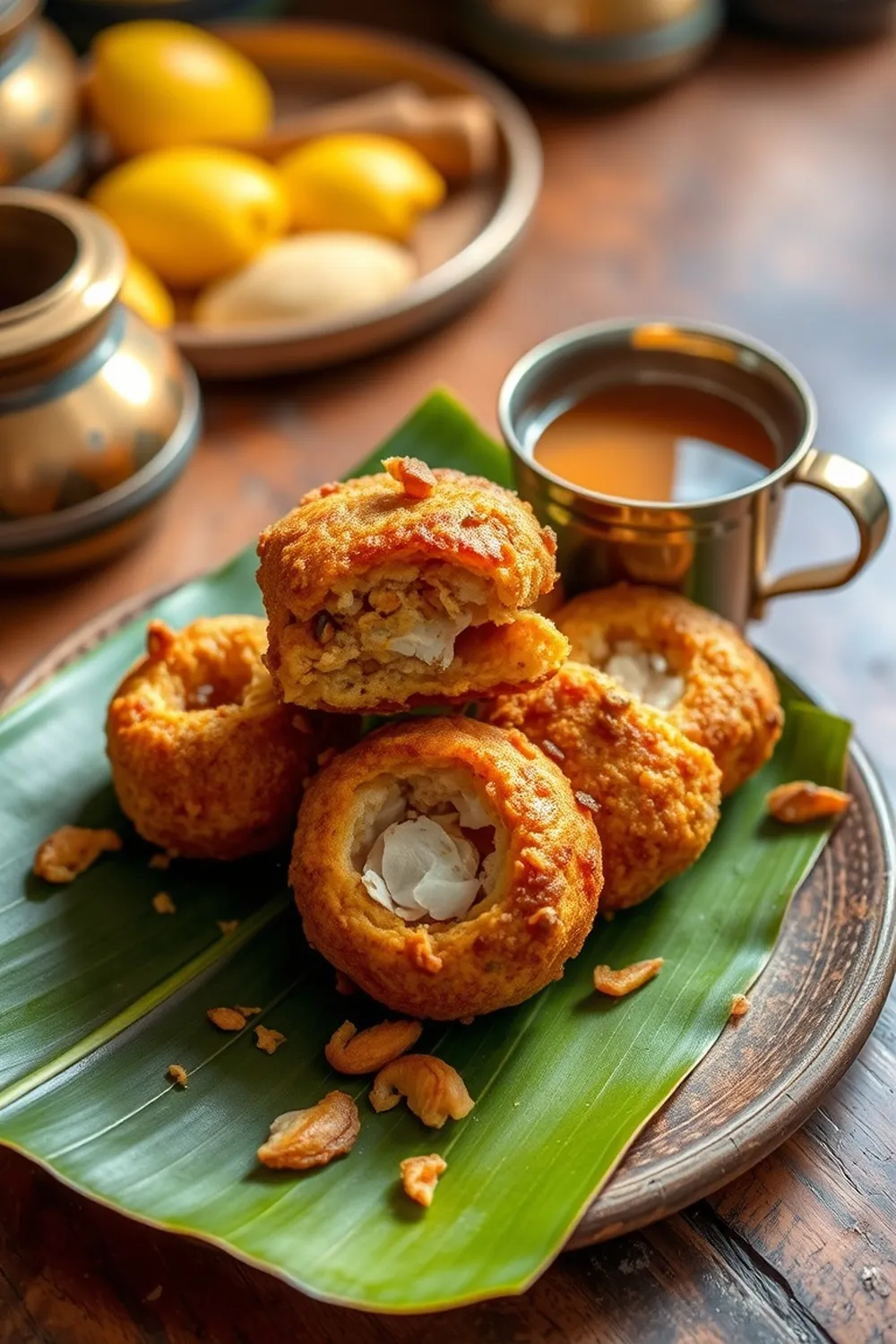
- In a bowl, whisk curd (yogurt), salt, and baking soda until frothy.
- Gradually add maida (all-purpose flour) and mix until the dough becomes smooth and elastic.
- Add chopped green chilies, ginger, curry leaves, shredded coconut, coriander leaves, and cumin seeds. Mix well.
- Cover the dough and let it rest for 4-6 hours to ferment.
- After resting, gently mix the dough again for a minute to aerate.
- Heat oil in a pan or wok. Wet your hands, take a small portion of the dough, and gently drop it into the hot oil.
- Fry on medium heat until golden brown and crispy, flipping occasionally.
- Drain excess oil on paper towels and serve hot with coconut chutney.
- Calories:61 kcal25%
- Energy:255 kJ22%
- Protein:3 g28%
- Carbohydrates:11 mg40%
- Sugar:1 mg8%
- Salt:144 g25%
- Fat:1 g20%
Last Updated on 6 months ago by Neha Deshmukh
Authentic South Indian Masala Vada Recipe – Crispy & Fluffy
Hey everyone! If you’ve ever been to South India, you know the magic of a perfectly made masala vada. That crispy exterior giving way to a soft, fluffy interior… honestly, it’s pure bliss. I remember the first time I tried to make these – it took a few attempts to get them just right, but trust me, the effort is SO worth it. Today, I’m sharing my family’s recipe with you, complete with all the tips and tricks I’ve learned along the way. Let’s get started!
Why You’ll Love This Recipe
This masala vada recipe isn’t just about a delicious snack; it’s about experiencing a little piece of South Indian culinary tradition. These vadas are incredibly flavorful, wonderfully textured, and surprisingly satisfying. They’re perfect for a quick evening tea, a festive celebration, or just when you’re craving something savory and crunchy. Plus, they’re not as complicated as they seem!
Ingredients
Here’s what you’ll need to make these amazing masala vadas:
- 1 cup curd (about 240ml)
- ½ – ¾ tsp salt (adjust to taste)
- 1 tsp baking soda
- 2 cups maida / plain flour (about 250g)
- 2 green chilies, finely chopped (adjust to your spice preference)
- 1 inch ginger, finely grated
- A few curry leaves, chopped
- 2 tbsp shredded coconut, fresh or unsweetened dried
- 2 tbsp chopped coriander leaves
- 1 tsp cumin seeds
- Oil, for deep frying
Ingredient Notes
Let’s talk ingredients for a sec, because getting these right makes all the difference!
- Curd: This is key. Use good quality, slightly sour curd. Dahi is best, but plain yogurt works too. Avoid sweetened yogurt! The tanginess helps with fermentation.
- Maida (Plain Flour): Maida gives the vada its signature texture. You can find it at most Indian grocery stores. All-purpose flour is a good substitute, but the vadas might be slightly less fluffy.
- Spice Level: South Indian cuisine varies a lot! Some regions love it super spicy, others prefer a milder flavor. Feel free to adjust the number of green chilies to your liking. My grandma always used a mix of green and red chilies for extra color and flavor.
- Fresh is Best: Seriously, use fresh curry leaves and coconut if you can. The aroma and flavor are just unbeatable. If using dried coconut, make sure it’s unsweetened.
Step-By-Step Instructions
Alright, let’s get cooking!
- In a large bowl, whisk the curd, salt, and baking soda together until it becomes frothy. This is important – the frothy texture helps with the lightness of the vada.
- Gradually add the maida, mixing with your hand until you get a soft, elastic dough. Don’t overwork it!
- Now for the flavor boost! Add the chopped green chilies, grated ginger, curry leaves, shredded coconut, coriander leaves, and cumin seeds. Mix everything well.
- Cover the bowl and let the batter rest for at least 4 hours, or even overnight, to ferment. This is crucial for that light and airy texture. I usually leave it overnight for the best results.
- Once rested, give the batter a good beat for a minute or two to aerate it. You’ll notice it becomes a little lighter and fluffier.
- Heat oil in a deep frying pan or kadhai over medium heat. To test if it’s ready, drop a tiny piece of batter into the oil – it should sizzle and rise to the surface immediately.
- Wet your hands with water (this prevents the batter from sticking) and take a small portion of the batter. Gently shape it into a small disc and carefully drop it into the hot oil.
- Fry the vadas on medium heat until they are golden brown and crispy on all sides. This usually takes about 3-4 minutes per batch. Don’t overcrowd the pan!
- Remove the vadas with a slotted spoon and drain them on paper towels to remove excess oil.
Expert Tips
- Oil Temperature is Key: Too hot, and the vadas will burn on the outside and remain raw inside. Too cold, and they’ll absorb too much oil. Medium heat is your friend!
- Don’t Overmix: Overmixing the batter develops the gluten in the maida, resulting in tough vadas.
- Wet Hands: Always wet your hands before shaping the vadas to prevent sticking.
- Fermentation: The fermentation process is vital. It’s what gives the vadas their light and airy texture.
Variations
Want to switch things up? Here are a few ideas:
- Vegan Adaptation: Swap the curd for plant-based yogurt (soy or coconut yogurt work well).
- Gluten-Free Adaptation: Use a blend of rice flour and besan (gram flour) instead of maida. You might need to adjust the amount of liquid to get the right consistency.
- Spice Level Adjustments: My friend loves adding a pinch of red chili powder for extra heat.
- Festival Adaptations: These are a staple during Ganesh Chaturthi and Onam! I often make a larger batch during these festivals.
Serving Suggestions
Masala vada is best enjoyed hot and fresh! Serve it with:
- Coconut chutney (a classic pairing!)
- Sambar
- Mint-coriander chutney
- A cup of hot chai
Storage Instructions
Leftover vadas can be stored in an airtight container at room temperature for a day or two. They will lose some of their crispness, but you can reheat them in a preheated oven or air fryer to restore some of the crunch.
FAQs
1. What type of curd is best for making masala vada?
Good quality, slightly sour dahi (Indian curd) is ideal. Plain yogurt works too, but avoid sweetened varieties.
2. Can I use wheat flour instead of maida? What adjustments should I make?
You can, but the texture will be different. Wheat flour will result in denser vadas. You might need to add a little more baking soda to help with the rise.
3. How do I know if the oil is at the right temperature for frying?
Drop a tiny piece of batter into the oil. If it sizzles and rises to the surface immediately, the oil is ready.
4. My vada is absorbing too much oil. What could be the reason?
The oil might not be hot enough, or the batter might be too wet. Make sure the oil is at the right temperature and adjust the batter consistency if needed.
5. Can I make the batter ahead of time? How long can it be stored?
Yes, you can! The batter can be stored in the refrigerator for up to 24 hours. Just give it a good mix before frying.
Enjoy making these delicious masala vadas! I hope this recipe brings a little bit of South Indian sunshine into your kitchen. Let me know how they turn out in the comments below!


Neha Deshmukh
Neha holds a B.A. in History with a focus on Indian and world history, including ancient, medieval, and modern periods. At RecipesOfIndia.org — the world’s largest database of Indian recipes — she combines her love for food and history by exploring how India’s past has shaped its culinary traditions.