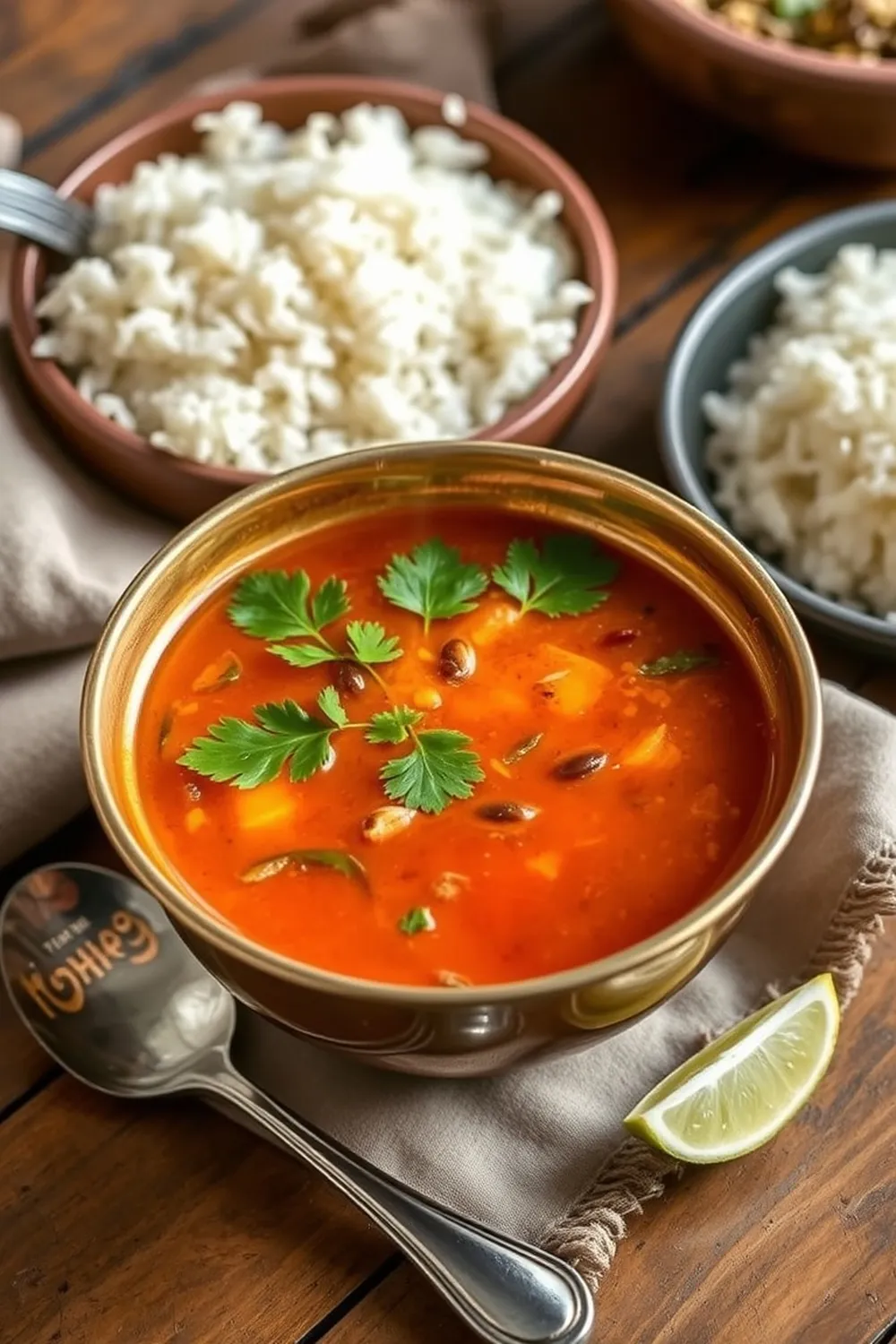
- Soak tamarind in 2 cups of hot water for 20 minutes. Heat oil in a pan and sauté chopped tomatoes and turmeric powder until fragrant. Strain tamarind juice into the pan.
- Boil tamarind juice for 3 minutes. Add rasam powder and simmer. In a separate pan, temper mustard seeds, curry leaves, and red chilies in ghee and oil. Pour the tempering into the rasam.
- Bring rasam to a rolling boil and garnish with coriander leaves. Serve hot with rice or as a soup.
- Calories:130 kcal25%
- Energy:543 kJ22%
- Protein:2 g28%
- Carbohydrates:15 mg40%
- Sugar:9 mg8%
- Salt:980 g25%
- Fat:8 g20%
Last Updated on 5 months ago by Neha Deshmukh
Authentic Tamarind Rasam Recipe – South Indian Soup
Hey everyone! If you’re craving something warm, comforting, and bursting with South Indian flavors, you have to try this tamarind rasam. It’s more than just a soup – it’s a hug in a bowl, and honestly, a staple in my family. I first learned to make this from my grandmother, and it’s been my go-to when I’m feeling under the weather or just need a little taste of home.
Why You’ll Love This Recipe
This rasam is incredibly flavorful, balancing tangy tamarind with aromatic spices. It’s surprisingly easy to make, ready in under 30 minutes, and perfect for a quick lunch or a light dinner. Plus, it’s known for its digestive benefits – a little something extra to feel good about! It’s a wonderfully versatile dish too; you can adjust the spice level to your liking and even add vegetables for a heartier meal.
Ingredients
Here’s what you’ll need to create this magic:
- 1 tamarind (gooseberry size)
- 1 small tomato
- 1 pinch turmeric powder (about 1/4 teaspoon)
- 1 teaspoon rasam powder
- 1 tablespoon coriander leaves, chopped
- Salt to taste
- 1 teaspoon ghee
- 2 teaspoons oil
- 1 teaspoon mustard seeds
- 1 sprig curry leaves (about 8-10 leaves)
- 2 red chilies, broken into pieces
Ingredient Notes
Let’s talk ingredients! A few little things can make a big difference:
- Tamarind: The quality of your tamarind really impacts the flavor. I prefer using a darker, more mature tamarind for a richer, tangier rasam. You can find these at most Indian grocery stores.
- Rasam Powder: There are tons of rasam powder blends out there! Some are spicier, some are more fragrant. Feel free to experiment with different brands to find your favorite. You can even make your own – it’s surprisingly easy!
- Oil: Traditionally, sesame oil is used in South Indian cooking, giving rasam a lovely nutty flavor. But you can absolutely use any neutral cooking oil like sunflower or vegetable oil if that’s what you have on hand. My mom always used groundnut oil, and that’s what I grew up with!
Step-By-Step Instructions
Alright, let’s get cooking!
- First, soak the tamarind in 2 cups of hot water for about 20 minutes. This helps to extract all that lovely tangy flavor.
- While the tamarind is soaking, heat the oil in a pan over medium heat. Add the chopped tomato and a pinch of turmeric powder. Sauté until the tomatoes are softened and fragrant, about 5-7 minutes.
- Strain the tamarind juice into the pan with the tomatoes. Discard the tamarind pulp.
- Bring the tamarind juice to a boil, then reduce the heat and simmer for about 3 minutes. This helps to concentrate the flavors.
- Add the rasam powder and salt to taste. Simmer for another 5 minutes, allowing the flavors to meld together.
- Now for the tempering! In a separate small pan, heat the ghee and remaining oil. Add the mustard seeds and wait for them to splutter.
- Once the mustard seeds splutter, add the curry leaves and red chilies. Fry for a few seconds until the curry leaves are crisp.
- Pour the tempering into the rasam. Give it a good stir.
- Bring the rasam to a rolling boil, then remove from heat. Garnish with fresh coriander leaves.
- Serve hot and enjoy!
Expert Tips
- Don’t skip the simmering steps! They’re crucial for developing the full flavor of the rasam.
- Adjust the amount of rasam powder to your liking. Start with 1 teaspoon and add more if you prefer a stronger spice flavor.
- For a smoother rasam, you can strain it through a fine-mesh sieve before serving.
Variations
- Vegan Adaptation: Simply substitute the ghee with an equal amount of oil.
- Spice Level Adjustment: Reduce the number of red chilies for a milder rasam, or add a pinch of cayenne pepper for extra heat.
- Festival/Illness Specific Rasam: My aunt always adds a small piece of jaggery when someone in the family is sick – she swears it helps soothe a sore throat! During festivals, we sometimes add a handful of chopped tomatoes and a small diced potato for a heartier version.
Serving Suggestions
Rasam is traditionally served hot with a generous helping of steamed rice. It’s also delicious on its own as a light soup, especially during the colder months. A dollop of yogurt on the side is a lovely addition too!
Storage Instructions
Leftover rasam can be stored in an airtight container in the refrigerator for up to 3 days. The flavors actually develop even more overnight! You can reheat it gently on the stovetop or in the microwave.
FAQs
- What is the best type of tamarind to use for rasam? A darker, more mature tamarind will give you the most flavorful rasam.
- Can I make rasam powder at home? Absolutely! There are many recipes available online. It’s a bit time-consuming, but worth it if you want complete control over the ingredients.
- How can I adjust the sourness of the rasam? If the rasam is too sour, add a pinch of sugar or jaggery. If it’s not sour enough, add a little more tamarind juice.
- Is rasam good for digestion? Yes! Rasam is known for its digestive properties, thanks to the tamarind, pepper, and other spices.
- Can I add vegetables to rasam? Definitely! You can add small pieces of tomatoes, potatoes, carrots, or even spinach. Just add them along with the tamarind juice and simmer until they’re tender.



Neha Deshmukh
Neha holds a B.A. in History with a focus on Indian and world history, including ancient, medieval, and modern periods. At RecipesOfIndia.org — the world’s largest database of Indian recipes — she combines her love for food and history by exploring how India’s past has shaped its culinary traditions.