- Blend chopped tomatoes and tamarind into a smooth puree without adding water.
- Heat sesame oil in a pan. Add mustard seeds and urad dal. Sauté until golden.
- Add ginger, curry leaves, and dry red chilies. Fry until aromatic.
- Mix in turmeric, red chili powder, and asafoetida. Stir on low heat.
- Pour the tomato-tamarind puree into the pan. Season with salt and cook, covered, for 15-18 minutes, or until thickened.
- Add fenugreek powder, jaggery, and 1 tablespoon of sesame oil. Cook for 2-3 more minutes.
- Cool completely and transfer to an airtight jar. Refrigerate for up to a week.
- Calories:60 kcal25%
- Energy:251 kJ22%
- Protein:1 g28%
- Carbohydrates:6 mg40%
- Sugar:4 mg8%
- Salt:150 g25%
- Fat:4 g20%
Last Updated on 6 months ago by Neha Deshmukh
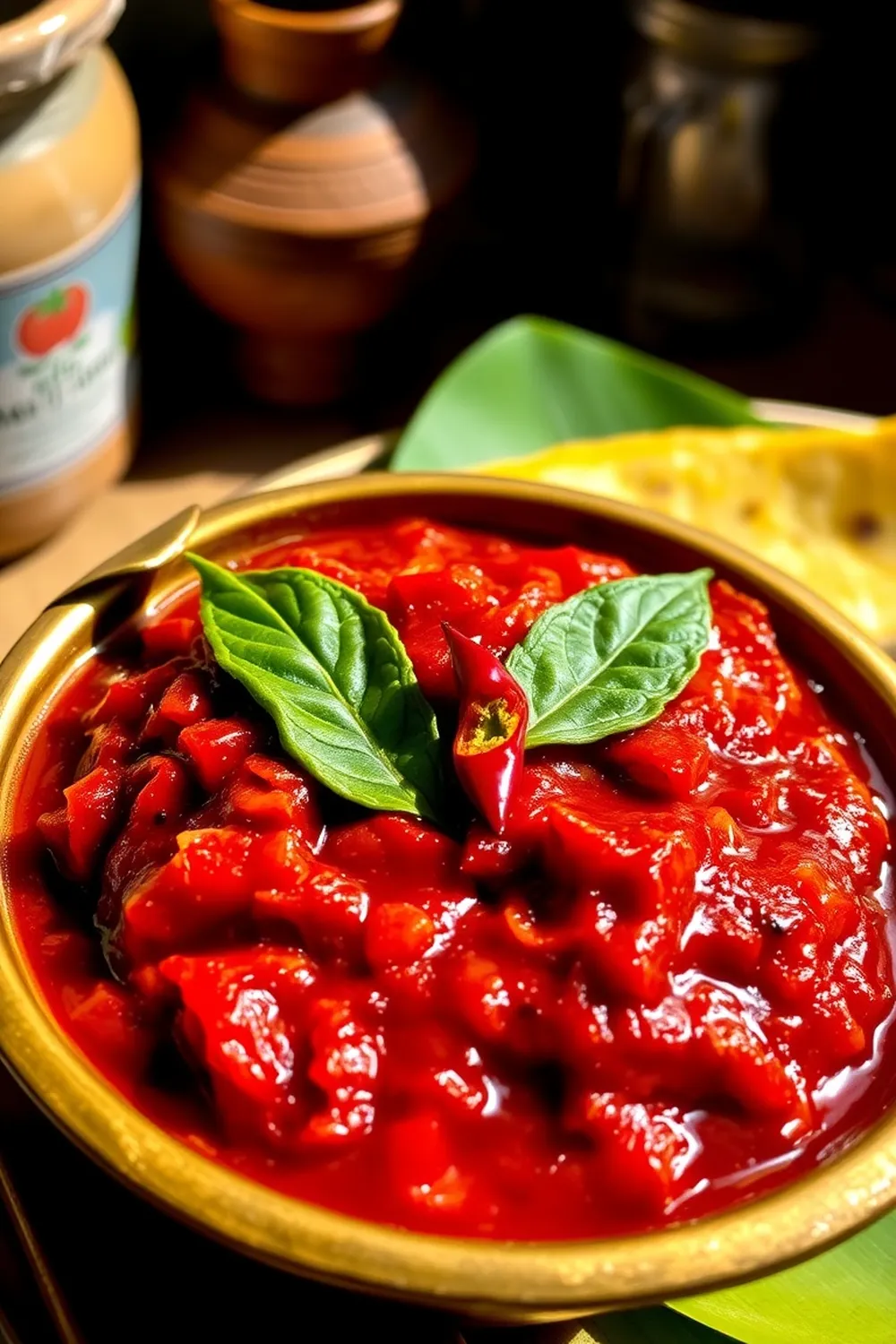
Authentic Tomato Tamarind Chutney Recipe – Sesame Oil & Spice Blend
Introduction
There’s just something about a good chutney, isn’t there? It instantly elevates a simple meal. This Tomato Tamarind Chutney is one of those recipes I keep coming back to – it’s tangy, a little sweet, and has a wonderful depth of flavour thanks to the sesame oil and spices. I first made this years ago, trying to recreate the taste of my grandmother’s version, and it’s become a family favourite ever since! It’s perfect with idli, dosa, vada, or even as a spread for sandwiches. You’ll be surprised how easy it is to make this little jar of deliciousness.
Why You’ll Love This Recipe
This chutney is more than just a condiment; it’s a flavour bomb! Here’s why you’ll adore it:
- Bold Flavours: The combination of tangy tamarind and sweet tomatoes is simply irresistible.
- Easy to Make: It comes together in under 30 minutes.
- Versatile: Perfect with so many dishes – breakfast, lunch, or dinner!
- Homemade Goodness: You control the ingredients and spice level.
Ingredients
Here’s what you’ll need to create this flavourful chutney:
- 300 grams tomatoes
- 1 teaspoon tamarind
- 3 tablespoons sesame oil
- ½ teaspoon mustard seeds
- 1 teaspoon urad dal (split black lentils)
- 1 teaspoon ginger (finely chopped)
- 10-12 curry leaves
- 1 dry red chili
- ½ teaspoon turmeric powder
- 1 teaspoon red chili powder
- ½ teaspoon asafoetida (hing)
- ½ teaspoon fenugreek powder
- 1 teaspoon jaggery
- Salt to taste
Ingredient Notes
Let’s talk ingredients! A few notes to help you get the best results:
- Sesame Oil: Don’t skip this! Sesame oil gives this chutney its signature flavour. It’s a staple in South Indian cooking. You can find it in most Indian grocery stores.
- Tamarind: I prefer using tamarind paste for convenience, but you can also use a small block of tamarind and soak it in warm water before extracting the pulp.
- Urad Dal: These little lentils add a lovely nutty flavour and help thicken the chutney.
- Asafoetida (Hing): This might seem like an unusual ingredient, but it adds a unique savoury depth. A little goes a long way! It’s often used to aid digestion too. You can find it as a powder or resin – powder is easier to use. If you can’t find it, you can omit it, but it does add a special touch.
- Jaggery: Jaggery is unrefined cane sugar, giving a lovely caramel-like sweetness. You can substitute with brown sugar if needed.
Step-By-Step Instructions
Alright, let’s get cooking!
- First, blend the chopped tomatoes and tamarind into a smooth puree. Don’t add any water – the tomatoes will release enough liquid.
- Now, heat the sesame oil in a pan over medium heat. Once hot, add the mustard seeds and urad dal. Watch closely – they’ll start to pop and turn golden brown.
- Add the finely chopped ginger, curry leaves, and dry red chili. Fry for a minute or so until everything is fragrant. The kitchen should smell amazing right about now!
- Mix in the turmeric powder, red chili powder, and asafoetida. Stir constantly on low heat for about 30 seconds – you don’t want the spices to burn.
- Pour in the tomato-tamarind puree. Season with salt and stir well. Cover the pan and let it cook for 15-18 minutes, stirring occasionally, until the chutney thickens.
- Finally, add the fenugreek powder, jaggery, and 1 tablespoon of sesame oil. Cook for another 2-3 minutes, stirring constantly.
- Let the chutney cool completely before transferring it to an airtight jar.
Expert Tips
- Don’t rush the cooking process. Allowing the chutney to simmer slowly helps the flavours meld together beautifully.
- Adjust the spice level to your liking. Add more or less red chili powder depending on how hot you like it.
- For a smoother chutney, you can strain it after cooking.
Variations
Want to switch things up? Here are a few ideas:
- Vegan Adaptation: This recipe is naturally vegan!
- Gluten-Free: Naturally gluten-free too.
- Spice Level: My family loves a medium spice level, but feel free to adjust the red chili powder. For a milder chutney, use ¼ teaspoon. For a hotter chutney, add up to 1 ½ teaspoons.
- Festival Adaptations: This chutney is a staple during festivals like Diwali, Pongal, and Onam. My aunt always makes a huge batch for Diwali!
Serving Suggestions
This chutney is incredibly versatile! Here are a few of my favourite ways to enjoy it:
- With idli and dosa for breakfast.
- As a side with vada and bonda.
- Spread on sandwiches or wraps.
- Served with rice and papadums.
Storage Instructions
Store the cooled chutney in an airtight jar in the refrigerator. It will stay fresh for up to a week.
FAQs
Let’s answer some common questions:
- What is the best type of tamarind to use for this chutney? I recommend using tamarind paste for convenience. If using a block, make sure it’s a good quality tamarind with a sour flavour.
- Can I make this chutney ahead of time and freeze it? Yes, you can! Freeze in small portions for easy use.
- What is asafoetida (hing) and where can I find it? Asafoetida is a resin with a pungent smell that adds a unique savoury flavour. You can find it in Indian grocery stores, usually in powder form.
- How can I adjust the sweetness of the chutney? Add more or less jaggery to suit your taste.
- What are some alternative oils I can use if I don’t have sesame oil? While sesame oil is traditional, you can use groundnut oil or sunflower oil as a substitute, but the flavour won’t be quite the same.



Neha Deshmukh
Neha holds a B.A. in History with a focus on Indian and world history, including ancient, medieval, and modern periods. At RecipesOfIndia.org — the world’s largest database of Indian recipes — she combines her love for food and history by exploring how India’s past has shaped its culinary traditions.