- Grind coconut with green chili, cumin seeds, mustard seeds, and ginger to a semi-fine paste. Set aside.
- Whisk curd until smooth and set aside.
- Sauté grated beetroot with turmeric and salt in a pan for 3-5 minutes.
- Add 1/2 cup water, cover, and cook for 10-12 minutes until beetroot softens.
- Mix in coconut paste and 1/2 cup water. Sauté for 5 minutes to remove raw aroma.
- Let the mixture cool, then blend in whisked curd. Adjust consistency with water if needed.
- Temper coconut oil with mustard seeds, red chili, curry leaves, and hing. Pour over pachadi.
- Mix well and serve chilled.
- Calories:151 kcal25%
- Energy:631 kJ22%
- Protein:6 g28%
- Carbohydrates:20 mg40%
- Sugar:8 mg8%
- Salt:300 g25%
- Fat:8 g20%
Last Updated on 6 months ago by Neha Deshmukh
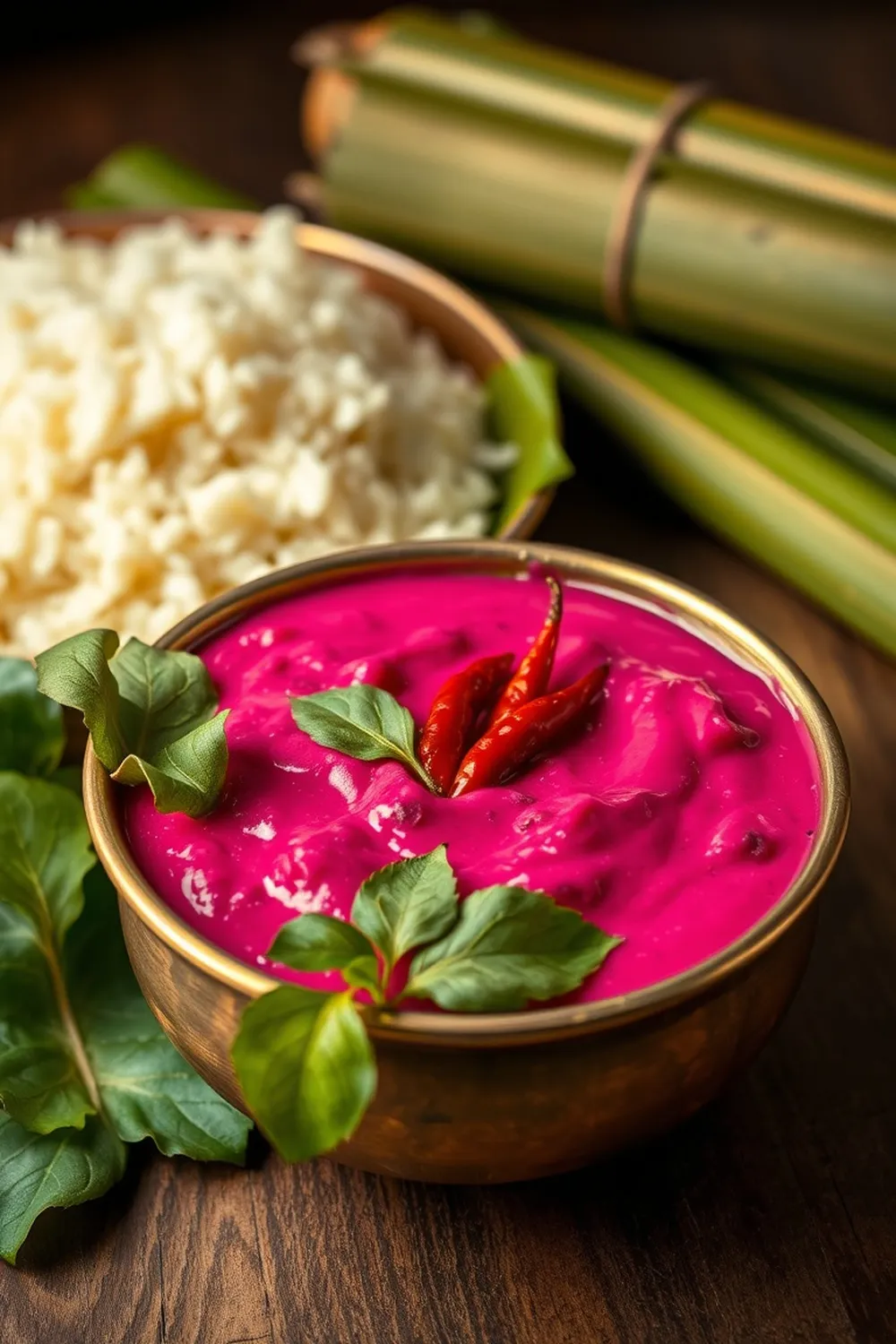
Beetroot Pachadi Recipe – Authentic Indian Coconut & Ginger Relish
Hey everyone! Today, I’m sharing a recipe that’s close to my heart – Beetroot Pachadi. It’s a vibrant, flavorful Indian relish that’s surprisingly easy to make. I first discovered this when visiting my aunt in Kerala, and it’s been a staple in my kitchen ever since. It’s the perfect balance of sweet, spicy, and tangy, and honestly, it just brightens up any meal.
Why You’ll Love This Recipe
This Beetroot Pachadi isn’t just delicious; it’s incredibly versatile. It’s a fantastic way to add a burst of flavor to your everyday meals. Plus, it’s a wonderful introduction to the world of South Indian cuisine. It’s quick to whip up, requires minimal ingredients, and is a guaranteed crowd-pleaser. Trust me, once you try it, you’ll be hooked!
Ingredients
Here’s what you’ll need to make this delightful pachadi:
- 1 cup beetroot, chopped (about 150g)
- ¼ teaspoon turmeric powder (about 1g)
- 1 cup thick curd (dahi) – about 240ml
- Salt to taste
- ¼ cup grated coconut (about 30g)
- 1 small green chili, finely chopped
- 2 tiny pieces ginger, roughly chopped
- ¼ teaspoon mustard seeds (about 1g)
- ¼ teaspoon cumin seeds (about 1g)
- 1 tablespoon coconut oil (about 15ml)
- ¾ teaspoon mustard seeds (for tempering – about 3g)
- 1 big red chili, broken into pieces
- 1 sprig curry leaves
- 1 pinch hing (asafoetida)
Ingredient Notes
Let’s talk ingredients! Beetroot is the star here, offering a lovely earthy sweetness. Using fresh, vibrant beetroot really makes a difference.
The coconut adds a beautiful texture and subtle sweetness. I always prefer freshly grated coconut for the best flavor, but you can use unsweetened desiccated coconut if needed.
Now, the tempering is key. Those mustard seeds, curry leaves, and a tiny pinch of hing (asafoetida) create an aromatic explosion that elevates the whole dish. Hing might seem unusual, but it adds a unique savory depth – don’t skip it if you can! It’s a little goes a long way.
Pachadi styles vary across South India. In Kerala, it’s often a bit sweeter, while in Tamil Nadu, it tends to be more tangy. This recipe leans towards a balanced flavor profile, but feel free to adjust to your liking.
Step-By-Step Instructions
Alright, let’s get cooking!
- First, let’s make the coconut-ginger paste. Grind the grated coconut with the green chili, cumin seeds, mustard seeds, and ginger in a blender or food processor until you get a semi-fine paste. Add a splash of water if needed to help it blend. Set this aside – it’s packed with flavor!
- Next, whisk the curd until it’s beautifully smooth. This is important for a creamy pachadi. Set it aside too.
- Now, heat the coconut oil in a pan over medium heat. Add the grated beetroot, turmeric powder, and salt. Sauté for about 3-5 minutes, just to get things started.
- Add ½ cup of water (about 120ml), cover the pan, and let the beetroot cook for 10-12 minutes, or until it’s nice and soft. You should be able to easily pierce it with a fork.
- Once the beetroot is cooked, add the coconut paste and another ½ cup of water (about 120ml). Sauté for about 5 minutes, stirring constantly, to get rid of any raw smell from the coconut.
- Let the mixture cool down a bit. Then, carefully blend in the whisked curd. If it’s too thick, add a little more water to reach your desired consistency.
- Time for the magic – the tempering! In a small pan, heat a little coconut oil. Add the mustard seeds and let them splutter. Then, add the red chili, curry leaves, and hing. Fry for a few seconds until fragrant.
- Pour this beautiful tempering over the pachadi. Mix well, and that’s it! Serve chilled for the best flavor.
Expert Tips
Want to make this pachadi perfect? Here are a few tips I’ve learned over the years:
- Consistency is key: Adjust the water to get the pachadi to your liking. Some people prefer it thicker, others thinner.
- Preventing curdling: Don’t add the hot beetroot mixture directly to the curd. Let it cool down a bit first to avoid curdling.
- Balancing flavors: Taste as you go! Adjust the salt, chili, and even a tiny squeeze of lemon juice to balance the sweet, spicy, and tangy flavors.
Variations
- Vegan Adaptation: Swap the curd for a plant-based yogurt alternative like coconut yogurt or cashew yogurt. It works beautifully!
- Gluten-Free Adaptation: This recipe is naturally gluten-free!
- Spice Level Adjustment: If you’re sensitive to spice, reduce the amount of green chili or remove the seeds. For a spicier kick, add another chili or a pinch of chili powder. My friend, Priya, loves to add a tiny bit of Kashmiri chili powder for color and mild heat.
- Festival Adaptations: Pachadi is a traditional part of Onam Sadhya (Kerala’s harvest festival) and is also often made during Ganesh Chaturthi.
Serving Suggestions
This Beetroot Pachadi is incredibly versatile. Here are a few ways to enjoy it:
- Serve it with a simple bowl of rice.
- Pair it with roti or paratha for a flavorful meal.
- Add it to your Thali (Indian platter) for a burst of freshness.
- It’s also fantastic as a side dish with dosas or idlis.
Storage Instructions
Leftover pachadi can be stored in an airtight container in the refrigerator for up to 2 days. The flavors might meld even more overnight!
FAQs
1. What is Pachadi and where does it originate from?
Pachadi is a traditional Indian side dish, typically a yogurt-based relish with fruits, vegetables, or spices. It’s particularly popular in South Indian cuisine, with variations found in Kerala, Tamil Nadu, Andhra Pradesh, and Karnataka.
2. Can I use store-bought coconut paste instead of freshly grated coconut?
Yes, you can! If you’re short on time, unsweetened store-bought coconut paste is a good substitute. Just make sure it doesn’t have any added sugar.
3. How can I adjust the sweetness of the Beetroot Pachadi?
Beetroot itself provides some sweetness. If you prefer a sweeter pachadi, you can add a tiny bit of jaggery or sugar.
4. What is hing (asafoetida) and can I skip it?
Hing is a pungent spice with a unique savory flavor. It aids digestion and adds depth to the pachadi. While you can skip it, it really does enhance the overall flavor.
5. My pachadi is too thick/thin – how do I fix it?
If it’s too thick, simply add a little more water, a tablespoon at a time, until you reach your desired consistency. If it’s too thin, you can add a tablespoon of grated coconut or a little more whisked curd.
6. Can this pachadi be made ahead of time?
Yes, you can! In fact, the flavors develop even more beautifully if you make it a few hours in advance. Just store it in the refrigerator until you’re ready to serve.
Enjoy making this delicious Beetroot Pachadi! I hope it brings a little bit of South Indian sunshine to your kitchen. Let me know how it turns out in the comments below!



Neha Deshmukh
Neha holds a B.A. in History with a focus on Indian and world history, including ancient, medieval, and modern periods. At RecipesOfIndia.org — the world’s largest database of Indian recipes — she combines her love for food and history by exploring how India’s past has shaped its culinary traditions.