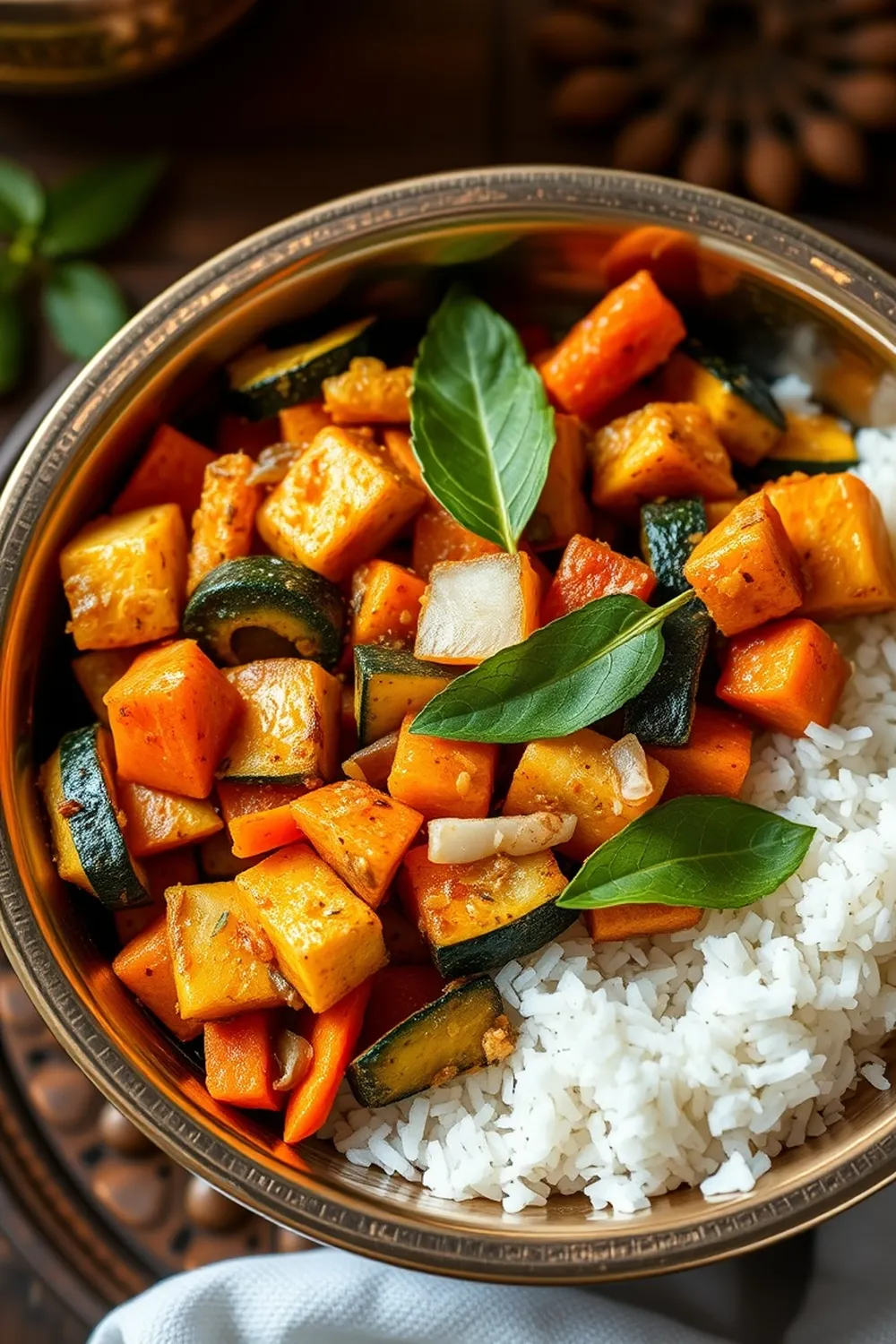
- Cook black-eyed peas in water until tender. Drain and set aside.
- Dry roast red chilies, coriander seeds, cumin seeds, mustard seeds, and peppercorns for 2-3 minutes. Cool, then grind into a coarse powder.
- Sauté coconut, garlic, and chopped onion in a pan until the coconut is lightly toasted. Add to the spice powder with tamarind and water; grind into a coarse paste.
- Return the paste to the pan. Add water to form a thick sauce. Stir in spinach, cooked black-eyed peas, salt, and turmeric, and simmer for 5-7 minutes.
- Heat oil in a small pan (tadka pan if available). Fry smashed garlic and pearl onions until golden brown. Pour the tempering over the curry and mix well. Serve with rice or roti.
- Calories:201 kcal25%
- Energy:840 kJ22%
- Protein:4 g28%
- Carbohydrates:16 mg40%
- Sugar:5 mg8%
- Salt:12 g25%
- Fat:14 g20%
Last Updated on 6 months ago by Neha Deshmukh
Black-Eyed Pea Curry Recipe – Spinach & Coconut South Indian Style
Hey everyone! Today, I’m sharing a recipe that’s close to my heart – a vibrant and flavorful Black-Eyed Pea Curry, made the South Indian way with spinach and coconut. I first stumbled upon a version of this when visiting my aunt in Tamil Nadu, and I’ve been tweaking it ever since to get it just right. It’s comforting, packed with goodness, and surprisingly easy to make. Let’s get cooking!
Why You’ll Love This Recipe
This isn’t your average curry. It’s a beautiful blend of earthy black-eyed peas, bright spinach, and the creamy richness of coconut. The South Indian spice blend gives it a unique depth of flavor, and the tamarind adds a lovely tang. Plus, it’s a fantastic way to get a healthy dose of protein and iron into your diet. Trust me, one bite and you’ll be hooked!
Ingredients
Here’s what you’ll need to make this delicious curry:
- 1 cup black-eyed peas
- 5 dried red chillies
- 1 tablespoon coriander seeds
- 1 teaspoon cumin seeds
- 1 teaspoon black mustard seeds
- 4-5 black peppercorns
- 1 cup grated coconut
- 2-3 garlic cloves
- 1 small red onion
- 1 marble-sized ball tamarind
- 3 cups baby spinach
- Salt to taste
- 1 teaspoon turmeric powder
- 2 tablespoons grapeseed oil (or any neutral oil)
- 3-4 garlic cloves (smashed)
- 3-4 pearl onions (sliced)
Ingredient Notes
Let’s talk ingredients! A few notes to help you get the best results:
- Black-Eyed Peas: These are the stars of the show! They have a lovely, slightly nutty flavor and cook up beautifully.
- South Indian Spice Blend: The combination of red chillies, coriander, cumin, mustard seeds, and peppercorns is what gives this curry its distinctive South Indian flavor. Don’t skip it!
- Fresh Grated Coconut: Seriously, if you can get your hands on fresh coconut, do it. It makes a world of difference. The flavor is so much brighter and more fragrant.
- Tamarind: This adds a wonderful tanginess that balances the richness of the coconut. You can find tamarind paste or blocks at most Indian grocery stores.
Step-By-Step Instructions
Alright, let’s get cooking!
- First, cook the black-eyed peas in water until they’re nice and soft. This usually takes about 30-40 minutes. Once cooked, drain them and set aside.
- Now, let’s make the spice powder. Dry roast the red chillies, coriander seeds, cumin seeds, mustard seeds, and peppercorns in a pan for 2-3 minutes, until fragrant. Let them cool completely, then grind them into a coarse powder.
- Next, sauté the grated coconut, garlic cloves, and chopped red onion in a pan until the coconut is lightly toasted. This adds a lovely depth of flavor. Add this mixture to the spice powder, along with the tamarind and a little water. Grind it all into a coarse paste.
- Pour the paste back into the pan. Add some water to create a thick sauce. Stir in the spinach, cooked black-eyed peas, salt, and turmeric powder. Simmer for 5-7 minutes, allowing the flavors to meld together.
- Finally, let’s make the tadka (tempering). Heat the oil in a separate small pan (a tadka pan is ideal!). Fry the smashed garlic and sliced pearl onions until they’re golden brown and crispy. Pour this tempering over the curry and mix well.
And that’s it! Your Black-Eyed Pea Curry is ready to enjoy.
Expert Tips
- Don’t be afraid to adjust the amount of red chillies to your liking.
- If your tamarind is very dry, soak it in warm water for 10-15 minutes before grinding.
- A good quality non-stick pan will prevent the coconut from sticking and burning.
Variations
- Vegan Adaptation: This recipe is naturally vegan!
- Spice Level Adjustment: For a milder curry, reduce the number of red chillies. For a spicier kick, add a pinch of cayenne pepper. My friend, Priya, loves to add a finely chopped green chilli for extra heat!
- Gluten-Free: This recipe is naturally gluten-free.
- Festival Adaptations: This curry is often made during Makar Sankranti and Pongal in South India. It’s considered an auspicious dish to bring good luck for the harvest season.
Serving Suggestions
This curry is fantastic served with a steaming bowl of rice or warm rotis. A side of papadums and a dollop of yogurt complete the meal perfectly.
Storage Instructions
Leftovers can be stored in an airtight container in the refrigerator for up to 3 days. It also freezes well – just thaw completely before reheating.
FAQs
1. What is the best way to soak and cook black-eyed peas for this curry?
I usually soak the black-eyed peas overnight, then drain and rinse them before cooking. This helps them cook faster and more evenly. You can also pressure cook them for about 15-20 minutes.
2. Can I use store-bought spice powder instead of making my own? What would be a good substitute?
While homemade spice powder is best, you can use a good quality South Indian curry powder as a substitute. Look for one that contains coriander, cumin, and red chillies.
3. What is the significance of the tempering (tadka) in this recipe?
The tadka is crucial! It adds a burst of flavor and aroma to the curry. The hot oil infuses the spices, releasing their essential oils and creating a truly delicious experience.
4. Can I freeze this black-eyed pea curry?
Absolutely! Let it cool completely before transferring it to a freezer-safe container. It will keep well for up to 2 months.
5. What type of rice or roti pairs best with this curry?
Basmati rice is a classic choice, but any long-grain rice will work well. For rotis, I prefer whole wheat or missi roti (made with chickpea flour).
6. I don’t have fresh coconut, can I use desiccated coconut? If so, what’s the conversion?
Yes, you can! Use about ¾ cup of desiccated coconut for every 1 cup of grated coconut. You might want to add a tablespoon or two of water to help it blend into a paste.
Enjoy! Let me know in the comments if you try this recipe and how it turns out. I love hearing from you all.


Neha Deshmukh
Neha holds a B.A. in History with a focus on Indian and world history, including ancient, medieval, and modern periods. At RecipesOfIndia.org — the world’s largest database of Indian recipes — she combines her love for food and history by exploring how India’s past has shaped its culinary traditions.