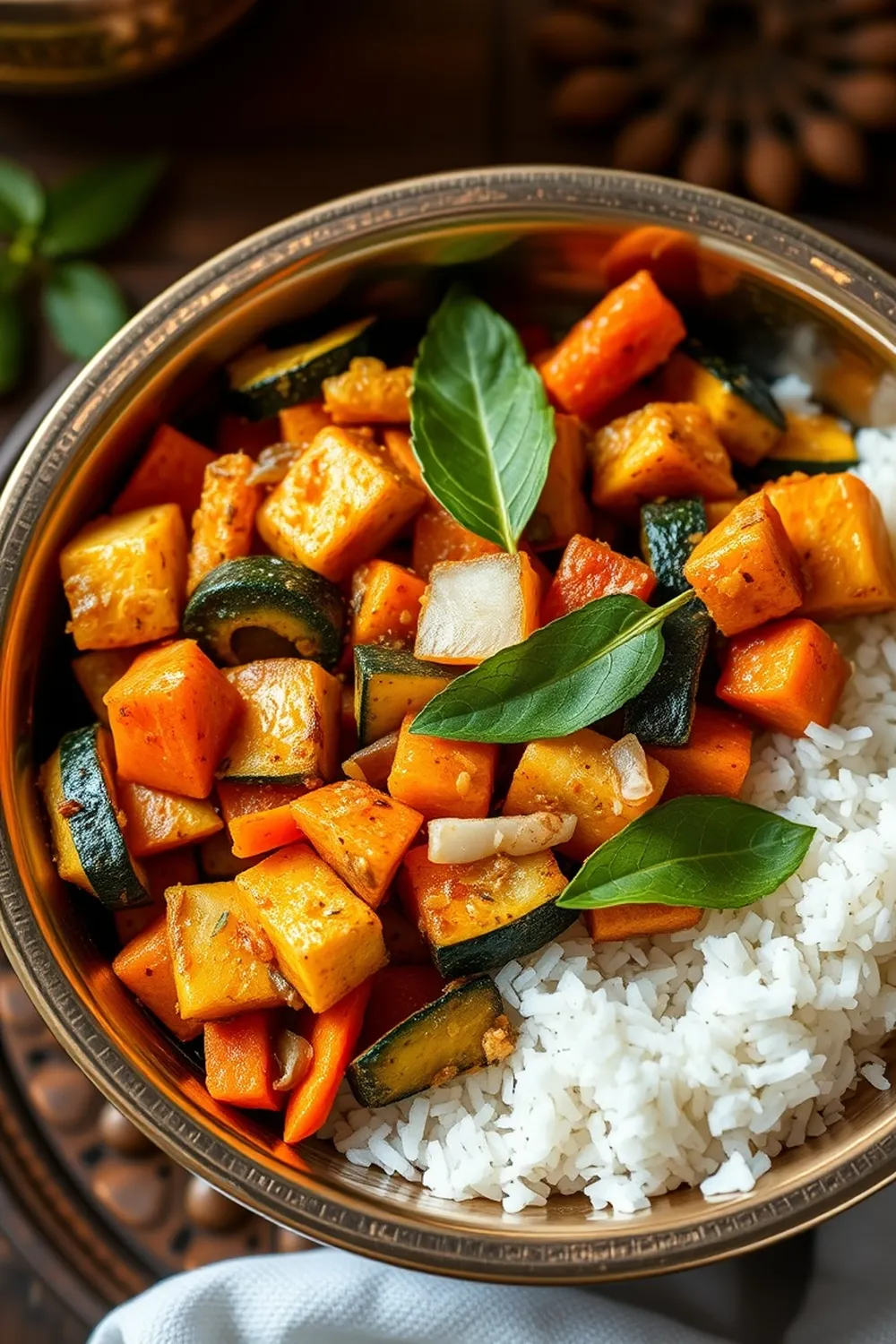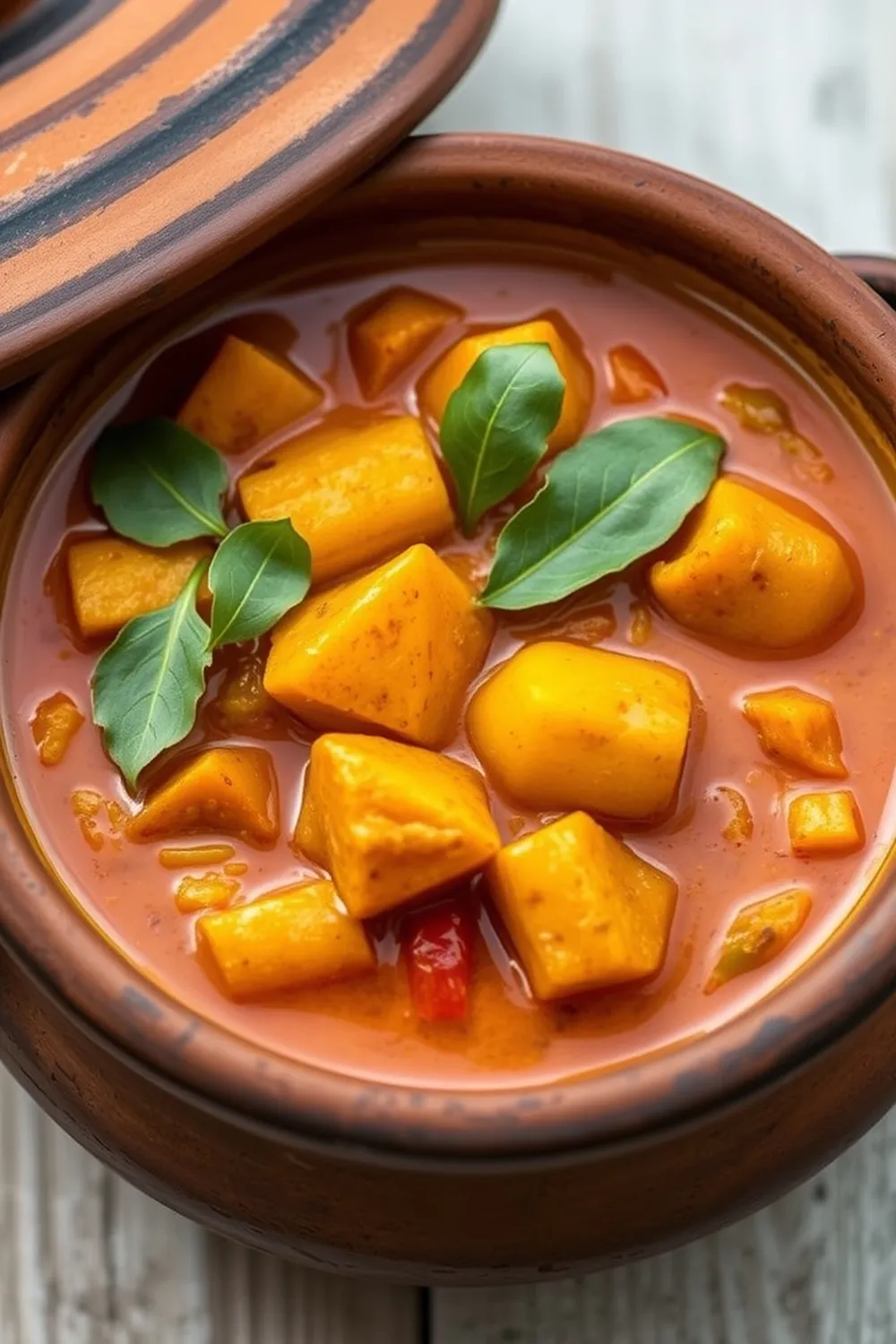
- Cook cubed butternut squash with 1 cup water, 1/2 teaspoon turmeric, 1 sprig curry leaves, and salt until tender but not mushy.
- Extract tamarind juice by soaking a small tamarind ball in 1/2 cup warm water; set aside.
- Heat 1 teaspoon coconut oil in a skillet. Fry 2 dried red chilies and 1/2 teaspoon fenugreek seeds briefly (avoid burning).
- Grind fried chilies, fenugreek seeds, 1/2 cup grated coconut, and 1/4 cup water into a smooth paste.
- Add the coconut paste and tamarind juice to the cooked squash. Pour in 1 cup water and simmer for 5 minutes.
- Heat the remaining oil in a skillet. Add 1 teaspoon mustard seeds, 2 tablespoons chopped shallots, 1 sprig curry leaves, and 1 chopped red chili. Sauté until shallots turn golden.
- Pour the seasoning over the curry and mix gently. Serve hot with rice.
- Calories:280 kcal25%
- Energy:1171 kJ22%
- Protein:5 g28%
- Carbohydrates:35 mg40%
- Sugar:10 mg8%
- Salt:400 g25%
- Fat:15 g20%
Last Updated on 5 months ago by Neha Deshmukh
Butternut Squash Curry Recipe – Tamarind & Coconut South Indian Style
Introduction
There’s just something so comforting about a warm, flavorful curry on a cozy evening, don’t you think? I stumbled upon this butternut squash curry a few years ago, trying to bring a little bit of South Indian sunshine into my kitchen. It’s a beautiful blend of sweet butternut squash, tangy tamarind, and creamy coconut – a truly unique and delicious combination. It’s become a regular in my rotation, and I’m so excited to share it with you!
Why You’ll Love This Recipe
This isn’t your typical curry. The butternut squash adds a lovely sweetness, balanced perfectly by the sour tamarind and rich coconut. It’s a surprisingly easy recipe to make, even though the flavors are complex and layered. Plus, it’s a fantastic way to enjoy seasonal produce with a South Indian twist.
Ingredients
Here’s what you’ll need to create this delightful curry:
- 3 cups butternut squash, chopped and cubed (1-inch pieces) – about 400g
- ½ – ¾ cup grated coconut – about 60-90g (depending on how coconutty you like it!)
- 2 cups water – 480ml (plus extra for soaking tamarind)
- ½ cup tamarind juice – 120ml (extracted from a small tamarind ball)
- 1 teaspoon salt – 6g
- 1 teaspoon turmeric powder – 4g
- 2 sprigs curry leaves
- ¾ – 1 teaspoon fenugreek seeds – 3-5g
- 3 red chilies
- 2 teaspoons coconut oil – 10ml
- ¾ teaspoon mustard seeds – 3g
- 4 shallots/small onions, chopped
Ingredient Notes
Let’s talk ingredients! Getting these right will really elevate your curry.
Butternut Squash: Choosing & Preparing
Look for a butternut squash that feels heavy for its size, with a hard, unblemished rind. I find it easier to peel and cube the squash before cooking – it saves a lot of effort later.
Coconut: Fresh vs. Dried – What to Use
Freshly grated coconut is amazing if you can get it! It adds a wonderful aroma and texture. However, unsweetened desiccated coconut works perfectly well too. Just make sure it’s not the sweetened kind.
Tamarind: A South Indian Flavor Staple
Tamarind is key to that signature South Indian tang. You can find tamarind pulp or blocks at most Indian grocery stores. I prefer using a small ball of tamarind and extracting the juice myself – it just tastes fresher.
Curry Leaves: The Aromatic Herb
Don’t skip the curry leaves! They have a unique, citrusy aroma that’s essential to South Indian cooking. You can find them fresh or frozen at Indian grocery stores.
Fenugreek Seeds: A Unique Spice Profile
Fenugreek seeds have a slightly bitter, maple-like flavor. A little goes a long way, so don’t overdo it. They add a lovely depth to the curry.
Mustard Seeds: The Pop of Flavor
Black mustard seeds are what we’re after here. When heated, they pop and release a nutty, pungent flavor. It’s a classic South Indian tempering technique.
Step-By-Step Instructions
Alright, let’s get cooking!
- First, let’s get that tamarind juice going. Soak a small ball of tamarind in about ½ cup of warm water for about 15-20 minutes. Once softened, squeeze out the juice, discarding the seeds and pulp. Set aside.
- In a pot, combine the cubed butternut squash, 1 cup of water, turmeric powder, curry leaves sprig, and salt. Bring to a boil, then reduce heat and simmer until the squash is tender but not mushy – about 15-20 minutes.
- While the squash is simmering, let’s make the coconut paste. Heat 1 teaspoon of coconut oil in a skillet over medium heat. Add the red chilies and fenugreek seeds and fry briefly (about 30 seconds) – be careful not to burn them!
- Transfer the fried chilies and fenugreek seeds to a blender or food processor. Add the grated coconut and 1 cup of water. Grind into a smooth paste.
- Once the squash is cooked, add the coconut paste and tamarind juice to the pot. Pour in the remaining water and simmer for another 5 minutes, allowing the flavors to meld.
- Now for the tempering! Heat the remaining 1 teaspoon of coconut oil in a separate skillet. Add the mustard seeds and wait for them to pop. Then, add the chopped shallots and curry leaves sprig, and sauté until the shallots turn golden brown. Add the remaining red chili.
- Pour the tempering over the curry and mix gently. Serve hot with rice!
Expert Tips
- Don’t overcook the squash! You want it to hold its shape.
- Taste and adjust the seasoning as needed. Everyone’s palate is different.
- For a smoother curry, you can strain the coconut paste before adding it to the squash.
Variations
- Vegan Adaptation: This recipe is naturally vegan!
- Gluten-Free Adaptation: This recipe is naturally gluten-free!
- Spice Level Adjustment (Mild to Spicy): Adjust the number of red chilies to your liking. Remove the seeds for a milder flavor.
- Festival Adaptation (Onam/Pongal): This curry would be a lovely addition to a festive Onam or Pongal sadhya (feast).
Serving Suggestions
This butternut squash curry is best served hot with a generous portion of steamed rice. A side of papadums (Indian crispy wafers) and a dollop of yogurt would complete the meal perfectly.
Storage Instructions
Leftovers can be stored in an airtight container in the refrigerator for up to 3 days. Reheat gently on the stovetop or in the microwave.
FAQs
What is the origin of this Butternut Squash Curry?
This recipe is inspired by traditional South Indian curries, particularly those from Kerala and Tamil Nadu, but adapted to use butternut squash, which isn’t traditionally used.
Can I use a different squash variety?
Absolutely! Kabocha squash or even pumpkin would work well in this recipe.
How can I adjust the sourness of the curry?
Adjust the amount of tamarind juice. Start with ½ cup and add more to taste.
What is the best way to extract tamarind juice?
Soak the tamarind in warm water for about 20 minutes, then squeeze out the juice with your hands, discarding the seeds and pulp.
Can this curry be made ahead of time?
Yes, you can make the curry a day ahead. The flavors will actually develop even more overnight! Just add the tempering right before serving.
Is it possible to freeze this curry?
Yes, you can freeze it, but the texture of the squash might change slightly. It’s best to freeze it without the tempering and add that when reheating.



Neha Deshmukh
Neha holds a B.A. in History with a focus on Indian and world history, including ancient, medieval, and modern periods. At RecipesOfIndia.org — the world’s largest database of Indian recipes — she combines her love for food and history by exploring how India’s past has shaped its culinary traditions.