- Soak basmati rice in water for 30 minutes.
- Boil 10 cups of salted water. Add rice and cook until 80% done. Drain and set aside.
- In a pressure cooker, heat 2 tbsp ghee. Fry onions until golden brown; set aside. Fry cashews and set aside.
- Add 1 tbsp ghee. Sauté remaining onions and green chilies until translucent.
- Add chicken, tomatoes, ginger-garlic paste, turmeric, 1 tbsp garam masala, and salt. Cook for one whistle.
- Release pressure. Stir in lemon juice and yogurt.
- Layer chicken masala in a saucepan. Top with rice, mint, coriander, remaining garam masala, fried onions, cashews, rosewater, saffron milk, and 1 tbsp ghee.
- Seal with foil and lid. Cook on low heat (dum) for 25-30 minutes. Serve with raita and papad.
- Calories:650 kcal25%
- Energy:2719 kJ22%
- Protein:20 g28%
- Carbohydrates:75 mg40%
- Sugar:5 mg8%
- Salt:500 g25%
- Fat:25 g20%
Last Updated on 6 months ago by Neha Deshmukh
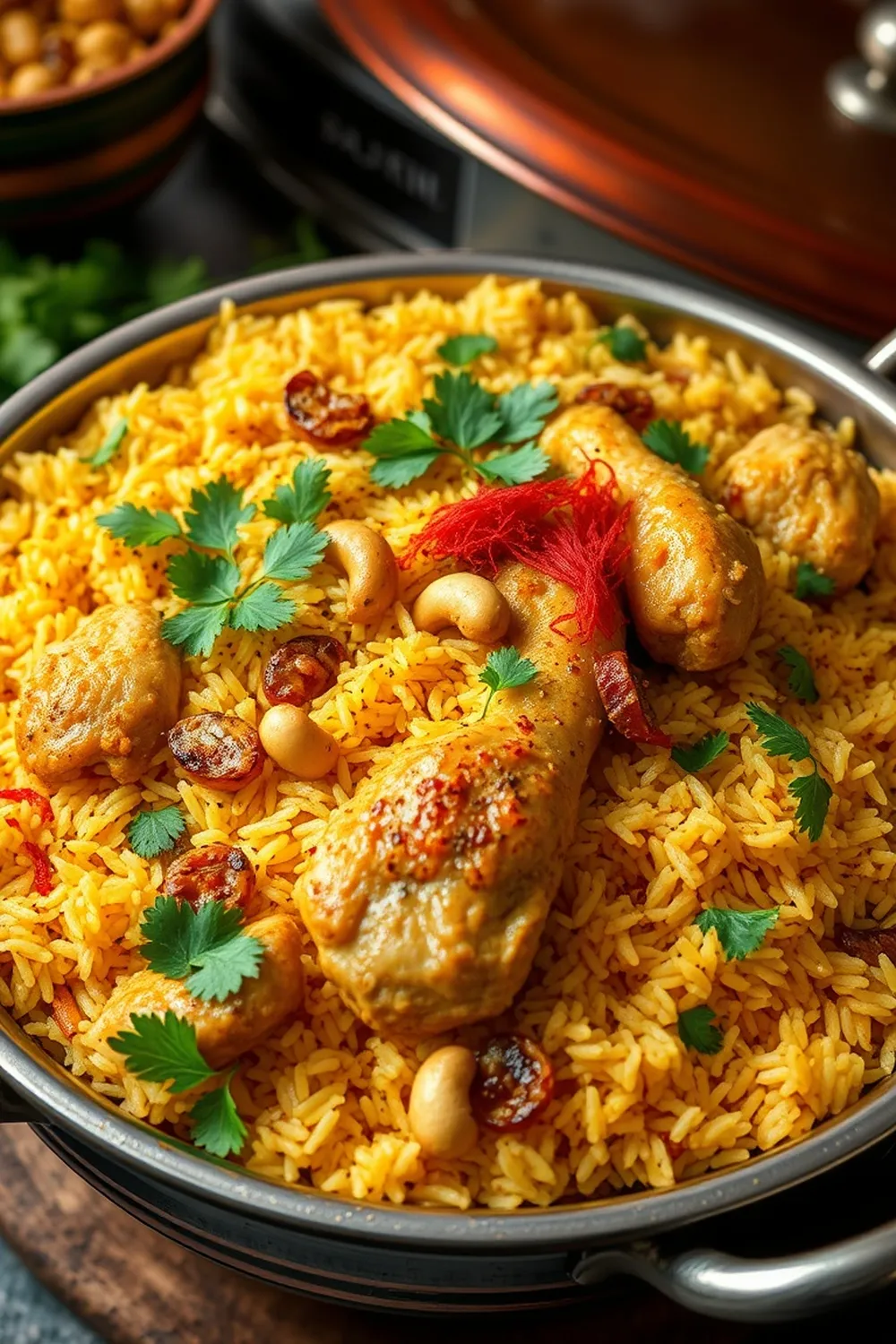
Chicken Biryani Recipe – Saffron, Rosewater & Traditional Indian Flavors
Hey everyone! If there’s one dish that screams ‘celebration’ in Indian households, it’s Biryani. The fragrant rice, tender chicken, and that beautiful layering… it’s just pure comfort food. I remember the first time I attempted Biryani – it felt a little daunting, but the incredible aroma filling my kitchen made it all worthwhile. Today, I’m sharing my go-to Chicken Biryani recipe, packed with saffron, a hint of rosewater, and all those traditional flavors we adore.
Why You’ll Love This Recipe
This isn’t just a Biryani recipe, it’s the Biryani recipe you’ll reach for again and again. It’s relatively easy, even for beginners, and delivers a restaurant-quality taste. The combination of saffron and rosewater adds a subtle floral aroma that elevates the dish, and the slow ‘dum’ cooking method ensures the flavors meld beautifully. Plus, it’s perfect for gatherings – everyone loves a good Biryani!
Ingredients
Here’s what you’ll need to create this masterpiece:
- 3 cups basmati rice
- 1 kg chicken, bone-in preferred
- 4 tbsp ghee (clarified butter)
- 4 large onions
- 1 tbsp cashew nuts
- 6 green chillies
- 1 tbsp ginger paste
- 1 tbsp garlic paste
- 0.5 tsp turmeric powder
- 1 tbsp garam masala powder
- 2 large tomatoes
- 0.25 cup mint leaves
- 0.25 cup coriander leaves
- 0.5 cup yogurt
- 1 lemon juice
- 1 tbsp rosewater
- 5-6 saffron strands
- Salt to taste
- 10 cups water (for cooking rice)
Ingredient Notes
Let’s talk ingredients – a few tips to make sure everything’s just right!
Basmati Rice: Choosing the Right Grain
Basmati is key! Look for aged basmati rice – it’s longer, fluffier, and less likely to become mushy. I usually get the Daawat or India Gate brands.
Ghee: The Importance of Clarified Butter
Ghee adds a richness and flavor that butter just can’t match. Don’t skimp on it! If you don’t have ghee, you can use butter, but the flavor won’t be quite the same.
Spices: Exploring Garam Masala & Turmeric
Garam masala is a blend of warming spices, and every family has their own version. Feel free to use your favorite brand. Turmeric adds color and a subtle earthy flavor – plus, it’s great for you!
Regional Variations in Biryani
Biryani varies hugely across India! Hyderabadi Biryani is known for its spicy kick, while Lucknowi Biryani is more delicate and aromatic. This recipe leans towards a more generally enjoyed style, but feel free to adapt it to your preferences.
Chicken Quality & Marinade Potential
Bone-in chicken adds so much flavor. If you can, use chicken pieces with some skin on. While a marinade isn’t strictly necessary for this recipe, you could marinate the chicken in yogurt and spices for a few hours for extra tenderness.
Step-By-Step Instructions
Alright, let’s get cooking!
- Soak the Rice: Start by soaking the basmati rice in water for at least 30 minutes. This helps it cook evenly and become nice and fluffy.
- Parboil the Rice: Boil 10 cups of salted water. Add the soaked rice and cook until it’s about 80% done – it should still have a slight bite. Drain and set aside.
- Fry the Onions & Cashews: In a pressure cooker, heat 2 tbsp ghee. Fry sliced onions until they’re golden brown and crispy. Set them aside. Fry the cashew nuts until golden and set aside. These will be our beautiful garnish!
- Sauté Aromatics & Chicken: Add another 1 tbsp ghee to the pressure cooker. Sauté the remaining sliced onions and chopped green chillies until they’re translucent. Then, add the chicken, chopped tomatoes, ginger-garlic paste, turmeric powder, ½ tbsp garam masala, and salt. Cook for one whistle.
- Release & Finish the Chicken: Let the pressure release naturally. Stir in the lemon juice and yogurt. This tenderizes the chicken and adds a lovely tang.
- Layer the Biryani: Now for the fun part! In a large, heavy-bottomed saucepan, layer the chicken masala. Top with the parboiled rice, chopped mint and coriander leaves, the remaining garam masala, fried onions, cashew nuts, rosewater, saffron milk (a pinch of saffron soaked in 2 tbsp warm milk), and 1 tbsp ghee.
- Dum Cooking: Seal the saucepan tightly with foil, then cover with a lid. Cook on the lowest heat (dum) for 25-30 minutes. This slow cooking process is what makes the Biryani so special.
Expert Tips
Here are a few things I’ve learned over the years to make my Biryani perfect:
Achieving the Perfect Dum (Slow Cooking)
The ‘dum’ is crucial. It’s all about trapping the steam inside the pot to cook the Biryani gently. Make sure the lid is sealed tightly! You can even place a heavy object on top of the lid for extra security.
Rice Consistency & Avoiding Stickiness
Don’t overcook the rice when parboiling. It should be 80% done, as it will continue to cook during the dum process. If you’re worried about sticking, you can spread a thin layer of ghee at the bottom of the saucepan.
Balancing Spice Levels
Adjust the number of green chillies to your liking. You can also add a pinch of red chilli powder for extra heat.
Variations
Biryani is super versatile! Here are a few ways to customize it:
Vegan Biryani Adaptation
Swap the chicken for vegetables like potatoes, cauliflower, and carrots. Use plant-based yogurt and ghee.
Gluten-Free Biryani Considerations
This recipe is naturally gluten-free, but always double-check the ingredients of your garam masala to ensure it doesn’t contain any gluten-containing additives.
Spice Level Adjustments (Mild, Medium, Hot)
For a milder Biryani, reduce the number of green chillies. For a spicier version, add a pinch of cayenne pepper or use hotter green chillies.
Festival Adaptations (Eid, Diwali)
Biryani is a staple for festivals like Eid and Diwali. You can add dried fruits like raisins and apricots for a festive touch.
Serving Suggestions
Biryani is a complete meal in itself, but here are a few things that go perfectly with it:
Raita Pairings
A cooling raita (yogurt dip) is a must! Cucumber raita or boondi raita are classic choices.
Accompaniments: Papadums & Salads
Crispy papadums and a simple onion-cucumber salad add a nice textural contrast.
Storage Instructions
Refrigerating Leftover Biryani
Store leftover Biryani in an airtight container in the refrigerator for up to 3 days.
Freezing Biryani for Later
Biryani freezes really well! Let it cool completely before transferring it to a freezer-safe container. It will keep for up to 2 months.
Reheating Instructions
Reheat Biryani in the microwave or on the stovetop. Add a splash of water to prevent it from drying out.
FAQs
What type of rice is best for biryani?
Basmati rice is the only way to go! It’s long-grained, fragrant, and cooks up beautifully.
Can I make biryani without a pressure cooker?
Yes, you can! You’ll need to cook the chicken in a pot until it’s tender before layering it with the rice.
How can I adjust the spice level of this biryani?
Adjust the number of green chillies or add a pinch of red chilli powder.
What is ‘dum’ cooking and why is it important?
‘Dum’ cooking is a slow cooking technique where the Biryani is cooked in a sealed pot, trapping the steam inside. It’s essential for developing the flavors and ensuring the rice is perfectly cooked.
Can I use chicken thighs instead of bone-in chicken?
Yes, you can! Chicken thighs will be even more tender and flavorful.
How do I prevent the biryani from sticking to the bottom of the pot?
Use a heavy-bottomed saucepan and spread a thin layer of ghee at the bottom.
What is saffron milk and how does it enhance the biryani?
Saffron milk is made by soaking saffron strands in warm milk. It adds a beautiful color, aroma, and subtle flavor to the Biryani.
Enjoy making this Biryani! I hope it brings as much joy to your table as it does to mine. Let me know how it turns out in the comments below!


Neha Deshmukh
Neha holds a B.A. in History with a focus on Indian and world history, including ancient, medieval, and modern periods. At RecipesOfIndia.org — the world’s largest database of Indian recipes — she combines her love for food and history by exploring how India’s past has shaped its culinary traditions.