- Prepare masala paste: Boil onions, cashews, and poppy seeds separately until softened. Blend into a smooth paste with minimal water.
- Fry sliced onions in oil until golden brown and crispy. Crush once cooled.
- Heat oil in a pan. Add whole garam masala and ginger-garlic paste, and sauté until fragrant.
- Add chicken pieces, salt, and green chilies. Cook until the chicken is browned on all sides.
- Mix in beaten yogurt and cook for 10 minutes, stirring frequently to prevent curdling. Add prepared masala paste and simmer, covered, for 15-20 minutes.
- Stir in crushed fried onions, chili powder, and coriander powder. Cook until the oil separates from the masala.
- Prepare tadka (tempering): Sauté onion rings and dried red chilies in oil until crisp. Pour over the curry before serving.
- Calories:600 kcal25%
- Energy:2510 kJ22%
- Protein:30 g28%
- Carbohydrates:40 mg40%
- Sugar:10 mg8%
- Salt:800 g25%
- Fat:35 g20%
Last Updated on 6 months ago by Neha Deshmukh
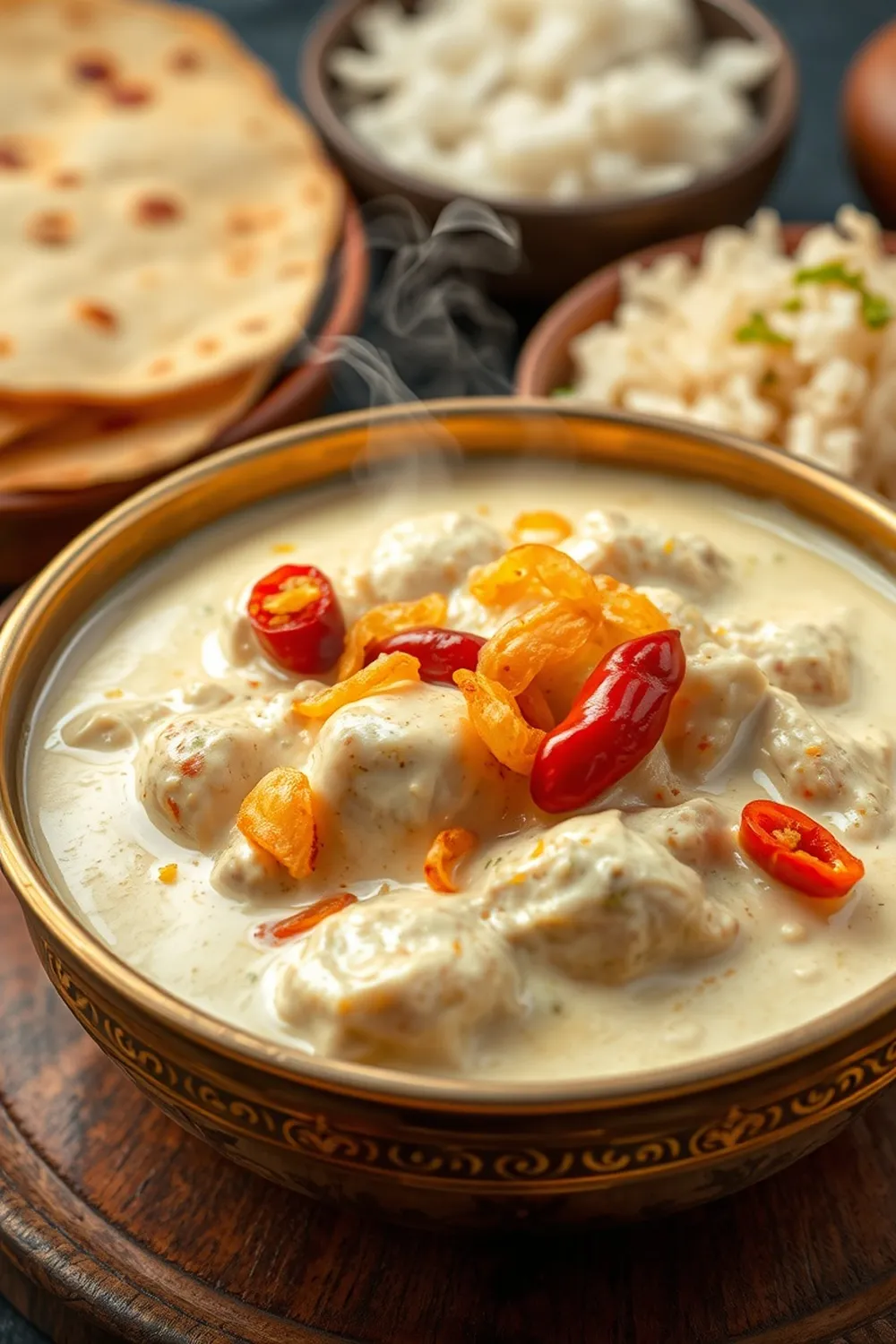
Chicken Curry Recipe – Cashew & Poppy Seed Masala Delight
Introduction
There’s just something about a really good chicken curry, isn’t there? It’s the kind of dish that feels like a warm hug, perfect for a cozy weeknight dinner or a festive gathering. This particular recipe is a bit special – it’s a North Indian-inspired delight, brimming with the richness of cashews and the subtle nuttiness of poppy seeds. I first stumbled upon a version of this while visiting my aunt in Delhi, and I’ve been tweaking it ever since to get it just right. It’s a little more involved than your average curry, but trust me, the depth of flavor is absolutely worth it!
Why You’ll Love This Recipe
This Chicken Curry isn’t just about amazing taste; it’s about the experience. The cashew and poppy seed paste creates a wonderfully creamy texture without relying on too much cream. It’s a flavour bomb – fragrant, subtly spicy, and deeply satisfying. Plus, it’s a great way to impress your friends and family with a truly authentic Indian dish.
Ingredients
Here’s what you’ll need to create this deliciousness:
- 500 gms chicken pieces
- 3 medium onions
- 8 cashewnuts (kaju)
- 1 tbsp poppy seeds (khus khus)
- 3 tablespoons oil
- Whole garam masala (3 cloves, 2 cardamoms, 1 cinnamon stick, 1 bay leaf, 2 dried red chillies)
- 1 tbsp ginger garlic paste
- 4-5 slit green chillies
- 1 cup yogurt/curd
- ?? tsp black pepper powder
- ?? tsp white pepper powder
- ?? tsp roasted coriander powder
Ingredient Notes
Let’s talk ingredients! A few little tips can make all the difference.
Cashews (Kaju) – Significance in North Indian Cuisine
Cashews aren’t just a tasty snack in Indian cooking. They’re a cornerstone of many North Indian gravies, adding a luxurious richness and helping to create that beautiful, smooth texture. Don’t skimp on quality here – good cashews really shine.
Poppy Seeds (Khus Khus) – Regional Variations & Benefits
Poppy seeds might seem unusual in a curry, but they’re surprisingly common in certain regional Indian cuisines, particularly in the North. They add a subtle, nutty flavour and help thicken the sauce. Plus, they’re a good source of calcium!
Garam Masala – Building a Flavorful Base
Garam masala is the heart and soul of many Indian dishes. I prefer to use a freshly ground blend for the most vibrant flavour. You can find pre-made blends, but check the ingredients – a good one should include cinnamon, cloves, cardamom, and black pepper.
Onions – Choosing the Right Variety for Curry
Red onions are my go-to for curries. They caramelize beautifully and add a lovely sweetness. But yellow onions work well too, especially if you want a more subtle flavour.
Oil – Selecting the Best Oil for Authentic Flavor
Traditionally, mustard oil is used in North Indian cooking for its pungent flavour. However, it’s an acquired taste! Vegetable oil or sunflower oil are great alternatives if you prefer a milder flavour.
Step-By-Step Instructions
Alright, let’s get cooking!
- Prepare the masala paste: First, we’ll boil the onions, cashews, and poppy seeds separately until they’re nice and soft. Then, blend them into a super smooth paste with just a little bit of water – you want it to be thick!
- Fry the onions: Heat up your oil in a pan and fry sliced onions until they’re golden brown and crispy. Once cooled, give them a little crush. These will add a fantastic texture to the finished curry.
- Sauté the aromatics: In the same pan, heat a little more oil. Add your whole garam masala, ginger-garlic paste, and sauté for a minute or two until fragrant. This is where the magic starts!
- Brown the chicken: Add the chicken pieces, salt, and slit green chillies to the pan. Cook until the chicken changes colour – you don’t need to cook it all the way through at this stage.
- Simmer with yogurt and masala: Mix in the beaten yogurt and cook for about 10 minutes, stirring occasionally. Then, add the prepared masala paste and simmer, covered, for another 15 minutes. This is where the flavours really meld together.
- Finish with spices and fried onions: Stir in the crushed fried onions, black pepper powder, white pepper powder, and roasted coriander powder. Cook until the oil starts to separate from the curry – that’s how you know it’s ready!
- Prepare the tadka: While the curry is finishing, make the tadka (tempering). Heat a little oil in a small pan and sauté onion rings and dried red chillies until the onions are golden and the chillies are fragrant. Pour this over the curry just before serving.
Expert Tips
- Don’t rush the masala paste! A smooth paste is key to a creamy curry.
- Adjust the amount of green chillies to your spice preference.
- If the curry is too thick, add a splash of water. If it’s too thin, simmer for a few more minutes.
Variations
- Vegan Adaptation – Using Plant-Based Alternatives: Swap the chicken for paneer (Indian cheese) or chickpeas. Use plant-based yogurt and ensure your garam masala is vegan-friendly.
- Gluten-Free – Naturally Gluten-Free: This recipe is naturally gluten-free! Just double-check your garam masala blend to be sure.
- Spice Level – Adjusting the Heat: Reduce or omit the green chillies and red chillies in the tadka for a milder curry. Add a pinch of cayenne pepper for extra heat.
- Festival Adaptations – Serving During Special Occasions: This curry is perfect for celebrations! Serve it with naan bread, basmati rice, and a side of raita (yogurt dip).
Serving Suggestions
Serve hot with fluffy basmati rice, warm naan bread, or roti. A side of cooling raita (yogurt dip) and a sprinkle of fresh coriander leaves complete the meal.
Storage Instructions
Leftovers can be stored in an airtight container in the refrigerator for up to 3 days. Reheat gently on the stovetop or in the microwave. It actually tastes even better the next day as the flavours have had time to develop!
FAQs
What is the best type of chicken to use for this curry?
Bone-in, skin-on chicken thighs are my favourite! They stay incredibly moist and flavourful during the long simmering process. But boneless, skinless chicken breast works too, just be careful not to overcook it.
Can I make the masala paste ahead of time?
Absolutely! You can make the masala paste a day or two in advance and store it in the refrigerator. This will save you time when you’re ready to cook.
How can I adjust the thickness of the curry?
If the curry is too thick, add a splash of water or chicken broth. If it’s too thin, simmer uncovered for a few more minutes to allow some of the liquid to evaporate.
What is the purpose of using both black and white pepper powder?
Black pepper adds a robust, earthy flavour, while white pepper provides a more subtle, delicate heat. Using both creates a more complex and balanced flavour profile.
Can I use store-bought garam masala? If so, what should I look for?
Yes, you can! Look for a garam masala that’s freshly ground and contains a good blend of spices like cinnamon, cloves, cardamom, and black pepper.
Is it necessary to fry the onions for the tadka?
Yes, frying the onions for the tadka is essential! It adds a lovely crispy texture and a sweet, caramelized flavour that really elevates the curry.


Neha Deshmukh
Neha holds a B.A. in History with a focus on Indian and world history, including ancient, medieval, and modern periods. At RecipesOfIndia.org — the world’s largest database of Indian recipes — she combines her love for food and history by exploring how India’s past has shaped its culinary traditions.