- Pressure cook cauliflower and carrots with a little water, turmeric powder, and salt for one whistle on medium flame. Allow the pressure to release naturally, then add frozen green peas and cook for another 2-3 minutes.
- Grind fresh coconut, soaked cashews, coriander seeds, cumin seeds, ginger, garlic, mint leaves, cilantro (coriander leaves), cloves, cardamom, star anise, shallots, and green chilies into a smooth paste using a little water if needed.
- Add the ground paste to the cooked vegetables and simmer until the raw aroma of the spices fades. Sprinkle garam masala and turn off the heat.
- Heat ghee in a pan. Temper cumin seeds, dried red chilies, and curry leaves until fragrant. Pour this tempering over the gravy and mix well.
- Adjust the gravy consistency with hot water if needed before serving.
- Calories:350 kcal25%
- Energy:1464 kJ22%
- Protein:8 g28%
- Carbohydrates:40 mg40%
- Sugar:10 mg8%
- Salt:400 g25%
- Fat:20 g20%
Last Updated on 5 months ago by Neha Deshmukh
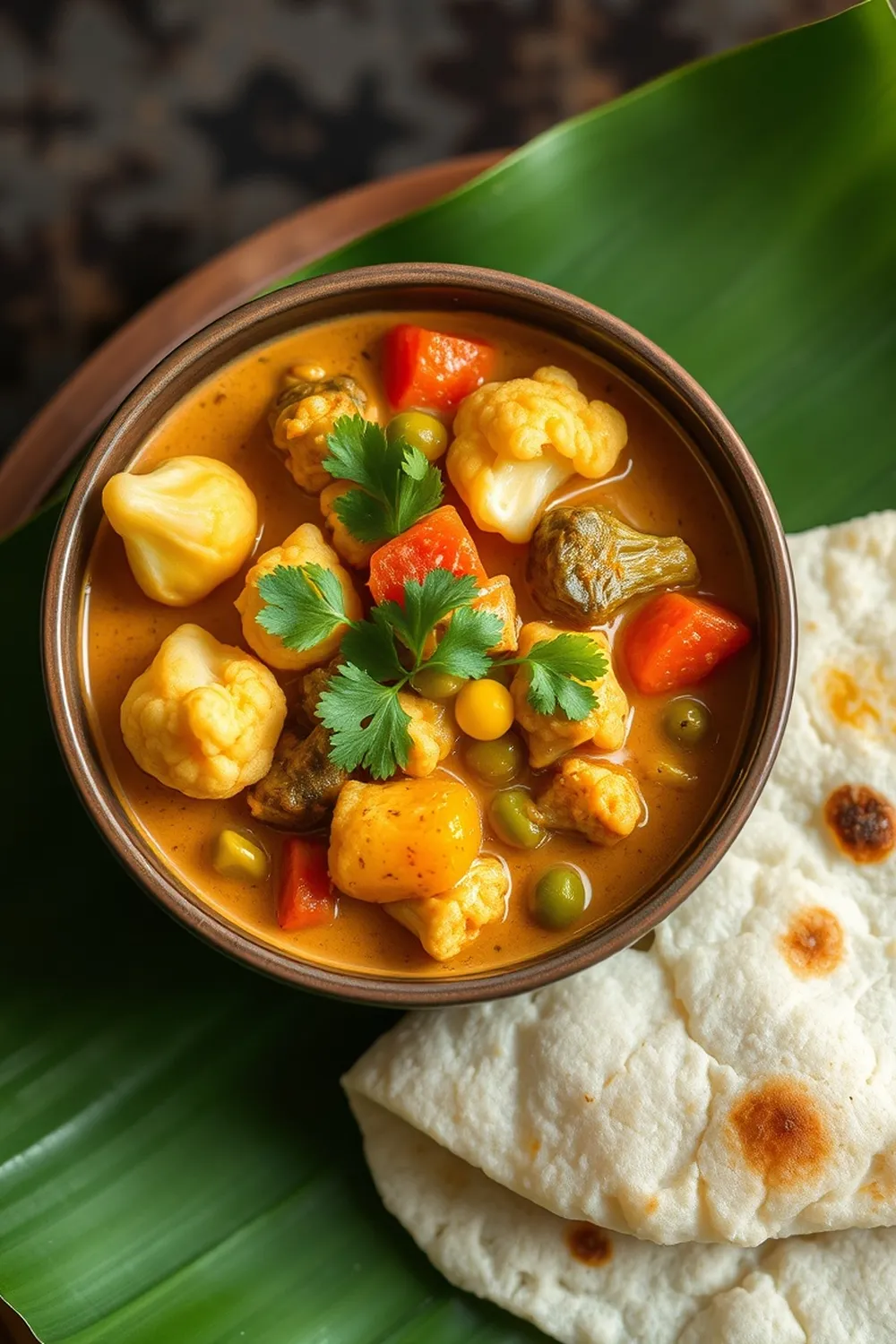
Coconut Vegetable Curry Recipe – Authentic Indian Gravy
Introduction
There’s just something so comforting about a rich, flavorful vegetable curry, isn’t there? This Coconut Vegetable Curry is a family favorite – it’s the kind of dish my grandmother used to make, filling the house with the most incredible aromas. It’s a little bit special, a little bit fragrant, and completely delicious. I’m so excited to share this authentic Indian gravy recipe with you! It’s perfect for a weeknight dinner or a festive occasion.
Why You’ll Love This Recipe
This curry isn’t just tasty; it’s a hug in a bowl! The creamy coconut milk beautifully balances the spices, creating a harmonious blend of flavors. It’s packed with healthy vegetables, and the homemade spice paste takes it to another level. Plus, it’s surprisingly easy to make once you get the hang of the spice paste.
Ingredients
Here’s what you’ll need to create this delightful curry:
- ½ cauliflower, cut into florets
- 2 carrots, chopped
- ½ cup frozen green peas
- ¼ tsp turmeric powder
- Salt to taste
- ½ cup fresh coconut, grated (about 80g)
- 10 cashews
- 1 tsp coriander seeds
- ½ tsp cumin seeds
- 1 inch ginger, roughly chopped
- 4 cloves garlic
- A handful of mint leaves and coriander leaves
- 2 cloves
- 3 cardamom pods
- 1 star anise
- 4 shallots, roughly chopped
- 2 green chilies, roughly chopped (adjust to your spice preference!)
- 1 tbsp ghee
- ½ tsp cumin seeds
- 3 dry red chilies
- 1 sprig curry leaves
- ¼ tsp garam masala
Ingredient Notes
Let’s talk ingredients! A few tips to make sure everything comes together perfectly:
- Coconut: Exploring Varieties & Fresh vs. Dried – Fresh coconut is amazing in this recipe, giving it a beautiful sweetness. If you can’t find fresh, you can use unsweetened desiccated coconut (about 1 cup). Just rehydrate it in a little warm water before using.
- Cashews: The Role of Soaking – Soaking the cashews for at least 30 minutes (or even better, a couple of hours) makes them blend into a super smooth paste. Trust me, it makes a difference!
- Spice Blend: Understanding the Aromatics (Cumin, Coriander, Star Anise) – These spices are the heart and soul of Indian cooking. Toasting them lightly before grinding enhances their flavor. Don’t skip the star anise – it adds a lovely subtle licorice note.
- Regional Variations: South Indian Influence & Spice Levels – This recipe leans towards South Indian flavors, with the use of coconut and curry leaves. Feel free to adjust the green chilies to control the spice level. Some families in my region add a pinch of asafoetida (hing) to the spice paste for extra depth.
Step-By-Step Instructions
Alright, let’s get cooking!
- First, let’s get the vegetables started. Pressure cook the cauliflower and carrots with a little water (about 1 cup), turmeric powder, and salt for one whistle on medium flame. Let the pressure release naturally. Then, add the frozen green peas and close the lid. This ensures the peas are perfectly cooked without getting mushy.
- While the vegetables are cooking, let’s make the magic happen – the spice paste! Grind the fresh coconut, soaked cashews, coriander seeds, cumin seeds, ginger, garlic, mint leaves, coriander leaves, cloves, cardamom, star anise, shallots, and green chilies into a smooth paste. A little water helps it along, but aim for a thick consistency.
- Once the vegetables are cooked, add the ground spice paste to the pot and simmer until the raw aroma fades. This usually takes about 5-7 minutes. Sprinkle in the garam masala and turn off the heat.
- Now for the tadka (tempering)! Heat ghee in a separate pan. Add the cumin seeds, dry red chilies, and curry leaves. Let them sizzle for a few seconds until fragrant. Be careful not to burn them!
- Pour this beautiful tempering over the gravy and mix well. This step adds a wonderful aroma and depth of flavor.
Expert Tips
- Don’t overcrowd the pressure cooker. Cook the vegetables in batches if necessary.
- Taste and adjust the seasoning as you go. Everyone’s palate is different!
- If your spice paste is too thick, add a tablespoon or two of water to thin it out.
Variations
- Vegan Adaptation: Simply substitute the ghee with a plant-based oil like coconut oil or vegetable oil.
- Gluten-Free Confirmation: This recipe is naturally gluten-free!
- Spice Level Adjustment (Mild to Spicy): Reduce or omit the green chilies for a milder curry. Add an extra chili or a pinch of cayenne pepper for more heat.
- Festival Adaptation: Onam/Sadya Special: This curry is a wonderful addition to a traditional Onam Sadya (Kerala feast). You can add a small piece of pumpkin or sweet potato for an authentic touch.
Serving Suggestions
This curry is incredibly versatile!
- Rice Varieties (Basmati, Brown Rice): Fluffy basmati rice is a classic pairing. Brown rice adds a nutty flavor and extra fiber.
- Bread Options (Naan, Roti, Paratha): Warm naan, roti, or paratha are perfect for scooping up the delicious gravy.
- Accompaniments (Raita, Papad): A cooling raita (yogurt dip) and crispy papadums (lentil crackers) complete the meal.
Storage Instructions
Leftovers? Yes, please! Store the curry in an airtight container in the refrigerator for up to 3 days. It actually tastes even better the next day as the flavors meld together. You can also freeze it for up to 2 months.
FAQs
- Can I use store-bought coconut paste instead of making my own? You can, but the flavor won’t be quite as vibrant. If you do, look for a good quality, unsweetened coconut paste.
- What is the best way to adjust the consistency of the curry? Add hot water, a tablespoon at a time, until you reach your desired consistency.
- Can I add other vegetables to this curry? Absolutely! Potatoes, beans, peas, and spinach all work well.
- How can I make this curry ahead of time? You can make the spice paste a day or two in advance and store it in the refrigerator.
- What is the significance of tempering (tadka/chhonk) in Indian cooking? Tempering is a crucial step in Indian cooking. It infuses the oil with the flavors of the spices, creating a fragrant and flavorful base for the dish.



Neha Deshmukh
Neha holds a B.A. in History with a focus on Indian and world history, including ancient, medieval, and modern periods. At RecipesOfIndia.org — the world’s largest database of Indian recipes — she combines her love for food and history by exploring how India’s past has shaped its culinary traditions.