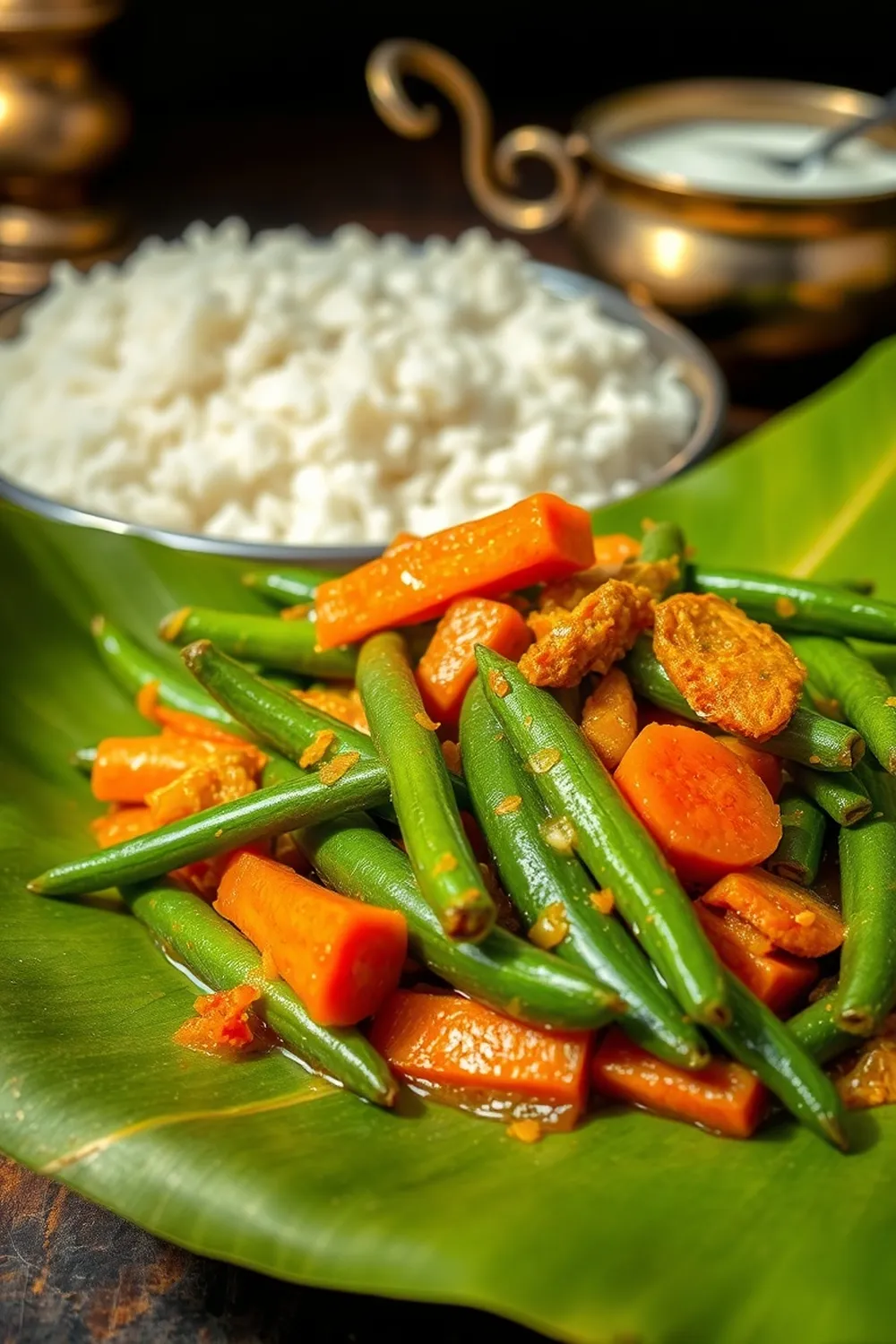
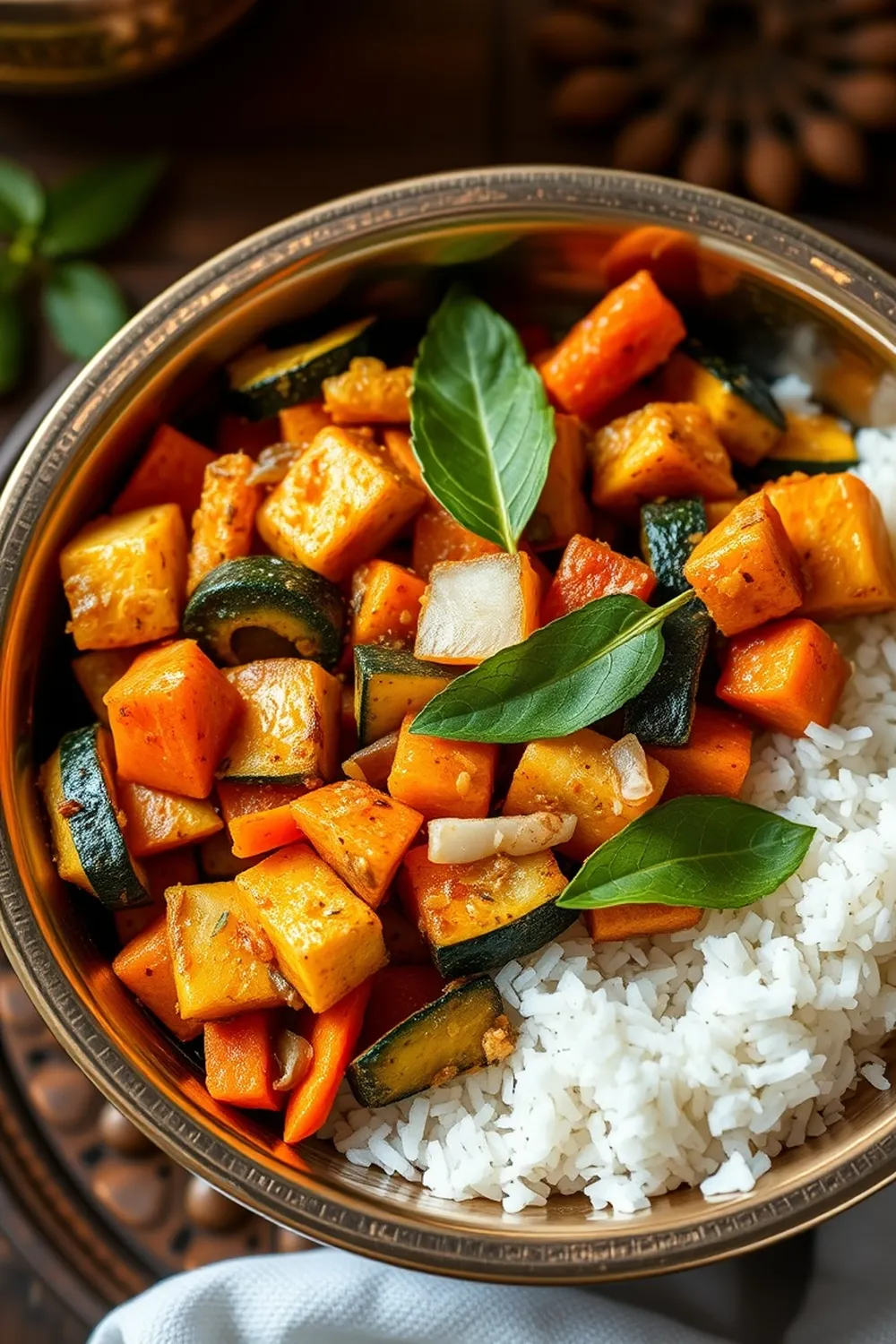
- Rinse and roughly chop tomatoes, then puree without water. Set aside.
- Heat oil in a pressure cooker. Add cumin seeds and let them splutter.
- Add ginger-garlic paste and chopped onions. Sauté until golden brown.
- Mix in tomato puree and cook until the raw aroma disappears.
- Stir in turmeric, red chili, coriander, and garam masala powders.
- Add cubed vegetables (except cauliflower) and sauté briefly.
- Pour in 2 cups of water, adjust salt, and pressure cook for 2 whistles.
- Allow natural pressure release, then add cauliflower florets.
- Simmer until cauliflower is tender.
- Blend in fresh cream and cook until oil separates.
- Finish with crushed kasoori methi and coriander leaves. Serve hot.
- Calories:257 kcal25%
- Energy:1075 kJ22%
- Protein:6 g28%
- Carbohydrates:23 mg40%
- Sugar:3 mg8%
- Salt:1381 g25%
- Fat:18 g20%
Last Updated on 5 months ago by Neha Deshmukh
Creamy Mixed Vegetable Curry Recipe – Authentic Indian Style
Introduction
Oh, this curry! It’s one of those dishes that just feels like home. I first made this creamy mixed vegetable curry when I was just starting to experiment in the kitchen, and it quickly became a family favorite. It’s comforting, flavorful, and surprisingly easy to make – perfect for a weeknight dinner or a special occasion. Get ready to dive into a world of aromatic spices and tender vegetables!
Why You’ll Love This Recipe
This isn’t just another vegetable curry. It’s a hug in a bowl! Here’s what makes it special:
- Rich & Creamy: The fresh cream adds a luxurious texture that elevates the whole dish.
- Flavorful Spice Blend: A carefully balanced blend of spices creates a truly authentic Indian taste.
- Versatile: You can easily adapt it to use your favorite vegetables or adjust the spice level.
- Relatively Quick: Ready in under an hour, making it perfect for busy schedules.
Ingredients
Here’s what you’ll need to create this delicious curry:
- 2 cups mixed vegetables (potatoes, carrots, peas, beans)
- ½ cup cauliflower florets
- 4 medium tomatoes
- 2 cups water
- ¼ cup fresh cream
- 1 teaspoon kasoori methi (dried fenugreek leaves)
- 1 tablespoon coriander leaves, chopped
- Salt to taste
- ¼ teaspoon turmeric powder
- 1 teaspoon red chilli powder
- 1 teaspoon coriander powder
- ½ teaspoon garam masala powder
- 2 tablespoons oil
- 1 teaspoon cumin seeds
- 1 teaspoon ginger-garlic paste
- 1 medium onion, finely chopped
Ingredient Notes
Let’s talk ingredients! A few tips to make sure your curry turns out perfectly:
- Tomatoes: Choosing the Right Variety – Ripe, juicy tomatoes are key. Roma or plum tomatoes work beautifully because they have less water content. If you’re using regular tomatoes, you might need to cook the puree a little longer to reduce the liquid.
- Mixed Vegetables: Seasonal Options & Regional Preferences – Feel free to get creative! I love using a mix of potatoes, carrots, peas, and beans, but you can add or substitute with whatever vegetables are in season. In the winter, I often add some root vegetables like turnips or parsnips.
- Spices: The Heart of Indian Flavor – Garam Masala & Kasoori Methi – Garam masala is a blend of warming spices, and every family has their own version. Kasoori methi adds a unique, slightly bitter flavor that’s essential for an authentic taste. Don’t skip it if you can help it!
- Cream: Full Fat vs. Low Fat – Impact on Texture – Full-fat cream will give you the richest, most luxurious texture. However, you can use low-fat cream or even coconut cream for a lighter option. Just be aware that the curry might not be quite as thick.
- Oil: Traditional Oils Used in Indian Cooking – Traditionally, we use mustard oil or ghee (clarified butter) for Indian cooking. But vegetable oil or canola oil work just fine too!
Step-By-Step Instructions
Alright, let’s get cooking!
- First, rinse and roughly chop the tomatoes, then puree them in a blender without adding any water. Set the tomato puree aside.
- Heat the oil in a pressure cooker over medium heat. Once hot, add the cumin seeds and let them splutter – you’ll know they’re ready when they start to dance in the oil!
- Add the ginger-garlic paste and finely chopped onions. Sauté until the onions turn golden brown and fragrant. This usually takes about 5-7 minutes.
- Pour in the tomato puree and cook for another 5-7 minutes, stirring occasionally, until the raw aroma of the tomatoes disappears.
- Now, it’s spice time! Stir in the turmeric powder, red chilli powder, coriander powder, and garam masala powder. Cook for a minute or two, stirring constantly, to toast the spices.
- Add the cubed mixed vegetables (except the cauliflower) and sauté briefly for about 2-3 minutes.
- Pour in 2 cups of water, adjust the salt to your liking, and close the pressure cooker lid. Cook for 2 whistles on medium heat.
- Let the pressure release naturally. Once the pressure is released, open the lid and add the cauliflower florets.
- Simmer for another 5-7 minutes, or until the cauliflower is tender.
- Gently blend in the fresh cream and cook for a couple of minutes, until the oil starts to separate from the curry. This is a sign that it’s beautifully cooked!
- Finally, finish with a sprinkle of crushed kasoori methi and chopped coriander leaves. Serve hot with rice or naan.
Expert Tips
- Don’t overcrowd the pressure cooker. If you’re making a large batch, cook it in two batches.
- Adjust the amount of red chilli powder to control the spice level.
- For a richer flavor, you can add a tablespoon of ghee along with the oil.
Variations
- Vegan Adaptation: Swap the fresh cream for coconut cream or cashew cream for a delicious vegan version.
- Gluten-Free Adaptation: This recipe is naturally gluten-free! Just double-check the ingredients in your garam masala to ensure they haven’t been processed with any gluten-containing ingredients.
- Spice Level Adjustment: My family prefers a medium spice level, but feel free to adjust the amount of red chilli powder to suit your taste. For mild, use ½ teaspoon; for hot, use 1 ½ teaspoons.
- Festival Adaptations: During Navratri, you can skip the onion and garlic for a vrat-friendly version. For Diwali, you can add a handful of cashews and raisins for a festive touch.
Serving Suggestions
This curry is fantastic with:
- Steaming hot basmati rice
- Warm, fluffy naan bread
- Roti or chapati
- A side of raita (yogurt dip)
Storage Instructions
Leftovers can be stored in an airtight container in the refrigerator for up to 3 days. Reheat gently on the stovetop or in the microwave. It actually tastes even better the next day as the flavors meld together!
FAQs
- What type of oil is best for making this curry? Traditionally, mustard oil or ghee are used, but vegetable or canola oil work well too.
- Can I use frozen vegetables in this recipe? Yes, you can! Just add them directly to the pressure cooker along with the water. You might need to adjust the cooking time slightly.
- How can I adjust the thickness of the curry? If the curry is too thick, add a little more water. If it’s too thin, simmer it for a few more minutes without the lid to allow some of the liquid to evaporate.
- What is kasoori methi and can I substitute it? Kasoori methi is dried fenugreek leaves. It has a unique flavor that’s hard to replicate, but you can try substituting it with a pinch of dried oregano or basil in a pinch.
- Can this curry be made ahead of time? Absolutely! You can make it a day or two in advance and store it in the refrigerator. The flavors will develop even more over time.



Neha Deshmukh
Neha holds a B.A. in History with a focus on Indian and world history, including ancient, medieval, and modern periods. At RecipesOfIndia.org — the world’s largest database of Indian recipes — she combines her love for food and history by exploring how India’s past has shaped its culinary traditions.