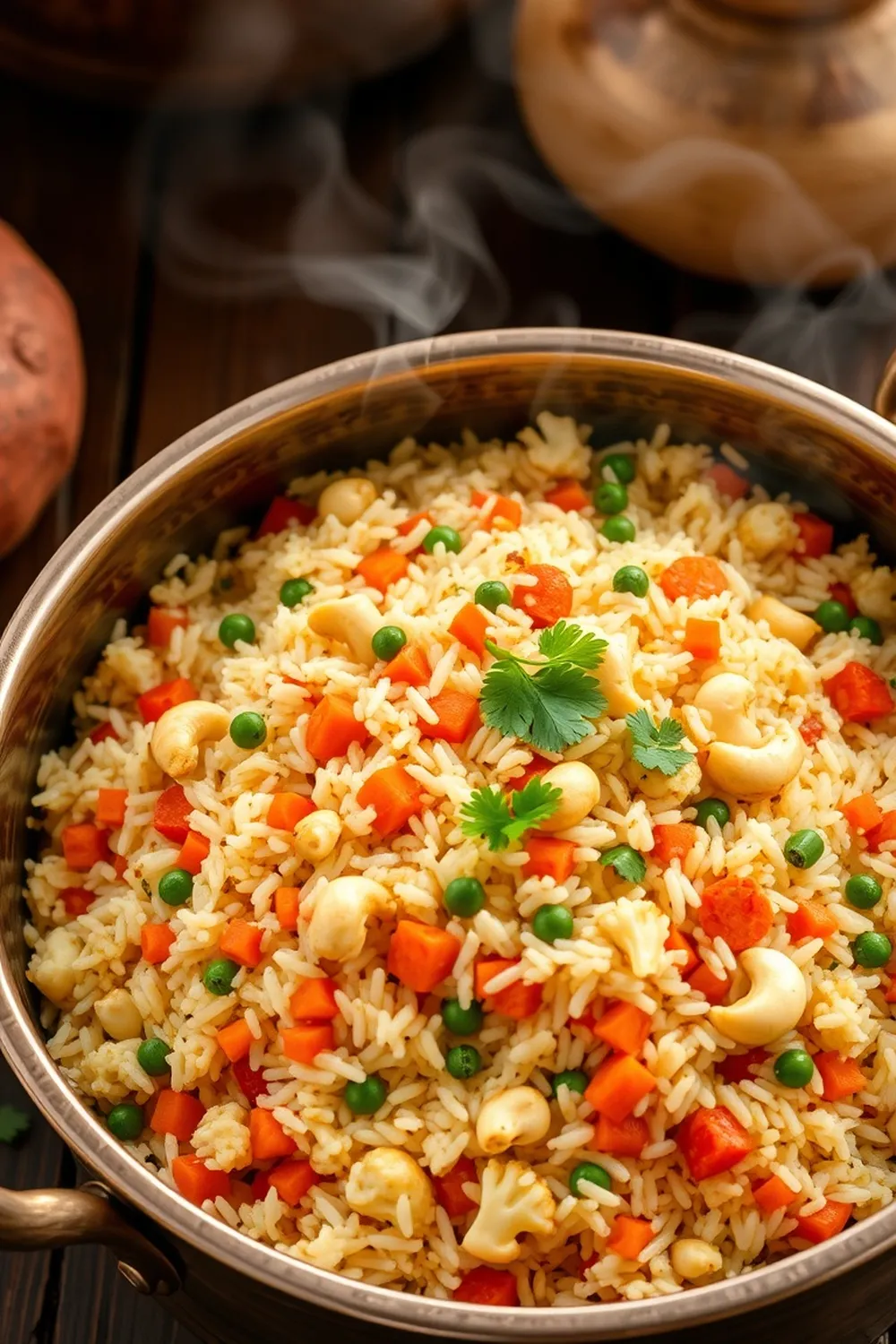
- Rinse the rice thoroughly and soak it in water for 30 minutes.
- Heat oil or ghee in a pan. Toast cashews until golden, then set aside.
- Add cumin seeds to the pan. Once fragrant, sauté chopped onions and garlic until softened.
- Mix in peas, carrots, and cauliflower. Cook until vegetables soften slightly.
- Add drained rice to the pan and sauté for 30 seconds to lightly toast.
- Transfer the mixture to a pot. Add water, toasted cashews, cloves, chili powder, turmeric, and salt.
- Bring to a boil, then cover and simmer on low heat for 12-15 minutes, or until the water is absorbed.
- Turn off heat and let it rest for 5 minutes. Fluff rice with a fork before serving.
- Calories:240 kcal25%
- Energy:1004 kJ22%
- Protein:5 g28%
- Carbohydrates:44 mg40%
- Sugar:2 mg8%
- Salt:28 g25%
- Fat:4 g20%
Last Updated on 6 months ago by Neha Deshmukh
Easy Vegetable Biryani Recipe – Cashews & Turmeric Flavors
Hey everyone! If you’re anything like me, you absolutely love a good biryani. But sometimes, the recipes can seem a little… daunting, right? Well, not this one! This easy vegetable biryani is packed with flavor, comes together without a ton of fuss, and is perfect for a weeknight dinner or a festive gathering. I first made this when I was craving something comforting and flavorful, and it’s been a family favorite ever since. Let’s get cooking!
Why You’ll Love This Recipe
This vegetable biryani is a winner for so many reasons. It’s vibrant, aromatic, and totally satisfying. Plus, it’s a fantastic way to get your veggies in! It’s not overly spicy, making it great for families, but we’ll definitely talk about how to kick up the heat if you prefer. And honestly, the smell while it’s simmering? Pure heaven.
Ingredients
Here’s what you’ll need to make this delicious biryani:
- 1 ½ cups dry basmati rice (about 250g)
- ½ cup peas (about 80g)
- ½ cup carrots, chopped (about 75g)
- 1 cup cauliflower, chopped (about 100g)
- 1 medium onion, chopped
- 3 garlic cloves, minced
- 1 tbsp vegetable oil or ghee
- 1 tsp whole cumin seeds
- 3 cloves
- ½ tsp chili powder (adjust to taste)
- 1 tsp turmeric powder
- 2 tbsp cashews
- 3 cups water (720ml)
- Salt to taste
Ingredient Notes
Let’s chat about a few key ingredients to make sure your biryani turns out perfectly!
- Basmati Rice Selection: Using good quality basmati rice is crucial. Look for long-grain basmati – it stays fluffy and doesn’t get mushy.
- The Role of Ghee vs. Oil: Ghee adds a lovely richness and traditional flavor, but vegetable oil works just fine if you prefer.
- Regional Variations in Vegetable Choices: Feel free to swap in your favorite veggies! Potatoes, beans, and even mushrooms work beautifully.
- Spice Blend Significance: Turmeric & Chili Powder: Turmeric isn’t just for color; it has amazing health benefits and a subtle earthy flavor. Chili powder adds warmth, but you can adjust the amount to your liking.
- Cashew Toasting – Achieving the Perfect Crunch: Don’t skip toasting the cashews! It brings out their nutty flavor and gives them a delightful crunch.
Step-By-Step Instructions
Alright, let’s get down to business!
- First, rinse the basmati rice thoroughly under cold water until the water runs clear. Then, soak it in water for about 30 minutes. This helps the grains cook evenly and become nice and fluffy.
- While the rice is soaking, heat the oil or ghee in a pan over medium heat. Add the cashews and toast them until they’re golden brown and fragrant. Be careful not to burn them! Set them aside.
- Now, add the cumin seeds to the same pan. Once they start to sizzle and become fragrant (this happens quickly!), add the chopped onions and minced garlic. Sauté until the onions are softened and translucent.
- Next, toss in the peas, carrots, and cauliflower. Cook for a few minutes, until the vegetables start to soften slightly.
- Drain the soaked rice and add it to the pan. Sauté for about 30 seconds, just to lightly toast the rice.
- Transfer everything to a pot. Add the water, toasted cashews, cloves, chili powder, turmeric, and salt. Give it a good stir.
- Bring the mixture to a boil, then immediately cover the pot and reduce the heat to low. Simmer for 12 minutes. Resist the urge to peek!
- Turn off the heat and let the biryani rest, covered, for another 5 minutes. This allows the steam to finish cooking the rice. Finally, fluff the rice gently with a fork before serving.
Expert Tips
Here are a few things I’ve learned over the years to make this biryani even better:
- Achieving Fluffy Biryani Rice: Soaking the rice is key! It allows the grains to absorb water and cook evenly.
- Preventing Sticking & Burning: Using a heavy-bottomed pot helps distribute heat evenly and prevents sticking. You can also add a tablespoon of ghee to the bottom of the pot before adding the ingredients.
- Adjusting Spice Levels: Start with ½ tsp of chili powder and taste as you go. You can always add more, but you can’t take it away!
- Soaking Rice – Why It Matters: Seriously, don’t skip the soaking! It makes a huge difference in the texture of the final dish.
Variations
Want to switch things up? Here are a few ideas:
- Vegan Vegetable Biryani: Simply use vegetable oil instead of ghee.
- Gluten-Free Vegetable Biryani: This recipe is naturally gluten-free!
- Spice Level Adjustments (Mild, Medium, Hot): For mild, use ¼ tsp chili powder. For hot, use 1 tsp or more!
- Festival Adaptations (Diwali, Eid): Add a sprinkle of saffron strands soaked in warm milk for a festive touch.
Serving Suggestions
This biryani is fantastic on its own, but here are a few ideas for accompaniments:
- Raita Pairings: Cucumber raita or onion raita are classic pairings.
- Side Dish Recommendations: A simple vegetable curry or a cooling salad.
- Biryani & Salad Combinations: A fresh tomato and cucumber salad with a lemon vinaigrette.
Storage Instructions
- Reheating Instructions: Reheat leftover biryani in the microwave or on the stovetop with a splash of water to prevent it from drying out.
- Freezing Biryani for Later: Biryani freezes beautifully! Let it cool completely, then store it in an airtight container for up to 2 months.
- Maintaining Flavor During Storage: To maintain the flavor, make sure the biryani is completely cooled before storing it.
FAQs
Got questions? I’ve got answers!
What type of rice is best for biryani?
Basmati rice is the way to go! Its long grains and delicate flavor are perfect for biryani.
Can I use frozen vegetables in this recipe?
Yes, you can! Just add them directly to the pan with the onions and garlic.
How can I make this biryani spicier?
Increase the amount of chili powder, or add a chopped green chili to the pan with the onions and garlic.
What is the best way to prevent the rice from sticking to the bottom of the pot?
Use a heavy-bottomed pot and keep the heat on low. Adding a tablespoon of ghee to the bottom of the pot can also help.
Can I prepare the vegetable mixture ahead of time?
Yes, you can! Prepare the vegetable mixture and store it in the refrigerator for up to 24 hours.
How does soaking the rice affect the final result?
Soaking the rice allows it to absorb water, resulting in fluffier, more evenly cooked grains.
Enjoy! I hope this recipe brings a little bit of Indian sunshine to your kitchen. Let me know how it turns out in the comments below!



Neha Deshmukh
Neha holds a B.A. in History with a focus on Indian and world history, including ancient, medieval, and modern periods. At RecipesOfIndia.org — the world’s largest database of Indian recipes — she combines her love for food and history by exploring how India’s past has shaped its culinary traditions.