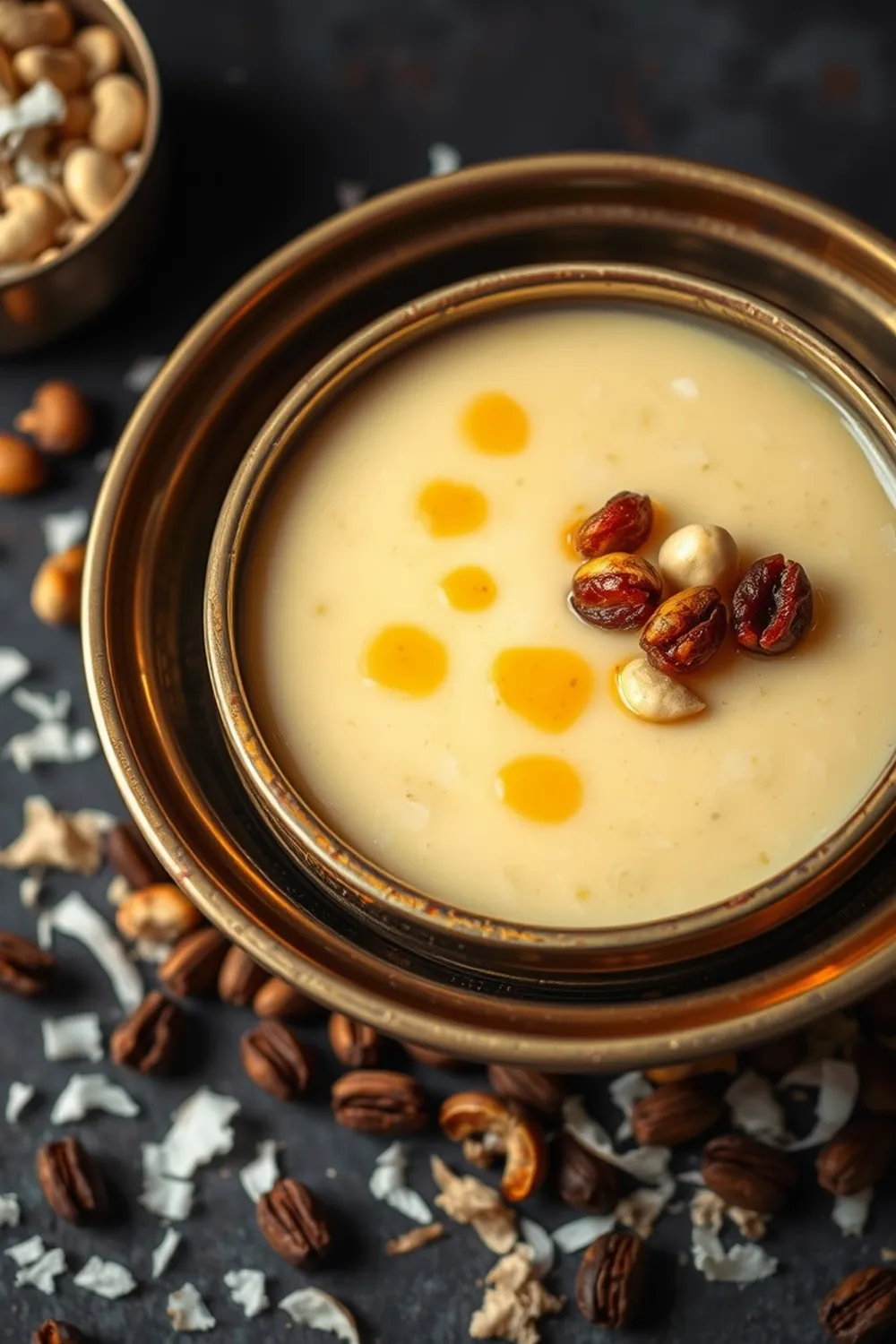
- Dry roast foxtail millet on low heat until fragrant. Set aside.
- Pressure cook millet and moong dal with 2 cups of water for 3 whistles. Let the pressure release naturally.
- Dissolve jaggery in 1 cup of water, strain to remove impurities, and mix with the cooked millet-dal mixture.
- Add the second-pressed coconut milk and simmer for 2 minutes. Stir in the first-pressed coconut milk, cardamom, and salt. Simmer for 1 minute.
- Heat ghee, roast cashews and raisins until golden brown. Add to the payasam.
- Serve warm.
- Calories:320 kcal25%
- Energy:1338 kJ22%
- Protein:8 g28%
- Carbohydrates:50 mg40%
- Sugar:20 mg8%
- Salt:150 g25%
- Fat:12 g20%
Last Updated on 6 months ago by Neha Deshmukh
Foxtail Millet Payasam Recipe – Authentic South Indian Dessert
Introduction
Payasam. Just the word conjures up images of festive celebrations and happy family gatherings, doesn’t it? This isn’t just a dessert; it’s a warm hug in a bowl! I remember my grandmother making payasam for every special occasion, and the aroma would fill the entire house. Today, I’m sharing a slightly healthier, yet equally delicious version – Foxtail Millet Payasam. It’s a wonderful way to enjoy a traditional treat with the goodness of millets. You’ll absolutely love how easy it is to make!
Why You’ll Love This Recipe
This Foxtail Millet Payasam is a delightful twist on a classic South Indian dessert. It’s creamy, subtly sweet, and packed with flavor. Plus, using foxtail millet (thinai) adds a lovely nutty taste and a boost of nutrition. It’s perfect for festivals, celebrations, or simply as a comforting treat. And honestly, it’s surprisingly easy to whip up!
Ingredients
Here’s what you’ll need to make this delicious payasam:
- ½ cup thinai arisi / foxtail millet (approx. 100g)
- 4 tablespoons split yellow moong dal (approx. 40g)
- ¾ cup roughly powdered jaggery (approx. 150g)
- ½ teaspoon cardamom
- A pinch of salt
- ½ cup first pressed coconut milk (approx. 120ml)
- ½ cup second pressed coconut milk (approx. 120ml)
- 2 teaspoons ghee (approx. 10ml)
- 10 cashewnuts
- 10 raisins
Ingredient Notes
Let’s talk ingredients! A few little tips can make all the difference.
Foxtail Millet (Thinai Arisi): Benefits and Regional Use
Foxtail millet is a powerhouse of nutrients! It’s gluten-free, rich in fiber, and a good source of protein. In South India, particularly in Tamil Nadu, it’s been a staple for centuries, often used in breakfasts and now, deliciously, in desserts like this payasam.
Moong Dal: Choosing the Right Variety
I prefer split yellow moong dal for this recipe because it cooks quickly and blends beautifully into the payasam, creating a creamy texture. Make sure it’s fresh for the best flavor!
Jaggery: Types and Flavor Profile
Jaggery adds a beautiful, unrefined sweetness. You can use any type – powdered, block, or liquid. I find powdered jaggery dissolves easily, but if using a block, make sure to dissolve it well in hot water before adding it to the payasam. The flavor is so much richer than refined sugar!
Coconut Milk: First Press vs. Second Press – What’s the Difference?
This is a big one! First pressed coconut milk is thicker and richer, while second pressed is lighter. Using both adds layers of flavor and texture. If you can only find one, using all first press is perfectly fine, but the payasam will be even richer.
Cardamom: Fresh vs. Ground – Which to Use?
Freshly ground cardamom is always best! The aroma is incredible. If you’re using ground cardamom, make sure it’s relatively fresh for maximum flavor.
Step-By-Step Instructions
Alright, let’s get cooking!
- First, dry roast the foxtail millet in a pan on low heat for a few minutes until it becomes fragrant. This step enhances the nutty flavor. Set it aside.
- Now, in a pressure cooker, combine the roasted millet and moong dal with 2 cups of water. Pressure cook for 3 whistles, then let the pressure release naturally. This ensures the millet and dal are perfectly cooked and soft.
- While that’s cooking, dissolve the jaggery in 1 cup of hot water. Strain it to remove any impurities – this will give you a clear, smooth payasam.
- Once the pressure has released, add the dissolved jaggery to the cooked millet-dal mixture. Give it a good stir.
- Add the second pressed coconut milk and simmer for about 2 minutes. Then, stir in the first pressed coconut milk, cardamom powder, and a tiny pinch of salt. Simmer for another minute, stirring constantly.
- Finally, heat the ghee in a small pan. Roast the cashews and raisins until golden brown and fragrant. Add them to the payasam.
Expert Tips
- Don’t skip the dry roasting step for the millet – it really makes a difference!
- Stir frequently while simmering to prevent the payasam from sticking to the bottom of the pan.
- Adjust the amount of jaggery to your liking.
Variations
This recipe is a great base for experimentation!
Vegan Foxtail Millet Payasam
My friend, Priya, is vegan and loves this payasam! Simply substitute the ghee with coconut oil or a vegan butter alternative.
Gluten-Free Adaptations
Good news – this recipe is naturally gluten-free! Foxtail millet is a fantastic gluten-free grain.
Adjusting the Sweetness Level
If you prefer a less sweet payasam, reduce the amount of jaggery. You can always add a little more later if needed.
Festival Adaptations (Pongal, Onam)
During Pongal or Onam, I like to add a few strands of saffron to the payasam for a beautiful color and aroma. It feels extra festive!
Serving Suggestions
Serve the payasam warm. It’s delicious on its own, but you can also garnish it with a sprinkle of chopped nuts or a few saffron strands. It’s the perfect ending to a South Indian meal.
Storage Instructions
Leftover payasam can be stored in an airtight container in the refrigerator for up to 3 days. Reheat gently on the stovetop or in the microwave before serving.
FAQs
Let’s answer some common questions!
What is Foxtail Millet and is it Gluten-Free?
Foxtail millet, or thinai in Tamil, is a small, round millet grain. It’s incredibly nutritious and, yes, it’s naturally gluten-free!
Can I use a different type of dal in this payasam?
You can experiment with other dals like toor dal or chana dal, but moong dal gives the best creamy texture.
How can I adjust the consistency of the payasam?
If the payasam is too thick, add a little more coconut milk or water. If it’s too thin, simmer for a few more minutes to allow it to thicken.
What is the best way to powder jaggery at home?
You can use a food processor or a heavy-duty blender to powder jaggery. If it’s too hard, break it into smaller pieces first.
Can I make this payasam ahead of time?
Yes, you can! The flavors actually develop even more overnight. Just reheat gently before serving.


Neha Deshmukh
Neha holds a B.A. in History with a focus on Indian and world history, including ancient, medieval, and modern periods. At RecipesOfIndia.org — the world’s largest database of Indian recipes — she combines her love for food and history by exploring how India’s past has shaped its culinary traditions.