- Peel and finely chop fresh ginger. Soak tamarind in hot water to extract the pulp.
- Heat coconut oil in a pan. Temper with mustard seeds, fenugreek seeds, and asafoetida.
- Add chopped ginger and sauté until golden brown and crisp.
- Add green chilies, dried red chilies, and curry leaves. Sauté briefly.
- Mix in turmeric powder, red chili powder, and salt. Cook until fragrant.
- Strain tamarind pulp into the pan. Add jaggery and remaining salt.
- Simmer until the mixture thickens and oil separates from the sides.
- Cool completely before transferring to an airtight container.
- Calories:819 kcal25%
- Energy:3426 kJ22%
- Protein:6 g28%
- Carbohydrates:111 mg40%
- Sugar:70 mg8%
- Salt:3645 g25%
- Fat:44 g20%
Last Updated on 6 months ago by Neha Deshmukh
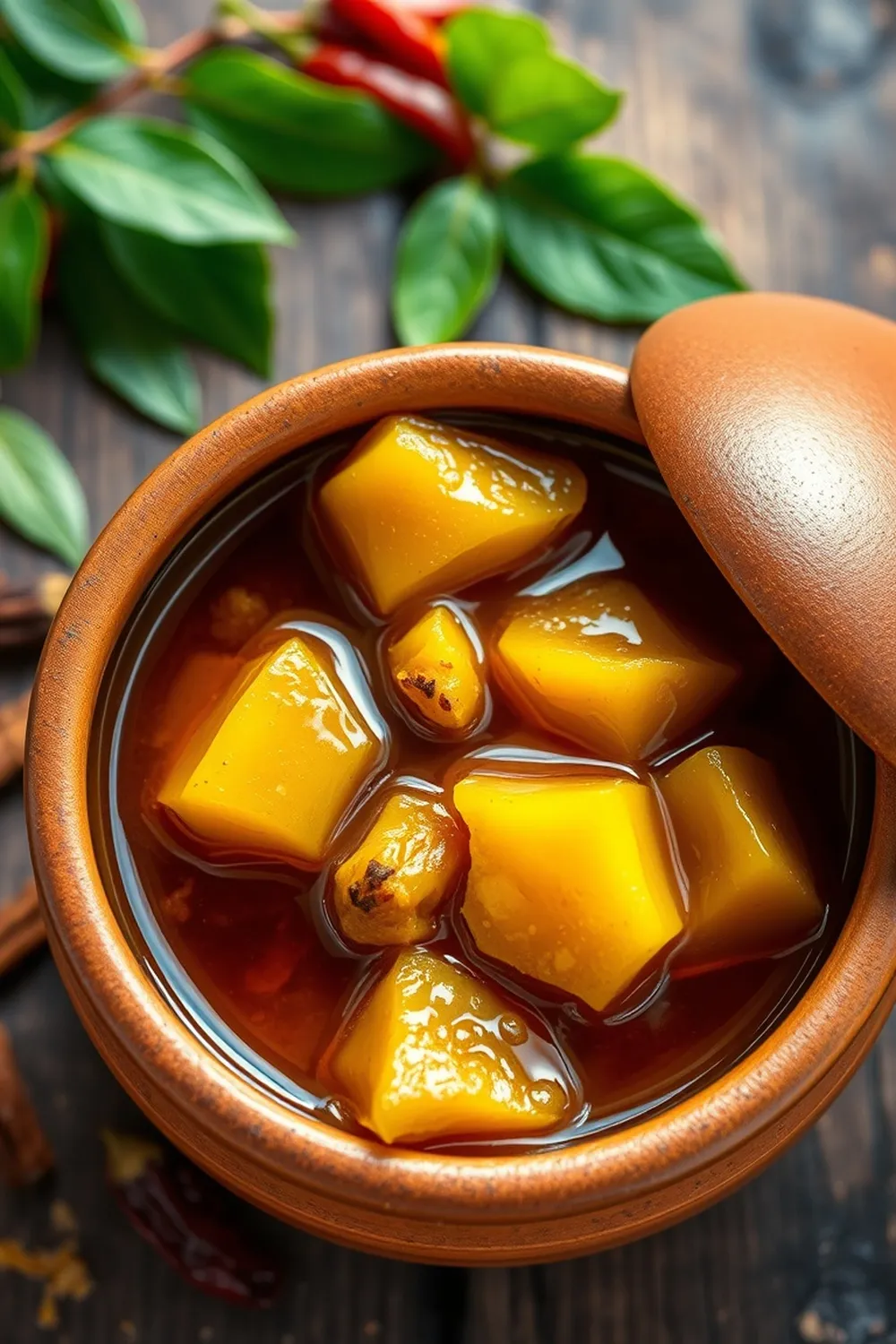
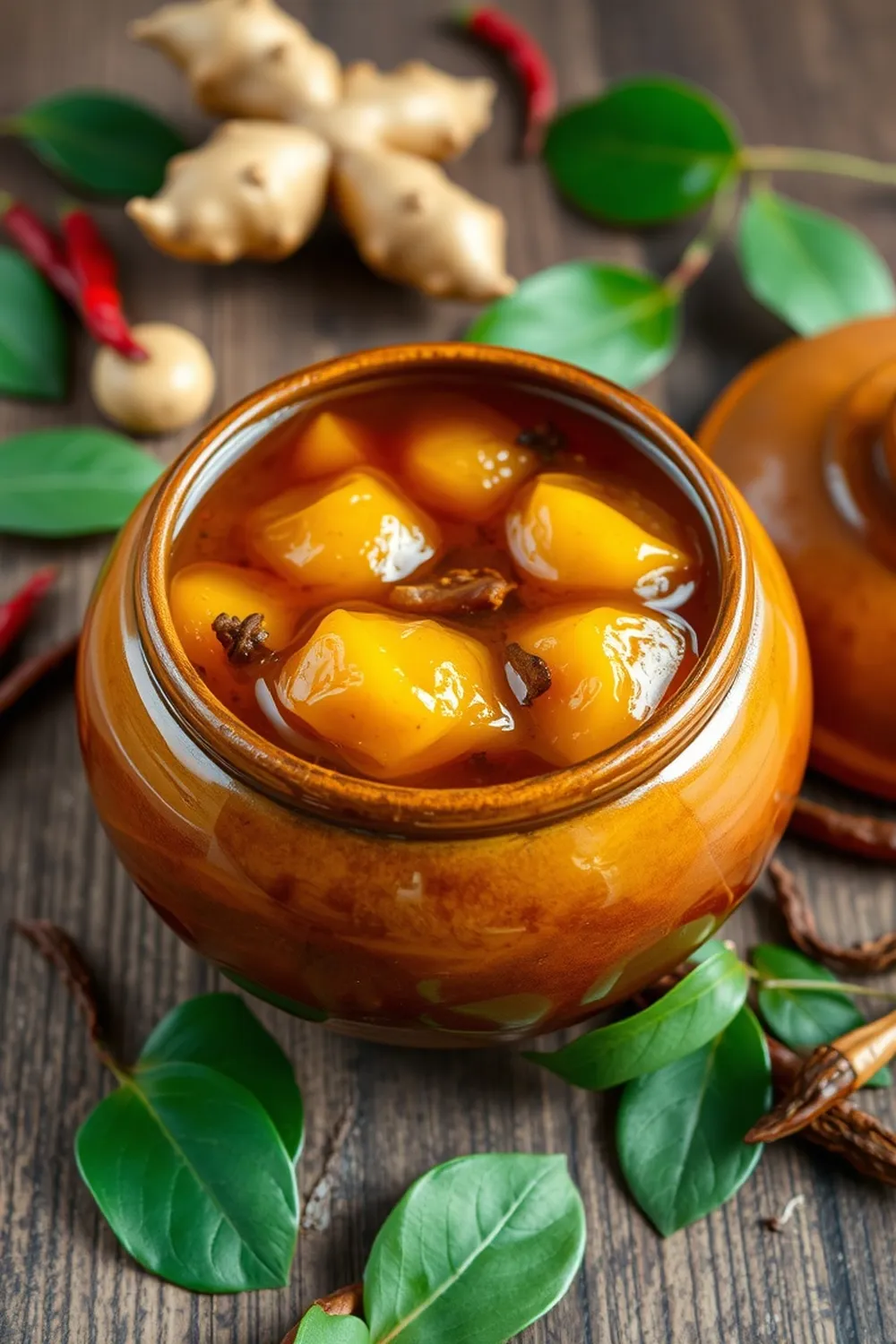
Ginger Tamarind Chutney Recipe – Authentic Indian Relish
Hey everyone! Today, I’m sharing a recipe that’s been a staple in my family for generations – Ginger Tamarind Chutney. It’s that perfect blend of sweet, sour, spicy, and savory that just makes a meal. I first made this myself when I moved away from home and instantly missed the flavors of my mom’s cooking. It’s surprisingly easy to make, and honestly, once you try it, you’ll be hooked!
Why You’ll Love This Recipe
This chutney isn’t just a condiment; it’s a flavor bomb! It’s incredibly versatile – perfect with everything from samosas and pakoras to rice and dal. Plus, it’s a fantastic way to add a burst of freshness to any Indian spread. You’ll love how the warmth of the ginger plays with the tang of the tamarind, and the little kick of spice keeps you coming back for more.
Ingredients
Here’s what you’ll need to whip up a batch of this delicious chutney:
- 150 grams ginger, peeled and finely chopped
- 50 grams tamarind, roughly chopped
- 2 cups hot water
- 3 tbsp coconut oil
- 1 tsp mustard seeds
- 0.25 tsp fenugreek seeds
- 0.25 tsp asafoetida (hing)
- 2 green chilies, slit
- 2 dried red chilies, broken into pieces
- A few curry leaves
- 0.5 tsp turmeric powder
- 1 tsp red chili powder
- 1.5 tsp salt (plus more to taste)
- 50 grams jaggery, grated
Ingredient Notes
Let’s talk ingredients! A few things make all the difference in this recipe:
- Fresh Ginger: Seriously, use fresh ginger. The flavor is so much brighter and more vibrant than ginger paste.
- Tamarind Quality: Look for good quality tamarind – it should be pliable and not too brittle. The pulp is where all the tangy goodness comes from!
- Spice Levels: Spice is a very personal thing! Feel free to adjust the number of green and red chilies to suit your preference. Some families in my region love it really spicy, while others prefer a milder flavor.
- Coconut Oil: Don’t skip the coconut oil! It adds a beautiful aroma and flavor that really complements the other ingredients. While other oils can be used, coconut oil is traditional and really elevates the taste.
Step-By-Step Instructions
Alright, let’s get cooking!
- First, peel and finely chop about 150 grams of fresh ginger. Then, soak the 50 grams of tamarind in 2 cups of hot water. This helps to extract all that lovely, tangy pulp.
- Heat 3 tablespoons of coconut oil in a pan over medium heat. Once hot, add 1 teaspoon of mustard seeds. Let them splutter – that’s how you know they’re ready!
- Add ¼ teaspoon of fenugreek seeds and ¼ teaspoon of asafoetida (hing) to the pan. Sauté for just a few seconds until fragrant.
- Now, toss in 2 slit green chilies, 2 broken dried red chilies, and a few curry leaves. Sauté briefly until the curry leaves are crisp.
- Add ½ teaspoon of turmeric powder, 1 teaspoon of red chili powder, and 1.5 teaspoons of salt. Cook for about 30 seconds, stirring constantly, until everything is nicely combined and aromatic.
- Strain the tamarind pulp into the pan, discarding the seeds and fibers. Add 50 grams of grated jaggery and the remaining salt.
- Bring the mixture to a simmer and cook for about 15-20 minutes, stirring occasionally, until it thickens and the oil starts to separate from the sides. This is how you know it’s ready!
- Let the chutney cool completely before transferring it to an airtight container.
Expert Tips
- Don’t rush the simmering process. It’s important to cook the chutney until it reaches the right consistency.
- If the chutney is too thick, you can add a splash of water to loosen it up.
- Taste and adjust the seasoning as needed. Everyone’s palate is different!
Variations
Want to switch things up? Here are a few ideas:
- Vegan Adaptation: This recipe is naturally vegan! Just ensure your jaggery is processed without bone char.
- Spice Level Adjustments: For a milder chutney, remove the seeds from the green chilies or use only one. For a spicier kick, add a few more red chilies or a pinch of cayenne pepper. My friend, Priya, loves to add a ghost pepper for a real challenge!
- Festival Adaptations: This chutney is often made during Diwali and Ugadi as part of the festive spread.
- Regional Variations: In Maharashtra, they sometimes add a touch of grated coconut. In South India, you might find versions with a bit of sesame oil.
Serving Suggestions
This chutney is incredibly versatile! Here are a few of my favorite ways to enjoy it:
- With samosas and pakoras
- As a side with rice and dal
- Spread on sandwiches or wraps
- Served with idli and dosa
- Alongside grilled meats or vegetables
Storage Instructions
Store the cooled chutney in an airtight container in the refrigerator. It will stay fresh for up to 2 weeks. You can also freeze it for longer storage – just thaw it completely before using.
FAQs
Let’s answer some common questions:
What is the best type of tamarind to use for this chutney?
I recommend using seedless tamarind pulp for convenience, but you can also use whole tamarind pods and extract the pulp yourself.
How long does this chutney stay fresh?
It stays fresh in the refrigerator for up to 2 weeks.
Can I adjust the spice level to make it milder?
Absolutely! Reduce the number of green and red chilies, or remove the seeds from the green chilies.
What are some traditional accompaniments for ginger tamarind chutney?
Samosas, pakoras, idli, dosa, and vada are all classic pairings.
Can I make this chutney ahead of time?
Yes, you can! It actually tastes even better after a day or two, as the flavors have time to meld together.

Neha Deshmukh
Neha holds a B.A. in History with a focus on Indian and world history, including ancient, medieval, and modern periods. At RecipesOfIndia.org — the world’s largest database of Indian recipes — she combines her love for food and history by exploring how India’s past has shaped its culinary traditions.