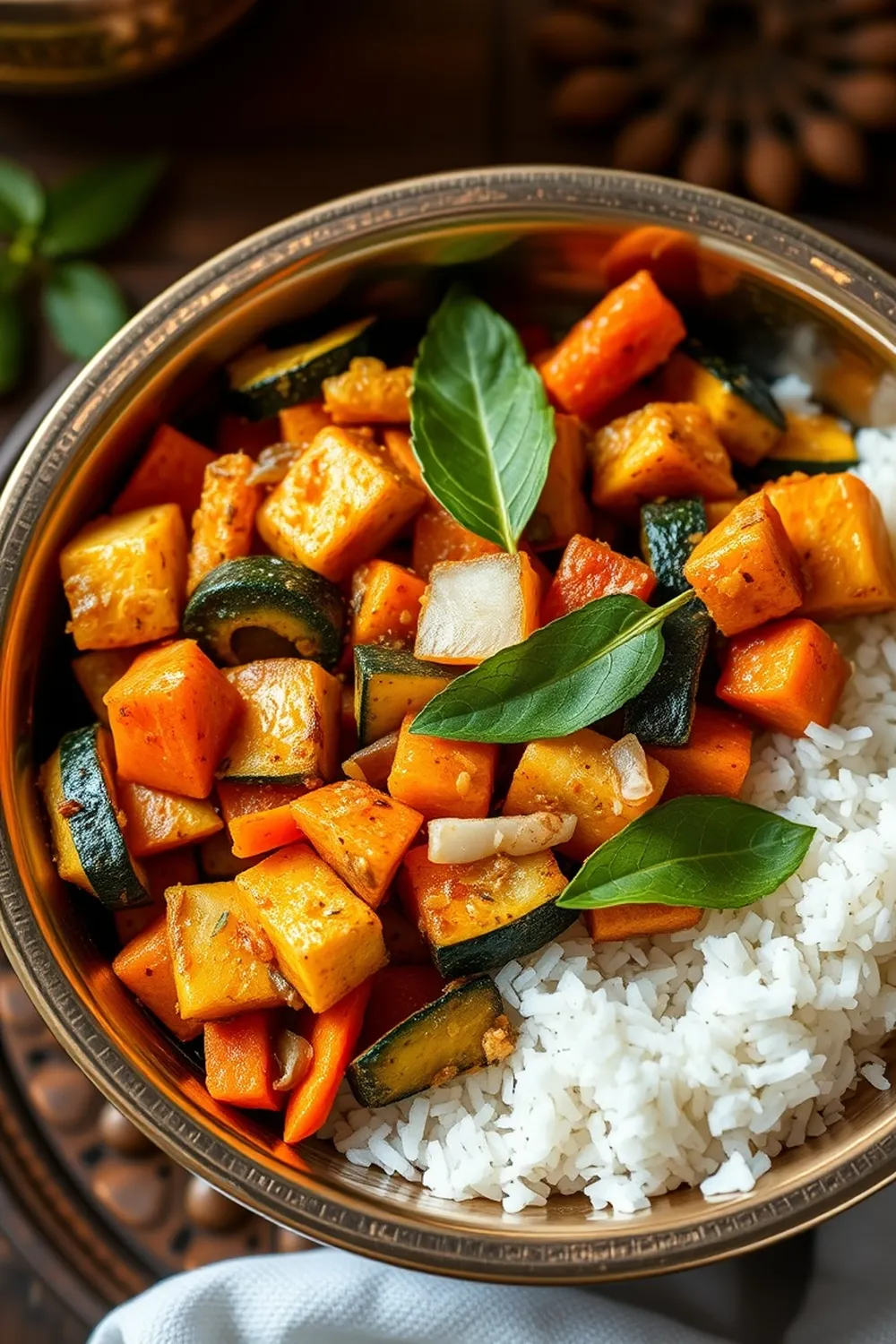
- Heat 1 tablespoon oil in a pan over medium-high heat. Add red bell pepper, carrots, green beans, and broccoli. Sauté for 2 minutes to enhance texture (optional).
- In a separate skillet, heat remaining oil. Add garlic and ginger; sauté for 1 minute until fragrant.
- Stir in green curry paste and Thai chilies. Cook for 1-2 minutes to release flavors.
- Pour in coconut milk and whisk continuously until fully combined. Simmer for 3-4 minutes until thickened.
- Add sautéed vegetables to the skillet. Cook for 2-3 minutes, keeping veggies crisp-tender.
- Mix in tamari, coconut sugar, and salt. Adjust seasoning to taste.
- Fold in Thai basil leaves and kaffir lime leaves (if using). Remove from heat.
- Thin curry with water if desired. Serve hot with jasmine or brown rice.
- Calories:350 kcal25%
- Energy:1464 kJ22%
- Protein:8 g28%
- Carbohydrates:35 mg40%
- Sugar:10 mg8%
- Salt:800 g25%
- Fat:20 g20%
Last Updated on 6 months ago by Neha Deshmukh
Green Curry Vegetable Recipe – Thai Coconut & Basil Delight
Hey everyone! If you’re anything like me, you’re always on the lookout for a vibrant, flavorful meal that doesn’t take forever to make. This Green Curry Vegetable recipe is exactly that – a fragrant, creamy Thai-inspired dish packed with goodness and ready in under 30 minutes. I first stumbled upon green curry during my travels in Thailand, and I’ve been trying to recreate that magic at home ever since. This version is my go-to, and I’m so excited to share it with you!
Why You’ll Love This Recipe
This isn’t just another vegetable curry. It’s a beautiful balance of spicy, sweet, and savory, all wrapped up in a luscious coconut milk sauce. It’s quick enough for a weeknight dinner, impressive enough for guests, and totally customizable to your liking. Plus, it’s a fantastic way to get your veggies in!
Ingredients
Here’s what you’ll need to whip up this delicious green curry:
- 2 tablespoons oil
- 1 large red bell pepper
- 2 medium carrots
- 10 green beans
- 1 small head broccoli
- 5-6 large garlic cloves
- 1 inch ginger
- 2 tablespoons green curry paste
- 1-2 Thai green chilies
- 1 (13.5 oz / 400ml) can coconut milk
- 2 teaspoons tamari (or soy sauce)
- 2 teaspoons coconut sugar (or brown sugar)
- ¼ teaspoon salt
- ¼ cup Thai basil leaves
- 2-3 kaffir lime leaves (optional)
Ingredient Notes
Let’s talk ingredients! A few things can really make or break a curry, so here are my little kitchen secrets:
Coconut Milk: Varieties & Fat Content – Full-fat coconut milk is key for that rich, creamy texture. You can use light coconut milk to reduce the fat, but the curry won’t be quite as decadent. Look for brands with a high coconut extract percentage for the best flavor.
Green Curry Paste: Store-Bought vs. Homemade – While homemade is amazing if you have the time, a good quality store-bought green curry paste works perfectly well. Mae Ploy is a brand I often reach for. Just check the ingredient list for any unwanted additives.
Thai Chilies: Heat Levels & Substitutions – Thai green chilies pack a punch! Start with one if you’re sensitive to spice, and add more to taste. If you can’t find them, serrano peppers are a good substitute.
Kaffir Lime Leaves: Flavor Profile & Availability – These add a unique citrusy aroma. They can sometimes be tricky to find, but Asian grocery stores usually carry them. Don’t worry if you can’t find them – the curry will still be delicious without them (see FAQs for alternatives!).
Tamari: Gluten-Free Soy Sauce Alternative – I love using tamari for a gluten-free option. Regular soy sauce works just as well if you don’t have dietary restrictions.
Step-By-Step Instructions
Alright, let’s get cooking!
- Heat 1 tablespoon of oil in a large pan or wok over medium-high heat. Add the red bell pepper, carrots, green beans, and broccoli. Sauté for about 2 minutes – you want them to start getting a little color, but still be nice and crisp. This step is optional, but I find it enhances the texture.
- In a separate skillet, heat the remaining oil. Add the minced garlic and grated ginger. Sauté for about a minute until fragrant – you don’t want it to burn!
- Stir in the green curry paste and chopped Thai green chilies. Cook for 1-2 minutes, stirring constantly, to really release those amazing flavors. Your kitchen should be smelling incredible right about now!
- Pour in the coconut milk and whisk continuously until everything is well combined. Bring to a simmer and cook for 3-4 minutes, until the sauce starts to thicken slightly.
- Add the sautéed vegetables to the skillet with the curry sauce. Cook for another 2-3 minutes, keeping the veggies crisp-tender. We don’t want mushy vegetables!
- Stir in the tamari, coconut sugar, and salt. Give it a taste and adjust the seasoning as needed. Everyone’s palate is different, so don’t be afraid to experiment!
- Finally, fold in the Thai basil leaves and kaffir lime leaves (if using). Remove from the heat – the basil will wilt quickly.
- If you prefer a thinner curry, simply add a little water until you reach your desired consistency. Serve hot with jasmine or brown rice.
Expert Tips
- Don’t overcrowd the pan when sautéing the vegetables. Work in batches if necessary to ensure they cook evenly.
- Taste as you go! Curry is all about balancing flavors, so adjust the spice, sweetness, and saltiness to your liking.
- For a richer flavor, let the curry simmer for a bit longer.
Variations
Vegan Green Curry: This recipe is already naturally vegan! Just double-check your green curry paste to ensure it doesn’t contain any fish sauce.
Gluten-Free Green Curry: We’re already covered here with the use of tamari!
Spice Level Adjustment: My family loves a bit of heat, but you can easily adjust the spice level by using fewer chilies or removing the seeds.
Festival Adaptation: Buddhist Lent/Vassa: During Buddhist Lent, many followers abstain from rich foods. This curry can be adapted by using less coconut milk and adding more vegetables for a lighter meal.
Serving Suggestions
This green curry is fantastic served with fluffy jasmine rice or healthy brown rice. A side of naan bread is also delicious for soaking up all that flavorful sauce. A sprinkle of chopped peanuts or a squeeze of lime juice adds a nice finishing touch.
Storage Instructions
Leftovers can be stored in an airtight container in the refrigerator for up to 3 days. The flavors actually develop even more overnight! Reheat gently on the stovetop or in the microwave.
FAQs
What vegetables can I substitute in this green curry? Absolutely! Feel free to swap in your favorites – eggplant, zucchini, mushrooms, snap peas, or even potatoes would all work well.
Can I make this green curry ahead of time? Yes! You can make the curry base (up to step 6) a day or two in advance and store it in the refrigerator. Add the basil and kaffir lime leaves just before serving.
How do I adjust the thickness of the curry? Add water, a tablespoon at a time, until you reach your desired consistency.
What is the best type of rice to serve with green curry? Jasmine rice is the classic choice, but brown rice is a healthier option. Basmati rice also works well.
Where can I find kaffir lime leaves and what can I use if I can’t find them? Asian grocery stores are your best bet. If you can’t find them, you can substitute with a teaspoon of lime zest. It won’t be exactly the same, but it will add a similar citrusy note.
Is green curry paste naturally vegan/gluten-free? Not always! Many brands contain fish sauce or shrimp paste. Always check the ingredient list. Tamari is a great gluten-free soy sauce alternative.
How can I reduce the oil content in this recipe? You can reduce the oil to 1 tablespoon total, or even try using a non-stick pan to minimize the amount needed.



Neha Deshmukh
Neha holds a B.A. in History with a focus on Indian and world history, including ancient, medieval, and modern periods. At RecipesOfIndia.org — the world’s largest database of Indian recipes — she combines her love for food and history by exploring how India’s past has shaped its culinary traditions.