- Heat coconut oil in a large pan. Sauté onions until softened.
- Add ginger and garlic pastes; cook until the raw aroma disappears.
- Mix in turmeric, red chili powder, and pepper. Sauté for 2 minutes.
- Stir in vinegar and salt. Layer fish pieces over the masala.
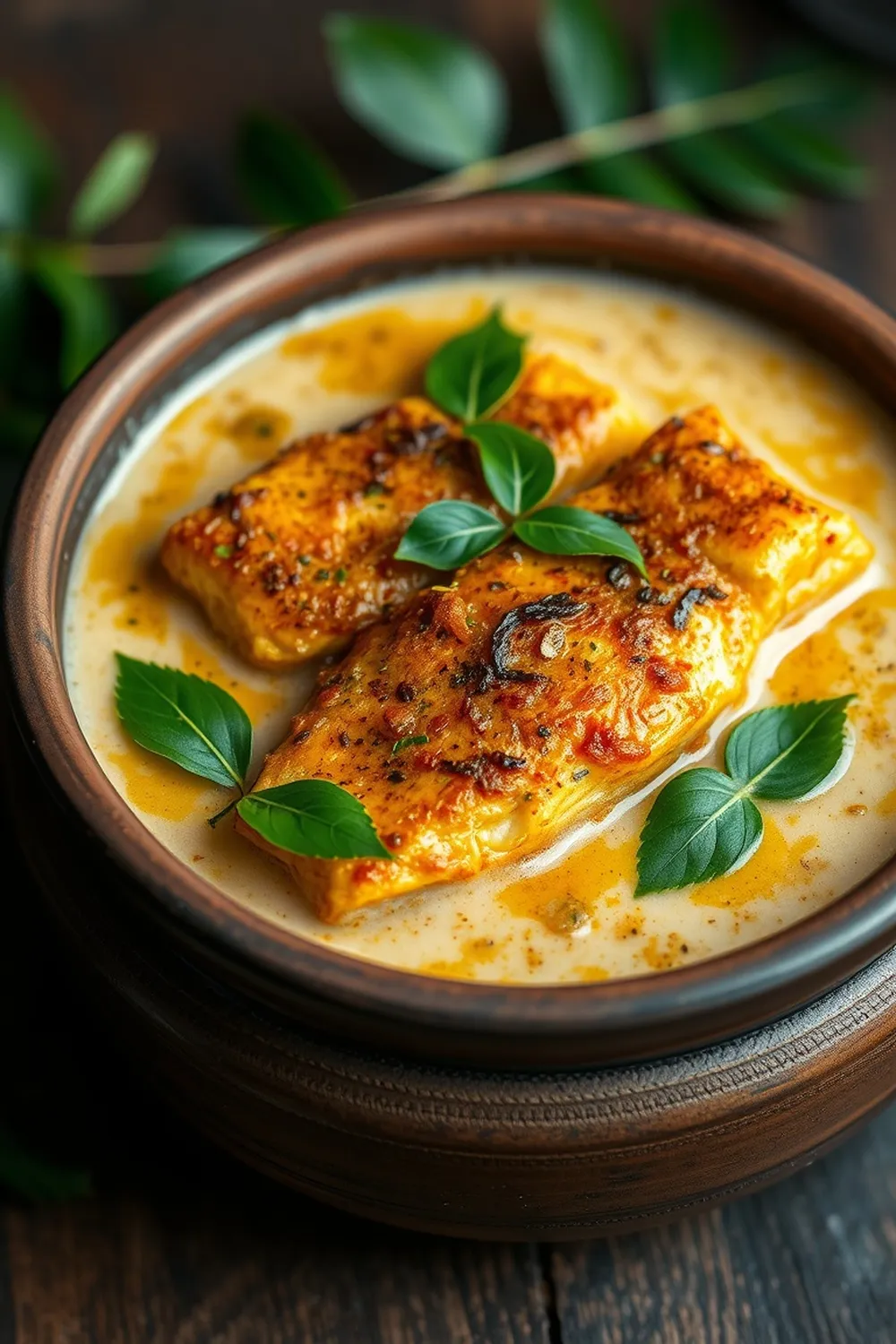
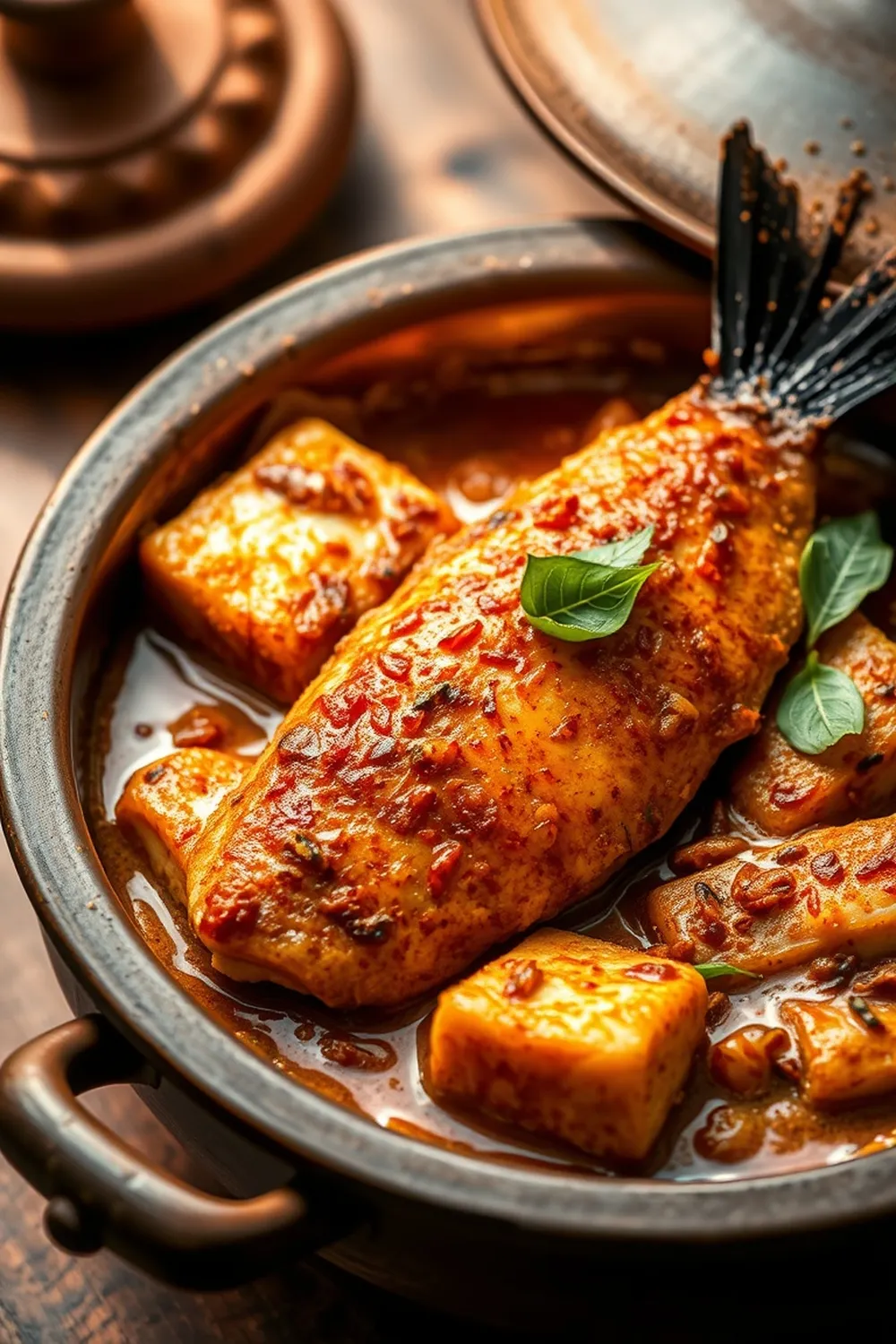
- Gently coat fish with masala using a spoon. Pour coconut milk over the fish.
- Cover and simmer on medium-low heat until fish is fully cooked (avoid flipping unless necessary).
- Turn off heat. Sprinkle curry leaves, cover, and let rest for 15 minutes.
- Adjust salt if needed. Serve warm with chapatis or rice.
- Calories:350 kcal25%
- Energy:1464 kJ22%
- Protein:20 g28%
- Carbohydrates:20 mg40%
- Sugar:5 mg8%
- Salt:500 g25%
- Fat:25 g20%
Last Updated on 5 months ago by Neha Deshmukh
King Fish Curry Recipe – Authentic Kerala Style with Coconut Milk
Introduction
Oh, Kerala fish curry. Just the name conjures up images of sun-drenched coasts, fragrant spices, and the comforting warmth of a home-cooked meal. This King Fish Curry (മീൻ കറി – meen curry in Malayalam!) is a dish I grew up with, and it’s one that always feels like a hug on a plate. I first made this on my own when I moved away from home, desperately trying to recreate the flavours of my childhood. It took a few tries, but I finally got it just right – and I’m so excited to share it with you! It’s a little bit of effort, but trust me, the result is so worth it.
Why You’ll Love This Recipe
This isn’t just any fish curry. It’s a taste of Kerala, packed with flavour and incredibly satisfying. Here’s why you’ll adore it:
- Authentic Flavour: We’re using traditional Kerala spices and techniques.
- Rich & Creamy: The thick coconut milk creates a luxurious texture.
- Relatively Easy: While it has a few steps, it’s totally achievable for a home cook.
- Versatile: Perfect with rice, chapatis, or even appams!
Ingredients
Here’s what you’ll need to create this Kerala masterpiece:
- 6 thick king-fish pieces (about 150-200g each)
- 2 tbsp coconut oil
- 2 large onions, finely chopped
- 1 tsp ginger paste
- 1 tsp garlic paste
- ½ tsp turmeric powder (haldi)
- ½ tsp red chilli powder
- ½ tsp Kashmir red chilli powder
- ½ tsp pepper powder
- 1 tbsp vinegar (I prefer coconut vinegar, but white vinegar works too)
- Salt to taste
- 1 cup thick coconut milk
- Curry leaves for garnish
Ingredient Notes
Let’s talk ingredients! Getting these right makes all the difference.
Coconut Oil: The Foundation of Kerala Cuisine
Coconut oil is essential for that authentic Kerala flavour. It adds a subtle sweetness and aroma that you just can’t replicate with other oils. I always use virgin coconut oil – it has the best flavour. (Approx. 30ml)
King Fish: Choosing the Best Cut
King fish (seer fish or neymeen in Malayalam) is the traditional choice. Look for thick, firm fillets. The thickness is important because it prevents the fish from falling apart during cooking. About 150-200g per piece is ideal.
Spices: Understanding Turmeric, Red Chilli & Kashmir Red Chilli Powders
- Turmeric: Adds colour, flavour, and amazing health benefits! (About 2.5ml)
- Red Chilli Powder: Provides the heat. Adjust to your preference. (About 2.5ml)
- Kashmir Red Chilli Powder: This is the secret to that beautiful red colour and mild flavour. It adds colour without too much heat. Don’t skip it if you can find it! (About 2.5ml)
Coconut Milk: Using Thick Coconut Milk for Richness
Thick coconut milk is crucial for this recipe. It creates that rich, creamy sauce that coats the fish beautifully. Don’t use the watery stuff from a carton – go for the full-fat coconut milk, or even better, freshly squeezed if you can! (Approx. 240ml)
Regional Variations: Exploring Different Kerala Fish Curry Styles
Kerala is a long coastal state, and every region has its own take on fish curry! Some variations include adding tomatoes, tamarind for sourness, or different types of chillies. This recipe is a fairly standard, central Kerala style.
Step-By-Step Instructions
Alright, let’s get cooking!
- Heat the coconut oil in a large, heavy-bottomed pan over medium heat.
- Sauté the chopped onions until they’re softened and lightly golden brown. This usually takes about 5-7 minutes.
- Add the ginger and garlic pastes and cook for another 2-3 minutes, until the raw aroma disappears. You’ll know it’s ready when it smells fragrant.
- Mix in the turmeric powder, red chilli powder, Kashmir red chilli powder, and pepper powder. Sauté for 2 minutes, stirring constantly to prevent burning. This is where the magic happens – the spices bloom and release their flavour!
- Stir in the vinegar and salt. Now, gently layer the king fish pieces over the masala.
- Using a spoon, gently coat each fish piece with the masala. Be careful not to break the fish.
- Pour the thick coconut milk over the fish, ensuring it’s mostly submerged.
- Cover the pan and simmer on medium-low heat for about 10-15 minutes, or until the fish is fully cooked through. Avoid flipping the fish unless absolutely necessary – it’s delicate!
- Turn off the heat. Sprinkle with fresh curry leaves, cover, and let the curry rest for at least 15 minutes. This allows the flavours to meld together beautifully.
- Adjust the salt if needed. Serve warm with chapatis or rice.
Expert Tips
Here are a few things I’ve learned over the years to make this curry perfect:
Achieving the Perfect Masala Consistency
You want the masala to be a thick paste, but not burnt. Keep the heat medium-low and stir constantly. If it starts to stick, add a splash of water.
Cooking the Fish to Flaky Perfection
Don’t overcook the fish! It should be flaky and tender, not rubbery. The cooking time will depend on the thickness of your fish pieces.
The Importance of Simmering
Simmering allows the flavours to develop and the fish to cook gently. Don’t rush this step!
Using the Right Type of Pan
A heavy-bottomed pan is best. It distributes heat evenly and prevents the curry from sticking.
Variations
Want to switch things up? Here are a few ideas:
Vegan King Fish Curry (Using Plant-Based Alternatives)
Substitute the king fish with firm tofu or jackfruit. Marinate the tofu/jackfruit in a little turmeric and salt before adding it to the curry.
Gluten-Free Adaptation
This recipe is naturally gluten-free! Just double-check that your spices are certified gluten-free if you have a severe allergy.
Spice Level Adjustment (Mild, Medium, Hot)
Adjust the amount of red chilli powder to control the heat. For a milder curry, use just ¼ tsp. For a spicier curry, add up to 1 tsp.
Festival Adaptations (Onam, Vishu)
During Onam and Vishu, this curry is often served as part of a larger sadya (feast). You can add a pinch of asafoetida (hing) to the masala for a more festive flavour.
Serving Suggestions
This curry is amazing with:
- Steaming hot rice
- Warm chapatis or roti
- Fluffy appams (a Kerala pancake)
- A side of thoran (stir-fried vegetables)
Storage Instructions
Leftovers can be stored in an airtight container in the refrigerator for up to 2 days. Reheat gently on the stovetop. The flavours actually develop even more overnight!
FAQs
Got questions? I’ve got answers!
What type of fish can I substitute for King Fish?
You can use other firm white fish like pomfret, snapper, or cod.
Can I use thin coconut milk instead of thick? What adjustments should I make?
You can, but the curry won’t be as rich and creamy. Reduce the amount of coconut milk to ¾ cup and add 1-2 tbsp of coconut cream to compensate.
How do I make ginger and garlic paste from scratch?
Simply blend equal parts of peeled ginger and garlic with a little water until smooth.
What is the difference between regular red chilli powder and Kashmir red chilli powder?
Regular red chilli powder is hotter and has a more intense flavour. Kashmir red chilli powder is milder and adds a beautiful red colour.
How can I adjust the sourness of the curry?
Add a squeeze of lime juice or a small piece of tamarind pulp soaked in warm water.
Is it necessary to let the curry rest after cooking? What does it achieve?
Yes! Letting the curry rest allows the flavours to meld together and deepen. It makes a huge difference in the final taste.
Neha Deshmukh
Neha holds a B.A. in History with a focus on Indian and world history, including ancient, medieval, and modern periods. At RecipesOfIndia.org — the world’s largest database of Indian recipes — she combines her love for food and history by exploring how India’s past has shaped its culinary traditions.