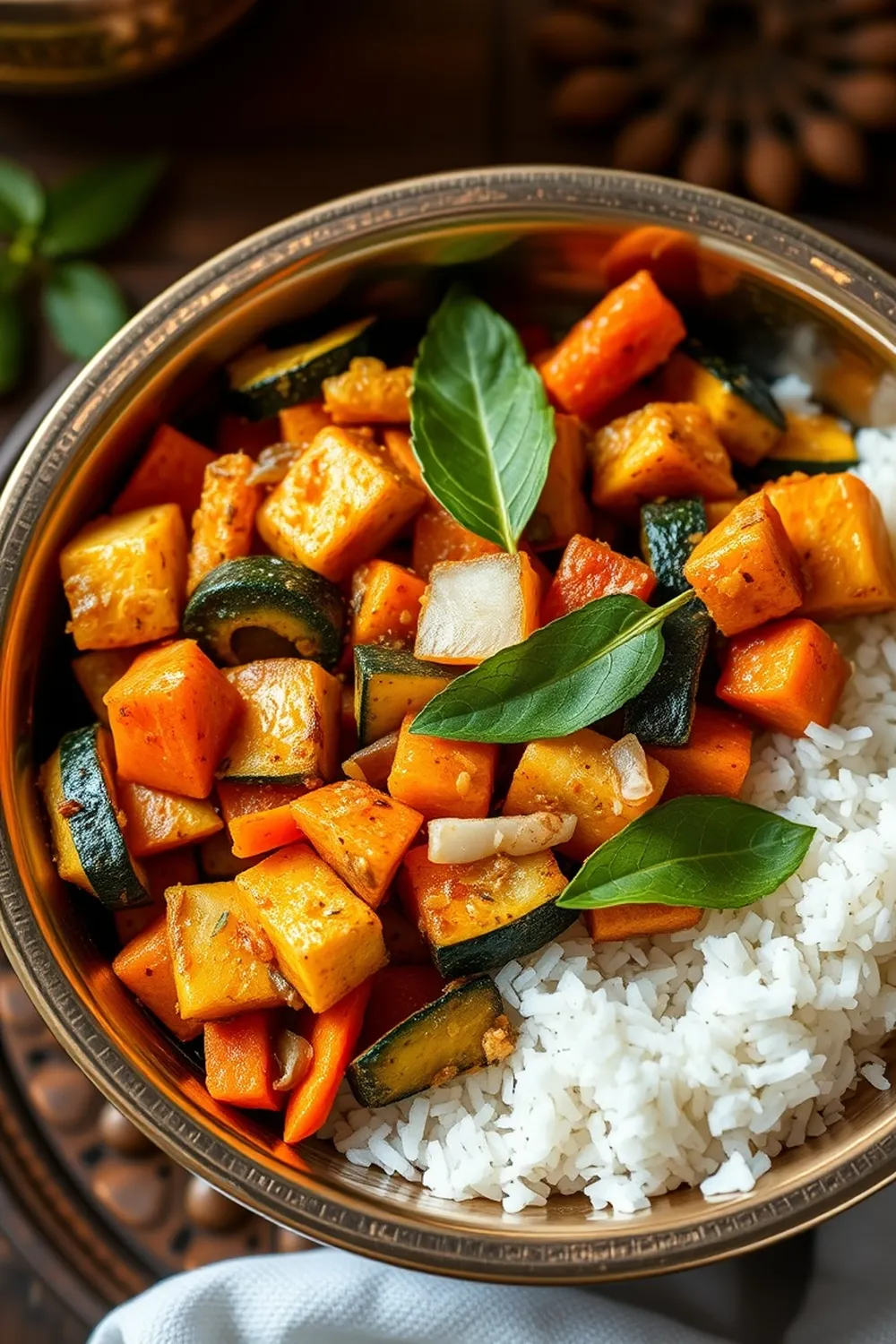
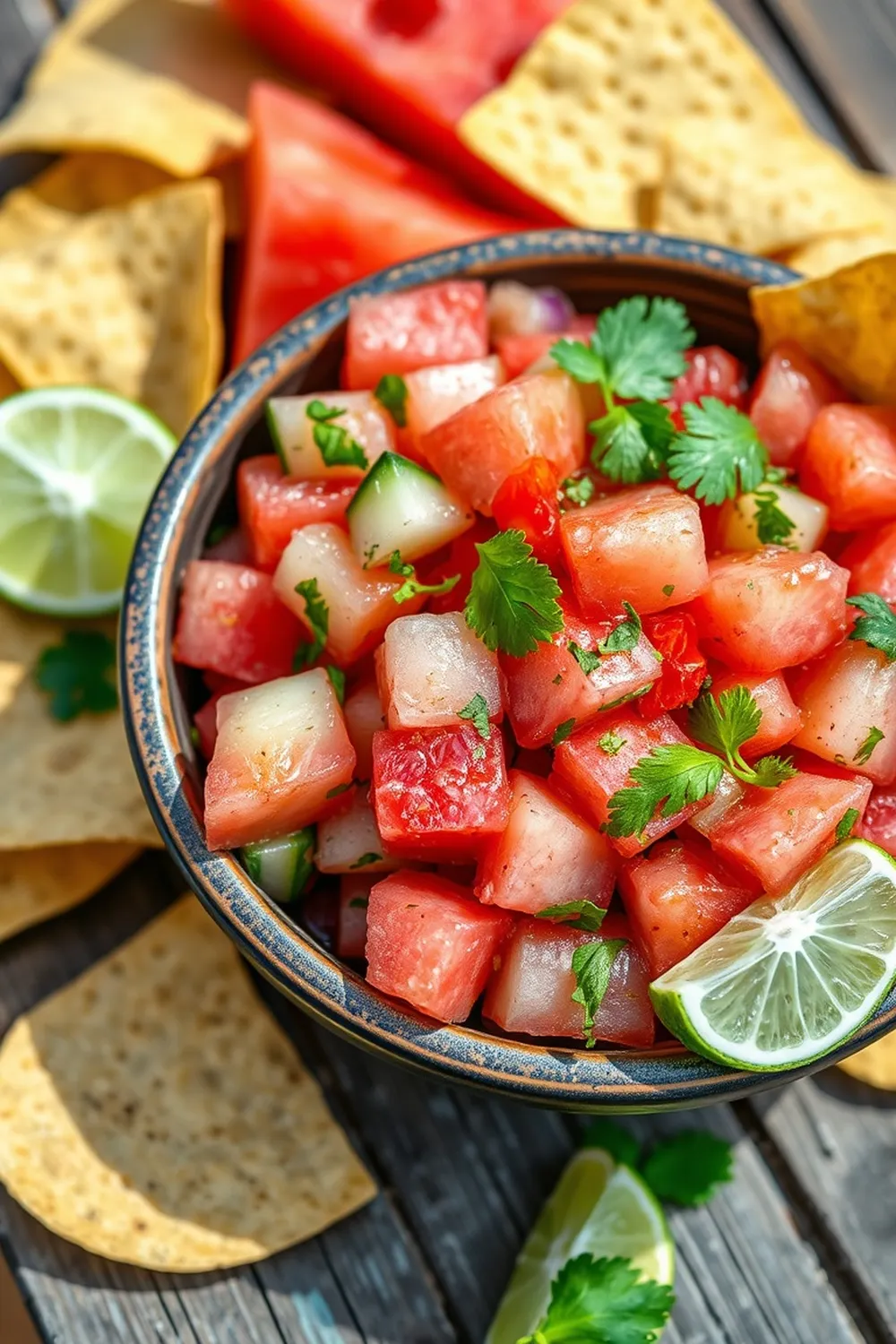
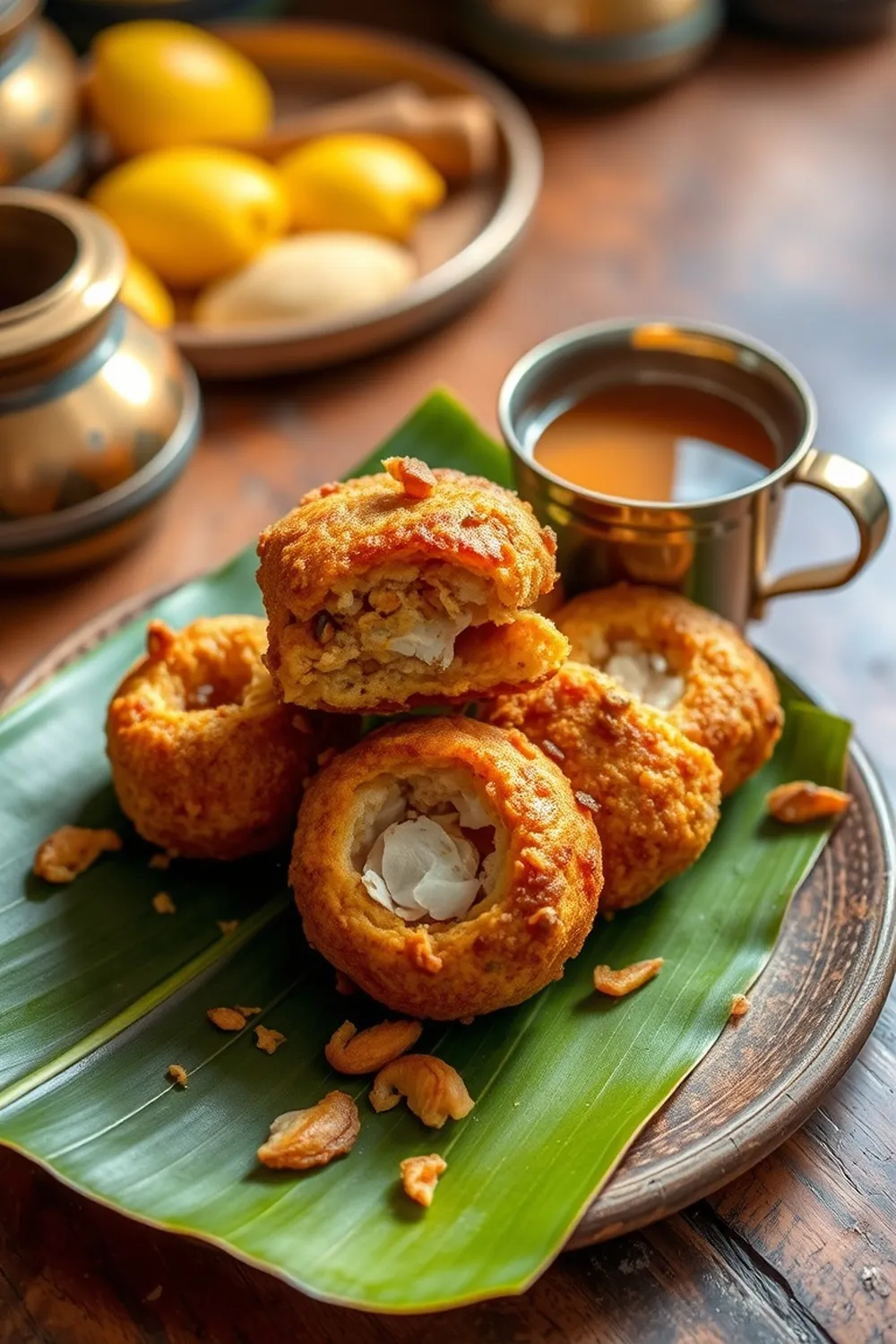
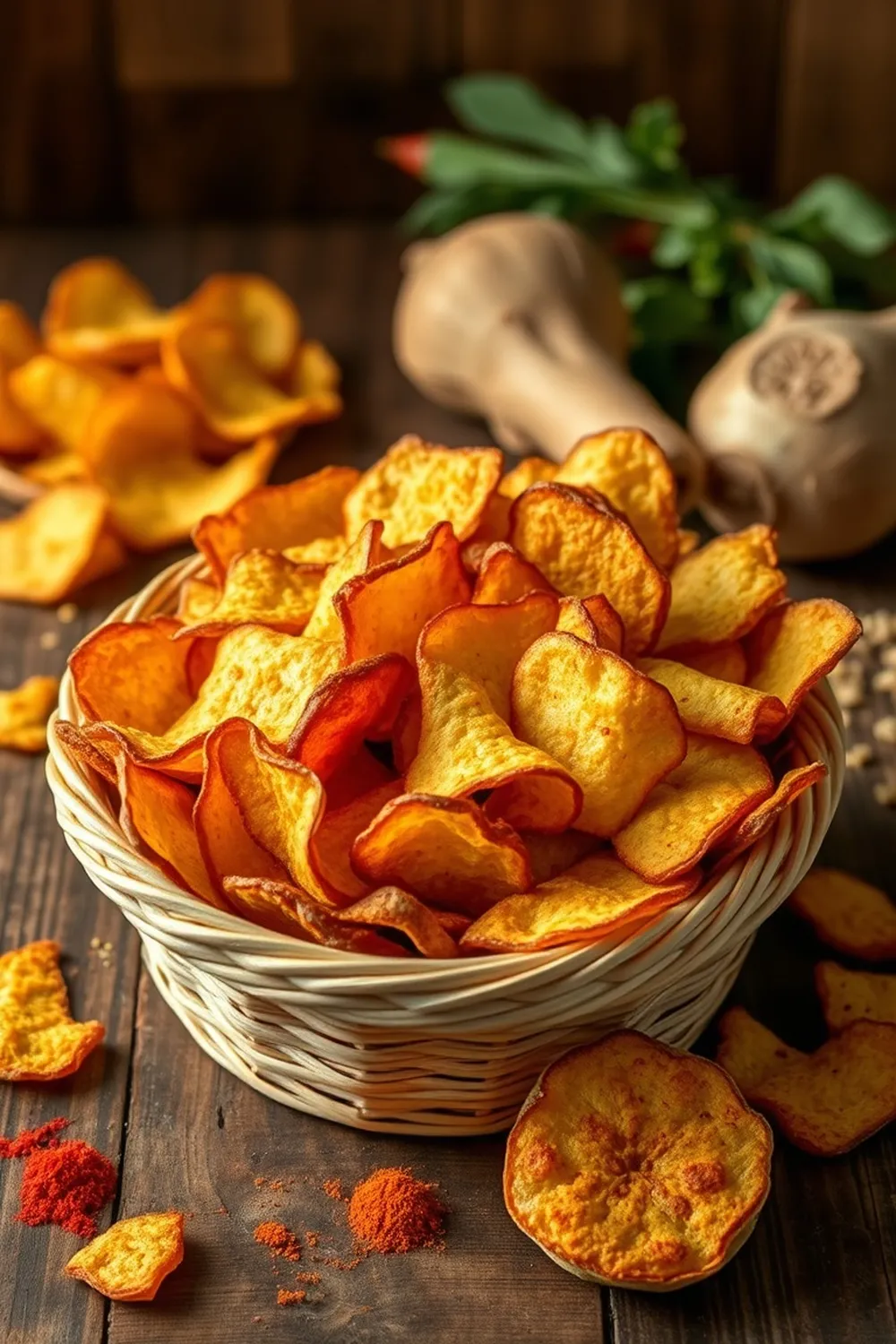
- Grind coconut, cashew nuts, cloves, and green cardamom into a fine paste. Set aside.
- Boil chopped potatoes, carrots, green peas, and beans in water until tender. Drain and set aside.
- Dry roast rava (semolina) on low heat until fragrant. Keep aside.
- Heat oil in a pan. Add mustard seeds and let them splutter.
- Add curry leaves and cashews. Fry until the cashews turn golden brown.
- Sauté chopped onions until translucent. Add ginger-garlic paste and cook until the raw aroma fades.
- Add tomatoes and cook until mushy. Mix in the ground paste and boiled vegetables.
- Season with salt. Pour in water, bring to a boil, then simmer.
- Gradually add roasted rava, stirring continuously to avoid lumps.
- Cook, covered, on low heat for 5-7 minutes until the rava softens.
- Stir in ghee before serving. Serve hot with coconut chutney and sambar.
- Calories:320 kcal25%
- Energy:1338 kJ22%
- Protein:6 g28%
- Carbohydrates:35 mg40%
- Sugar:5 mg8%
- Salt:150 g25%
- Fat:18 g20%
Last Updated on 5 months ago by Neha Deshmukh
Rava Vegetable Recipe – Authentic South Indian Semolina & Veggie Dish
Hey everyone! Today, I’m sharing a recipe that’s close to my heart – Rava Vegetable. It’s a comforting, flavorful dish that’s a staple in many South Indian homes, and honestly, it’s one of the first things I learned to make when I moved out on my own! It’s surprisingly easy to put together, and the result is a vibrant, satisfying meal. Let’s dive in!
Why You’ll Love This Recipe
This Rava Vegetable isn’t just delicious; it’s also incredibly versatile. It’s a fantastic way to sneak in some extra veggies, and it’s perfect for a quick weeknight dinner or a festive occasion. Plus, the subtle sweetness from the rava combined with the savory spices is just chef’s kiss. You’ll love how quickly it comes together and how much everyone enjoys it.
Ingredients
Here’s what you’ll need to make this delightful Rava Vegetable:
- 2 cup rava (white) – about 200g
- 4.5 cup water – 1070ml
- 0.5 tsp mustard seeds – about 2.5g
- 0.5 tsp turmeric powder – about 2.5g
- 3 medium onion (chopped) – about 300g
- 4 medium tomato (chopped) – about 400g
- 1 potato (chopped) – about 150g
- 2 carrot (small pieces) – about 100g
- 1 small bowl green peas – about 75g
- 0.5 bowl beans – about 75g
- 3-4 green chilies (chopped) – adjust to your spice preference
- Few curry leaves – about 10-12
- 6-7 tbsp oil – about 90ml
- 5 tbsp ghee – about 75g
- 9-10 cashew nuts (broken) – about 50g
- To taste salt
- 6-7 cashew nuts (for grinding)
- 0.5 coconut – about 100g grated
- 3 cloves
- 3 green cardamom
Ingredient Notes
Let’s talk ingredients! A few little tips can make all the difference:
- Rava (Semolina) – Types & Toasting: You can use fine or coarse rava, but I prefer fine for this recipe – it gives a smoother texture. Don’t skip toasting the rava! It removes any moisture and brings out a lovely nutty aroma.
- Coconut & Cashew Paste – Regional Variations: This paste is the heart of the flavor. Some families add a touch of ginger to the paste, which is lovely. Feel free to experiment!
- Spice Blend – The Importance of Freshness: Fresh curry leaves are a must! They add such a beautiful fragrance. If you can, use freshly ground spices for the best flavor.
- Oil & Ghee – Choosing the Right Fats: I like to use a neutral oil for the initial frying and then finish with ghee for that rich, authentic flavor. You can use coconut oil for a more South Indian touch.
Step-By-Step Instructions
Alright, let’s get cooking!
- First, let’s make the coconut-cashew paste. Grind the coconut, cashew nuts (for grinding), cloves, and green cardamom into a fine paste with a little water. Set this aside – it’s our flavor bomb!
- Next, boil the chopped potato, carrot, green peas, and beans in water until they’re tender but still hold their shape. Drain them well and set aside.
- Now, dry roast the rava on low heat for about 5-7 minutes, stirring constantly, until it smells fragrant. This is key to preventing a sticky rava vegetable. Keep it aside.
- Heat the oil in a pan. Once hot, add the mustard seeds and let them splutter – that’s when you know they’re ready!
- Add the curry leaves and broken cashew nuts. Fry until the nuts turn golden brown and crispy.
- Add the chopped onions and sauté until they become translucent. Then, add the ginger-garlic paste and cook until the raw aroma disappears.
- Now, add the chopped tomatoes and cook until they become soft and mushy. This is where the base of our flavor starts to build. Mix in the coconut-cashew paste and the boiled vegetables.
- Season with salt. Pour in the water, bring it to a boil, and then simmer for a few minutes.
- Here comes the important part! Gradually add the roasted rava, stirring constantly to avoid any lumps. This takes a little patience, but it’s worth it.
- Cover the pan and cook on low heat for 5-7 minutes, or until the rava softens and absorbs the water.
- Finally, stir in the ghee before serving. This adds a beautiful sheen and richness. Serve hot with coconut chutney and sambar!
Expert Tips
- Stirring is Key: Seriously, don’t stop stirring when you add the rava! Lumps are the enemy.
- Water Consistency: Adjust the water amount slightly depending on the rava you use. You want a slightly thick, porridge-like consistency.
- Taste as You Go: Don’t be afraid to taste and adjust the salt and spice levels to your liking.
Variations
- Vegan Rava Vegetable Recipe: Simply substitute the ghee with a vegan butter alternative or more oil.
- Gluten-Free Considerations: Rava is naturally gluten-free, but always check the packaging to ensure it hasn’t been processed in a facility that also handles gluten.
- Spice Level Adjustment: Reduce or omit the green chilies for a milder flavor. You can also add a pinch of red chili powder for extra heat.
- Festival Adaptations (e.g., Onam, Ganesh Chaturthi): This dish is often made during festivals. My grandmother used to add a little bit of jaggery for a slightly sweet and festive touch during Onam!
Serving Suggestions
Rava Vegetable is fantastic on its own, but it’s even better with accompaniments! I love serving it with:
- Coconut Chutney
- Sambar
- Papadums
- A side of yogurt (raita)
Storage Instructions
Leftovers can be stored in an airtight container in the refrigerator for up to 2 days. Reheat gently on the stovetop with a splash of water to loosen it up.
FAQs
What is the best type of rava to use for this recipe?
Fine rava is generally preferred for a smoother texture, but coarse rava works too! Just adjust the cooking time slightly.
Can I make this recipe ahead of time?
You can prepare the vegetable mixture and coconut-cashew paste ahead of time. However, it’s best to cook the rava vegetable just before serving for the best texture.
How can I adjust the consistency of the rava vegetable?
If it’s too thick, add a little more hot water. If it’s too thin, cook it for a few more minutes, stirring constantly.
What can I substitute for ghee in this recipe?
You can use oil or a vegan butter alternative.
Is this dish suitable for kids, and how can I make it milder?
Yes! Reduce or omit the green chilies and ensure the vegetables are cooked until very soft.


Neha Deshmukh
Neha holds a B.A. in History with a focus on Indian and world history, including ancient, medieval, and modern periods. At RecipesOfIndia.org — the world’s largest database of Indian recipes — she combines her love for food and history by exploring how India’s past has shaped its culinary traditions.