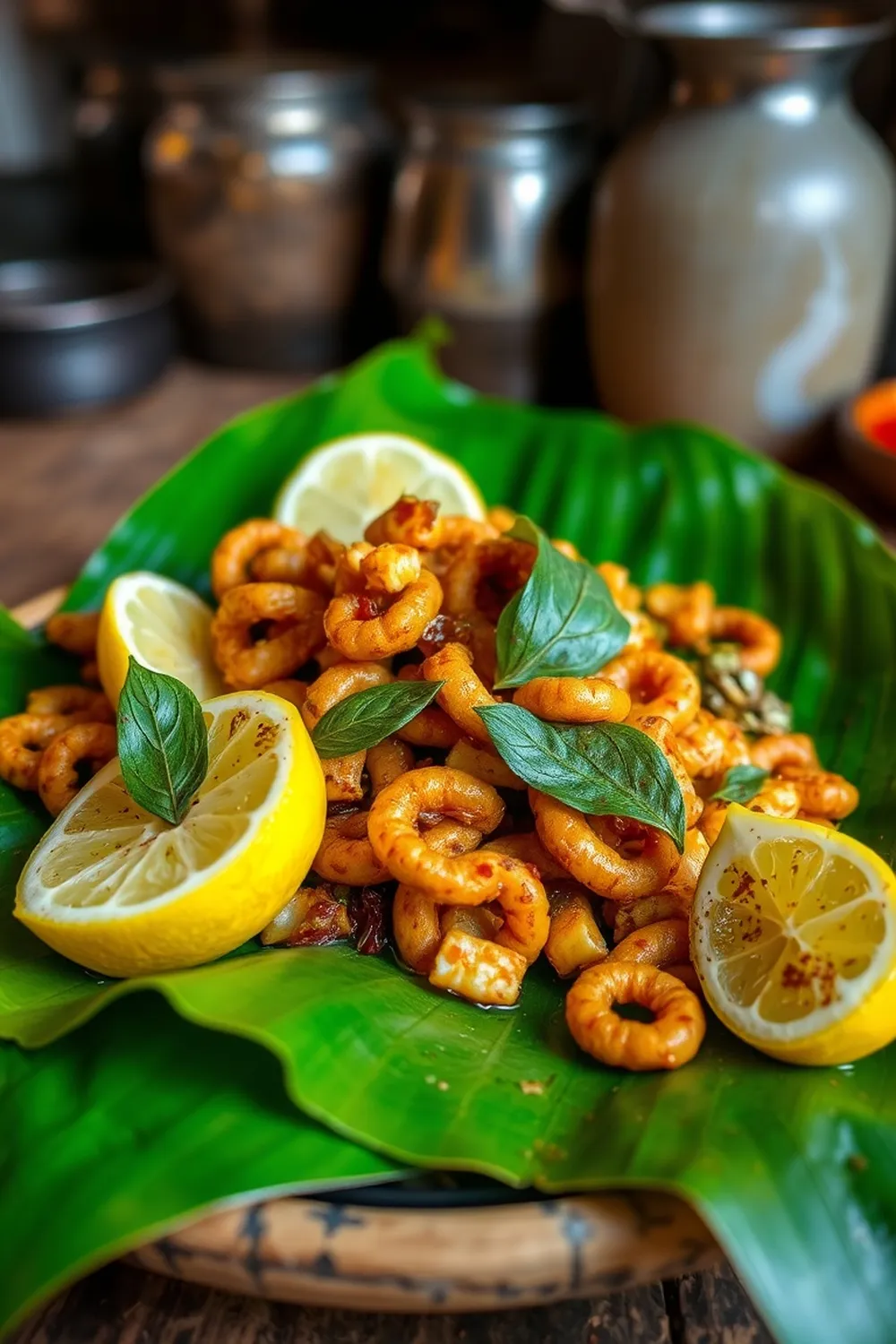
- Marinate squid with red chili powder, Kashmiri red chili powder, turmeric, ginger-garlic paste, lemon juice, salt, and pepper powder. Refrigerate for 1 hour.
- Pressure cook the marinated squid for 3 whistles. Allow to cool naturally.
- Heat coconut oil in a pan. Fry curry leaves until crisp.
- Add cooked squid with its liquid. Sauté on high heat until browned and liquid evaporates.
- Serve hot with rice, dal, or chapatis.
- Calories:220 kcal25%
- Energy:920 kJ22%
- Protein:25 g28%
- Carbohydrates:8 mg40%
- Sugar:1 mg8%
- Salt:450 g25%
- Fat:10 g20%
Last Updated on 5 months ago by Neha Deshmukh
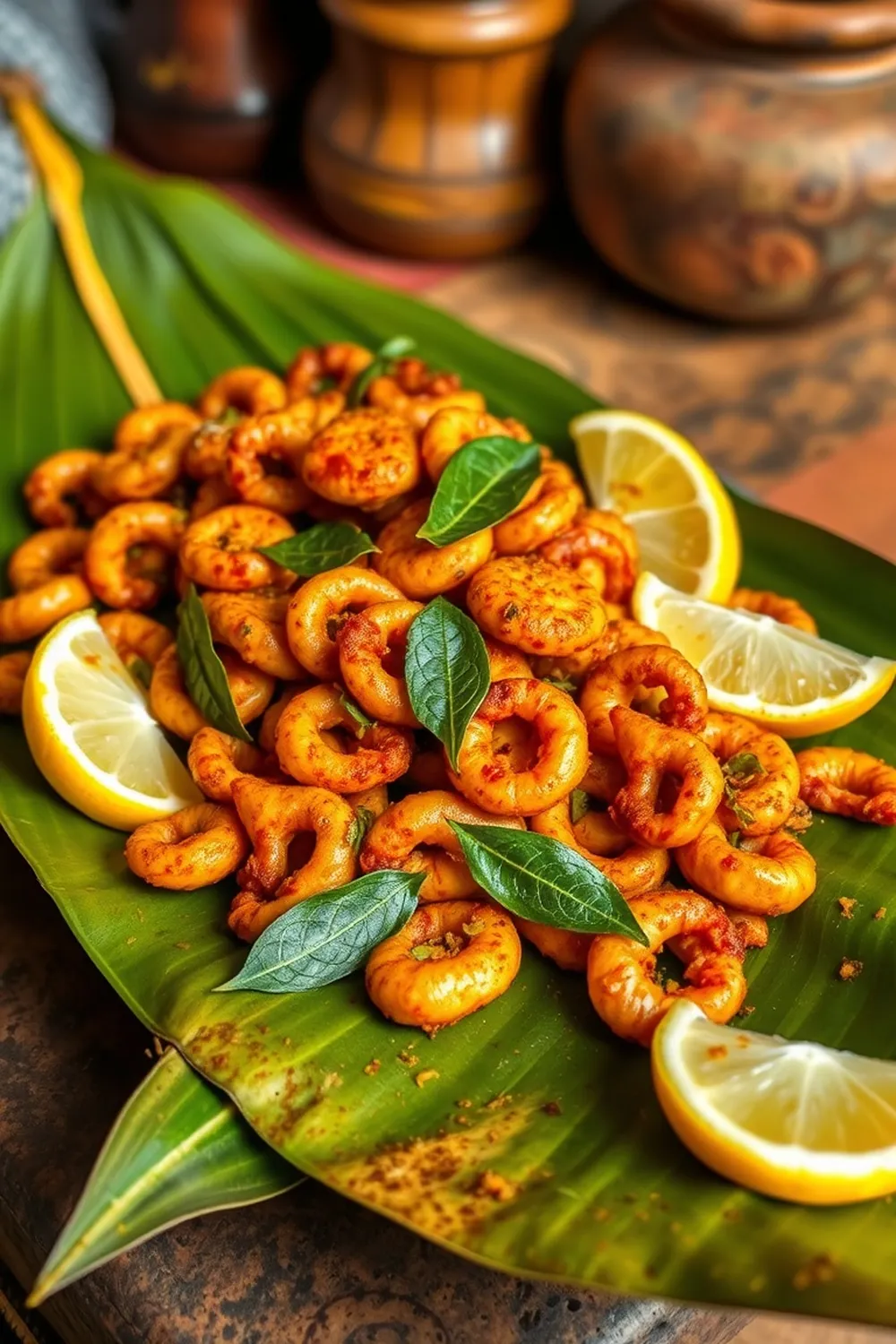
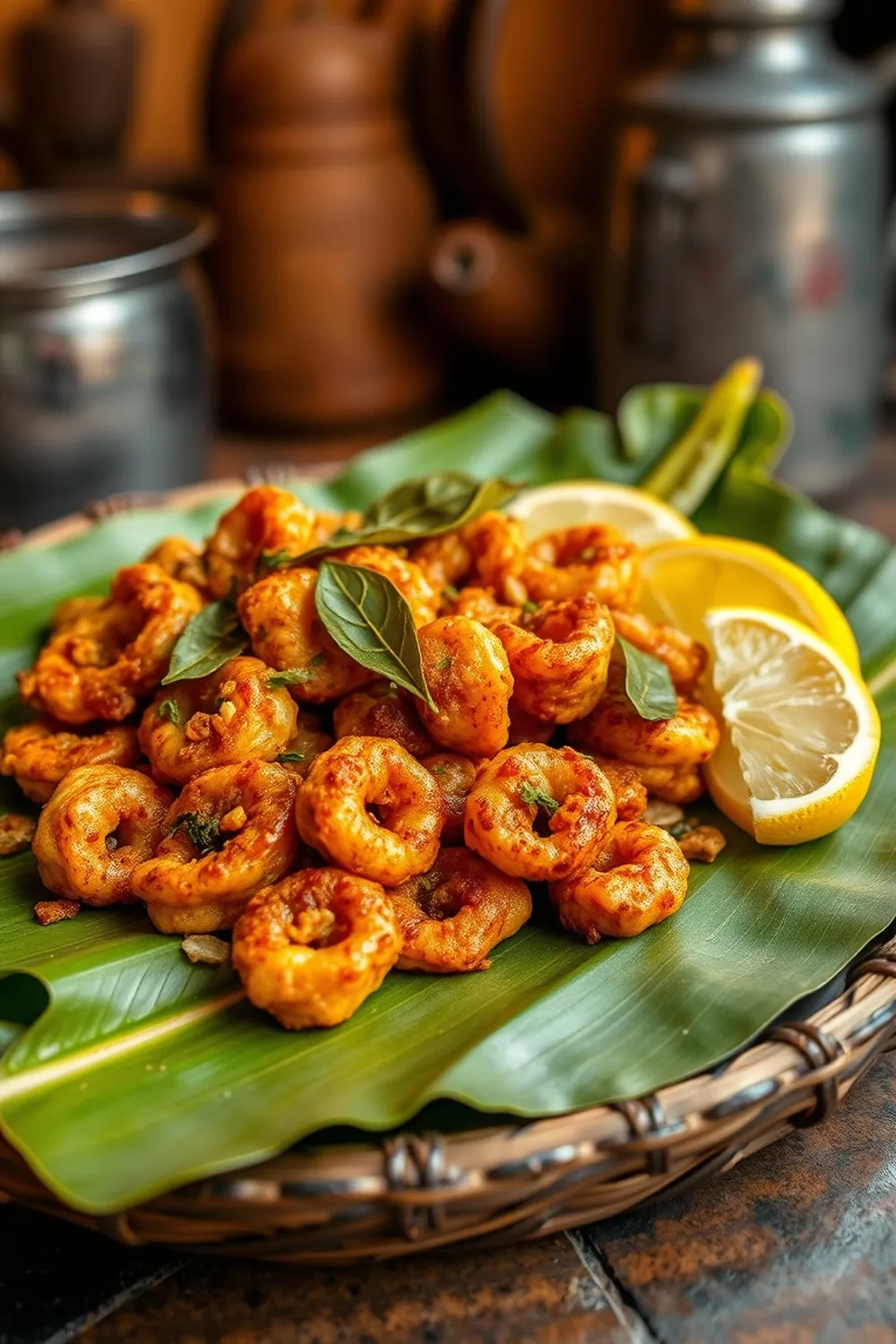
Spicy Squid Recipe – Kerala Style with Coconut Oil & Curry Leaves
Hey everyone! If you’re anything like me, you’re always on the lookout for a flavourful, slightly fiery dish that’s a little different from the usual. This spicy squid recipe, inspired by the incredible cuisine of Kerala, is exactly that. I first made this a few years ago after a trip to Kochi, and it’s been a family favourite ever since. The combination of tender squid, aromatic spices, and that signature Kerala coconut oil… honestly, it’s magic!
Why You’ll Love This Recipe
This isn’t just another seafood dish. It’s a vibrant explosion of South Indian flavours. It’s relatively quick to make (once the marinating is done!), and the result is a dish that’s both comforting and exciting. Plus, the aroma while it’s cooking? Unbeatable. You’ll be hooked after the first bite, I promise!
Ingredients
Here’s what you’ll need to create this Kerala-style squid masterpiece:
- 1 kg squid, cleaned and cut into rings
- 2 tsp red chilli powder (adjust to your spice preference!)
- 1 tsp Kashmiri red chilli powder (for colour and a mild heat)
- 1 tsp turmeric powder
- 1 tbsp ginger garlic paste
- 1 lemon, juiced
- Salt to taste
- 1 tsp pepper powder
- 2 tbsp coconut oil
- 2 sprigs curry leaves
Ingredient Notes
Let’s talk ingredients for a sec, because getting these right makes all the difference.
Squid Selection & Freshness
Freshness is key when it comes to squid. Look for squid that smells fresh (not fishy!) and has a pearly white colour. If you can, buy it the same day you plan to cook it.
Kashmiri Red Chilli Powder: Colour & Flavour
Don’t skip the Kashmiri red chilli powder! It gives the dish a beautiful vibrant red colour and a lovely, mild fruity flavour. It’s different from regular chilli powder, which can be too harsh.
The Importance of Coconut Oil in Kerala Cuisine
Coconut oil is essential in Kerala cooking. It adds a unique aroma and flavour that you just can’t replicate with other oils. It’s what truly makes this dish sing. I always use cold-pressed coconut oil for the best flavour.
Curry Leaves: A South Indian Staple
Curry leaves are another non-negotiable. They have a wonderfully citrusy, almost anise-like flavour. Fry them in the oil until they’re crispy – that’s when they release all their goodness!
Step-By-Step Instructions
Alright, let’s get cooking!
- Marinate the Squid: In a large bowl, combine the squid with red chilli powder, Kashmiri red chilli powder, turmeric powder, ginger garlic paste, lemon juice, salt, and pepper powder. Give it a good mix, ensuring the squid is well coated. Cover and refrigerate for at least an hour – longer is even better!
- Pressure Cook: Transfer the marinated squid to a pressure cooker. Add about 1/2 cup of water (the liquid from the marinade will also help). Pressure cook for 3 whistles on medium heat. Once done, let the pressure release naturally. Don’t rush this step!
- Fry the Curry Leaves: Heat the coconut oil in a pan over medium-high heat. Add the curry leaves and fry until they turn dark green and crispy. Be careful, they can splatter!
- Sauté the Squid: Add the cooked squid (along with the liquid from the pressure cooker) to the pan with the crispy curry leaves. Sauté on high heat, stirring constantly, until the liquid evaporates and the squid is nicely browned. This usually takes about 5-7 minutes.
- Serve: And that’s it! Serve hot with steamed rice, a comforting dal, or warm chapatis.
Expert Tips
A few little things that’ll take your squid game to the next level:
- Achieving the Perfect Squid Texture: Don’t overcook the squid! Overcooked squid becomes rubbery. The pressure cooking method helps keep it tender, but keep a close eye on it during the final sauté.
- Balancing the Spice Level: Feel free to adjust the amount of chilli powder to suit your taste. Start with less and add more if you like it extra spicy.
- Don’t overcrowd the pan: When sautéing, work in batches if necessary to ensure the squid browns properly.
Variations
Want to switch things up? Here are a few ideas:
- Vegan Adaptation (Using Plant-Based Alternatives): While this is a seafood recipe, you could try using king oyster mushrooms sliced into rings for a similar texture. Marinate and cook them the same way.
- Gluten-Free Adaptation: This recipe is naturally gluten-free! Just double-check that your spice powders haven’t been processed in a facility that also handles gluten.
- Spice Level Adjustment (Mild to Extra Spicy): For a milder flavour, reduce the red chilli powder to 1 tsp. For extra heat, add a pinch of cayenne pepper or a finely chopped green chilli.
- Festival Adaptation (Onam/Vishnu Festival): This dish would be a fantastic addition to a Kerala Sadhya spread for Onam or Vishnu Festival.
Serving Suggestions
This spicy squid is incredibly versatile. Here are a few of my favourite ways to serve it:
- With a side of fluffy white rice and a cooling cucumber raita.
- Alongside a simple dal and some warm chapatis.
- As part of a larger South Indian meal with various vegetable curries and appams.
Storage Instructions
Leftovers can be stored in an airtight container in the refrigerator for up to 2 days. Reheat gently in a pan or microwave. It’s best enjoyed fresh, though!
FAQs
Got questions? I’ve got answers!
What type of squid is best for this recipe?
Indian squid (also known as calamari) works beautifully. You can also use other types of squid, but make sure it’s cleaned properly.
Can I use a different oil instead of coconut oil?
While coconut oil is traditional and adds a unique flavour, you can use vegetable oil or sunflower oil in a pinch. But honestly, the coconut oil really makes a difference!
How do I know if the squid is cooked properly?
The squid should be opaque and firm to the touch. Avoid overcooking, as it will become rubbery.
Can this dish be made ahead of time?
You can marinate the squid a day in advance. However, it’s best to cook it just before serving for the best texture.
What is the best way to remove the squid’s membrane?
The membrane is a thin, translucent layer that can be a bit tough. To remove it, simply peel it off with your fingers or a small knife. It’s not essential to remove it, but it improves the texture.
Enjoy! I really hope you give this recipe a try. Let me know what you think in the comments below. Happy cooking!

Neha Deshmukh
Neha holds a B.A. in History with a focus on Indian and world history, including ancient, medieval, and modern periods. At RecipesOfIndia.org — the world’s largest database of Indian recipes — she combines her love for food and history by exploring how India’s past has shaped its culinary traditions.