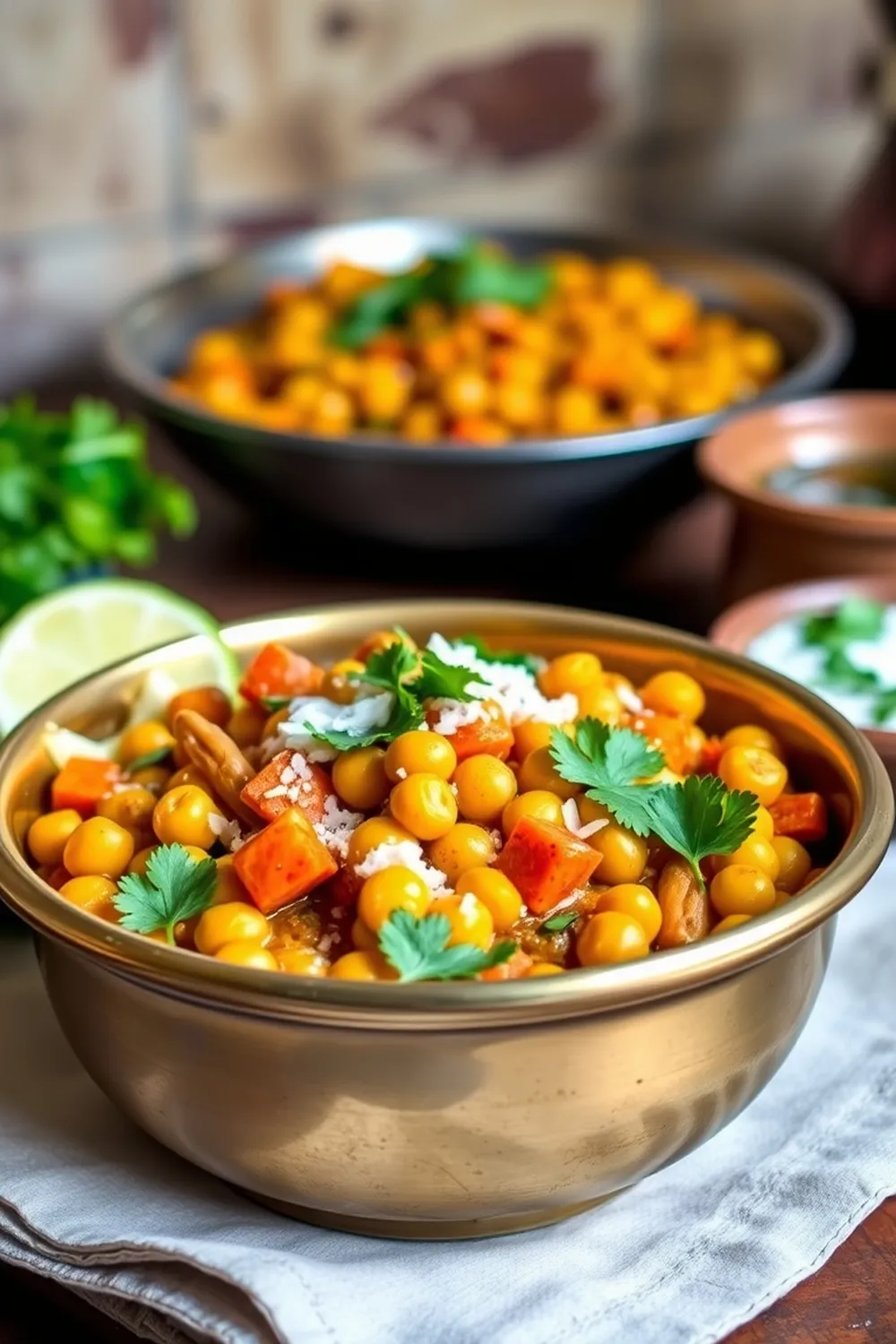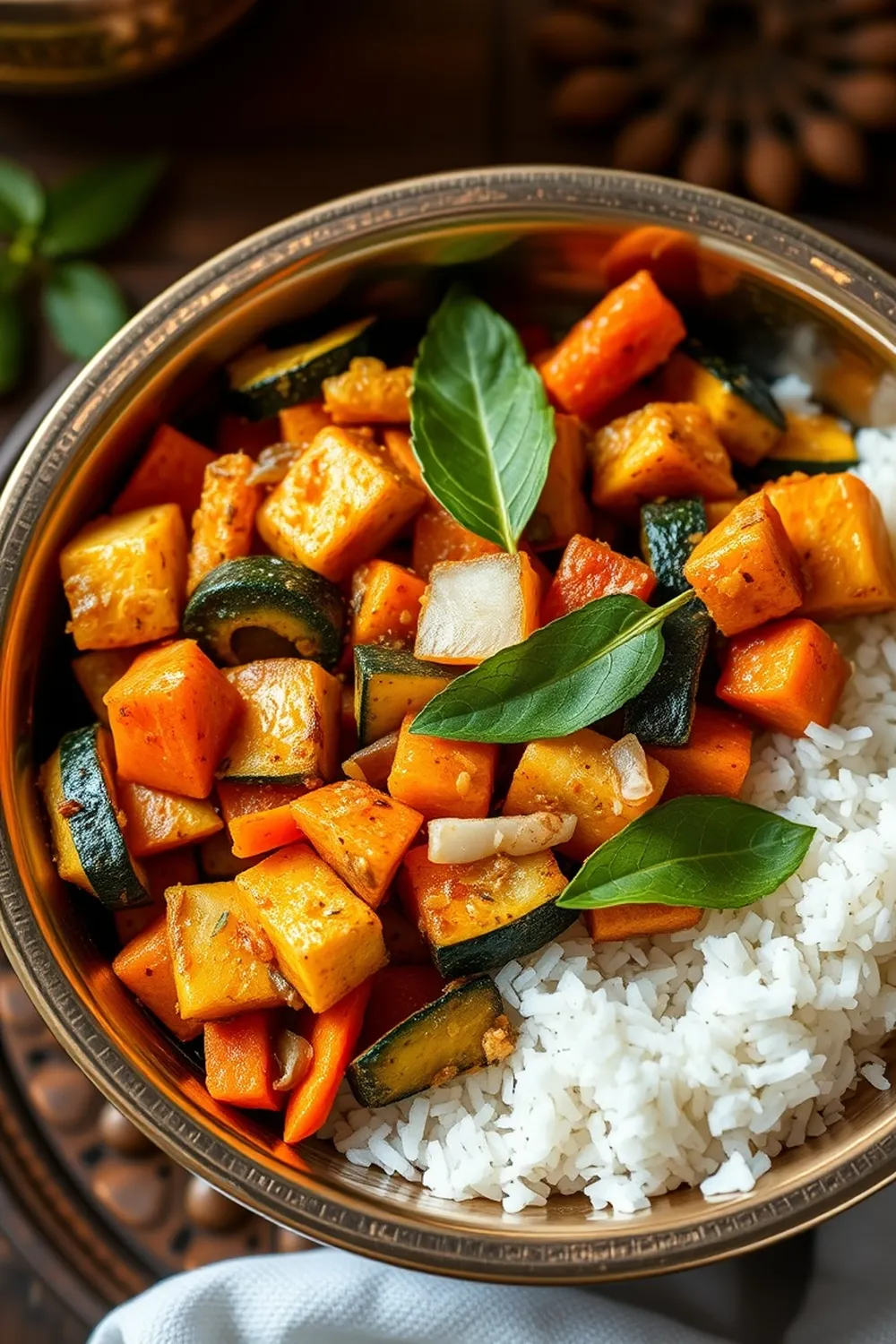
- Grind cinnamon, cardamom, cloves, *marathi moggu* (dried flower buds), peppercorns, coriander seeds, cumin, roasted *chana dal* (split chickpeas), garlic, ginger, coriander leaves, coconut, green chilies, and water into a smooth paste.
- Heat oil in a pan. Add mustard seeds and *urad dal* (split black lentils). Fry until golden.
- Add curry leaves, asafoetida, and red chilies. Sauté for 10 seconds.
- Add chopped onions and sauté until translucent. Mix in turmeric powder.
- Add mixed vegetables and tomatoes. Pour in water, season with salt, and cook covered until the vegetables soften.
- Stir in the ground spice paste and simmer for 7-8 minutes until the gravy thickens.
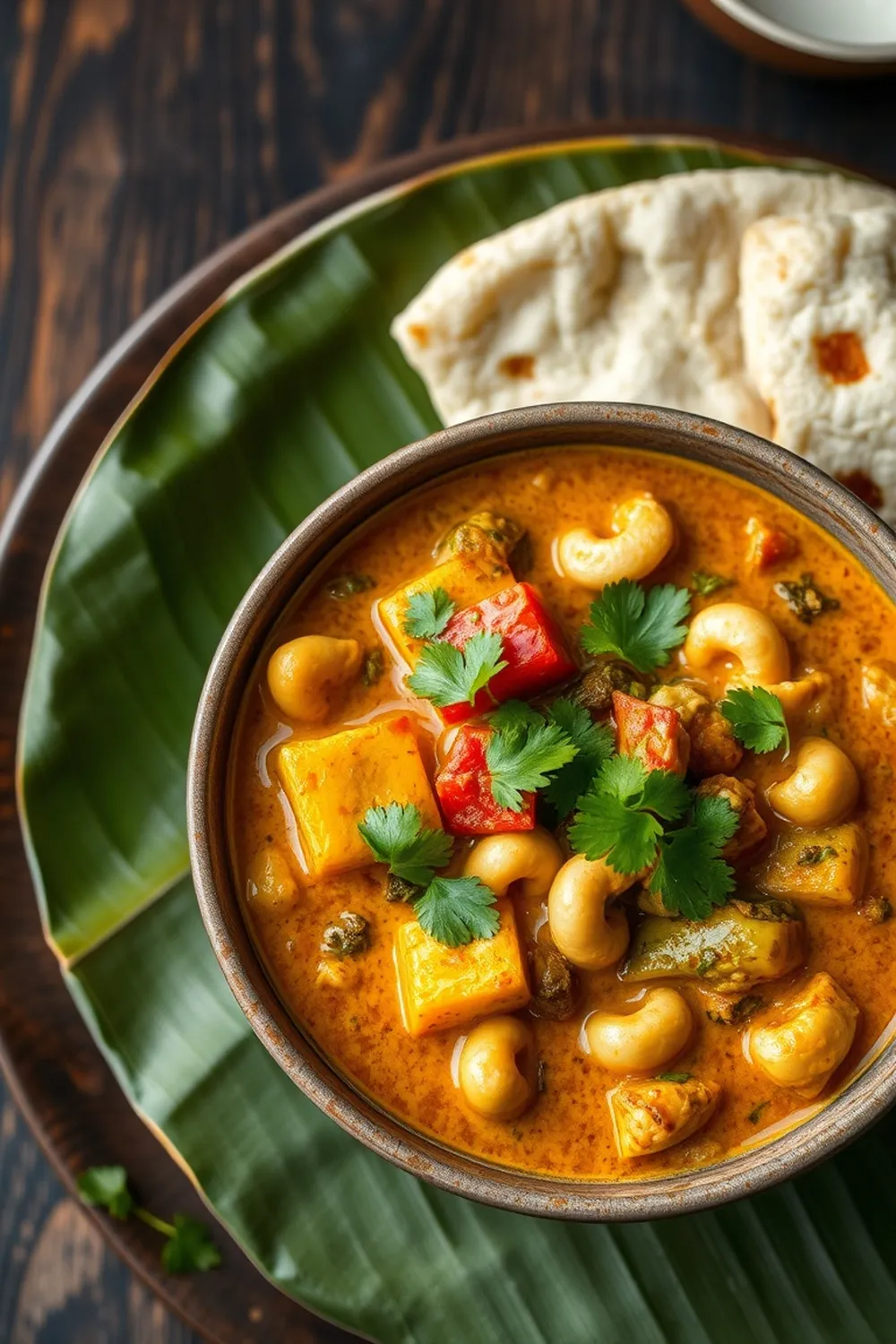
- Garnish with fried cashews and coriander leaves. Serve hot with dosa or poori.
- Calories:350 kcal25%
- Energy:1464 kJ22%
- Protein:8 g28%
- Carbohydrates:45 mg40%
- Sugar:8 mg8%
- Salt:600 g25%
- Fat:18 g20%
Last Updated on 6 months ago by Neha Deshmukh
Spicy Vegetable Curry Recipe – Marathi Moggu & Coconut Flavors
Introduction
There’s just something so comforting about a flavorful vegetable curry, isn’t there? This one is extra special. It’s a recipe I’ve been perfecting for years, inspired by the vibrant flavors of South Indian cuisine. The secret? Marathi Moggu, also known as Kapok buds, which lend a truly unique aroma and taste. It’s a bit of a hidden gem, but trust me, once you try it, you’ll be hooked! This Spicy Vegetable Curry is perfect with a fluffy dosa, warm poori, or even a simple bowl of rice.
Why You’ll Love This Recipe
This isn’t just another vegetable curry. It’s a flavor explosion! The combination of aromatic spices, fresh coconut, and the distinctive Marathi Moggu creates a depth of flavor that’s truly unforgettable. Plus, it’s a fantastic way to get your daily dose of veggies. It’s moderately spiced, but easily adjustable to your preference.
Ingredients
Here’s what you’ll need to create this delicious curry:
- 1 inch cinnamon
- 2 green cardamoms
- 2 to 3 cloves
- 2 Marathi Moggu (Kapok buds)
- 18 to 20 whole black peppercorns
- 1 tablespoon coriander seeds
- 1 teaspoon cumin seed
- 1 tablespoon roasted chana dal
- 3 to 4 small garlic cloves
- ?? inch ginger
- 2 tablespoons chopped coriander leaves
- ?? cup grated coconut
- 1 or 2 green chilies
- ?? cup water (for grinding)
- 2 tablespoons oil
- 1 teaspoon mustard seeds
- 1 teaspoon split husked black gram (urad dal)
- 8 to 10 curry leaves
- 1 pinch asafoetida (hing)
- 1 to 2 dry red chillies
- 1 medium onion
- 1 pinch turmeric powder
- 1.5 to 2 cups mixed vegetables
- 1 small tomato
- 1.25 cups water (for cooking)
Ingredient Notes
Let’s talk ingredients! A few notes to help you get the best results:
- Marathi Moggu (Kapok Buds): A Unique Flavor Profile – These buds have a slightly floral, resinous aroma. They’re key to the curry’s distinctive taste. You can find them at Indian grocery stores or online.
- Roasted Chana Dal: Adding Texture and Nutrients – Roasting the chana dal (split chickpeas) enhances its nutty flavor and adds a lovely texture to the curry. If you don’t have roasted, you can dry roast it in a pan for a few minutes until golden brown.
- Spice Blend: The Heart of the Curry – Don’t skimp on the spices! Freshly grinding them makes a huge difference. I like to use a small spice grinder for this.
- Regional Variations in Vegetable Choice – Feel free to use whatever mixed vegetables you enjoy! I often use potatoes, carrots, beans, cauliflower, and peas.
- Oil Selection: Traditional South Indian Oils – Traditionally, coconut oil is used in South Indian cooking, which adds a beautiful aroma. However, you can also use vegetable oil or sunflower oil.
Step-By-Step Instructions
Alright, let’s get cooking!
- First, we’ll make the spice paste. Grind the cinnamon, cardamoms, cloves, Marathi Moggu, peppercorns, coriander seeds, cumin, roasted chana dal, garlic, ginger, coriander leaves, coconut, green chilies, and 1/2 cup of water into a smooth, vibrant paste. Set this aside.
- Now, heat the oil in a pan over medium heat. Once hot, add the mustard seeds and urad dal. Listen for the mustard seeds to splutter – that’s how you know they’re ready!
- Add the curry leaves, asafoetida, and dry red chilies. Sauté for about 10 seconds until fragrant. Be careful not to burn the chilies!
- Add the chopped onion and sauté until it turns translucent and slightly golden. Stir in a pinch of turmeric powder.
- Add your mixed vegetables and chopped tomato. Pour in 1.25 cups of water, season with salt, and bring to a boil. Cover the pan and let the veggies cook until they’re tender, about 10-15 minutes.
- Now for the magic! Stir in the ground spice paste and simmer for 7-8 minutes, stirring occasionally, until the gravy thickens and the flavors meld together beautifully.
- Finally, garnish with fried cashews (if using) and fresh coriander leaves. Serve hot with dosa, poori, or rice.
Expert Tips
- Don’t be afraid to adjust the amount of green chilies to suit your spice preference.
- For a richer flavor, you can add a tablespoon of ghee (clarified butter) along with the oil.
- If the gravy is too thick, add a little more water. If it’s too thin, simmer for a few more minutes.
Variations
- Vegan Adaptation: This recipe is naturally vegan! Just ensure your asafoetida doesn’t contain any wheat flour (some brands do).
- Gluten-Free Adaptation: This recipe is also naturally gluten-free.
- Spice Level Adjustment: Reduce the number of green chilies or remove the dry red chilies for a milder curry. Add a pinch of cayenne pepper for extra heat.
- Festival Adaptations (Onam, Ganesh Chaturthi): This curry is a wonderful addition to a festive South Indian spread. It’s often served as part of the Onam Sadhya or during Ganesh Chaturthi celebrations. My grandmother always made a larger batch for these occasions!
Serving Suggestions
This curry is incredibly versatile. Here are a few of my favorite ways to serve it:
- With crispy dosas for a classic South Indian breakfast or dinner.
- Alongside fluffy pooris for a satisfying meal.
- Served with a side of steaming rice and papadums.
- Paired with a cooling raita (yogurt dip).
Storage Instructions
Leftovers can be stored in an airtight container in the refrigerator for up to 3 days. Reheat gently on the stovetop or in the microwave. The flavors actually develop even more overnight!
FAQs
- What is Marathi Moggu and where can I find it? Marathi Moggu, or Kapok buds, are flower buds with a unique aroma. You can find them at Indian grocery stores or online retailers specializing in Indian spices.
- Can I use store-bought curry paste instead of making my own? While you can use store-bought curry paste, the flavor won’t be quite the same. The homemade spice paste is what truly makes this curry special.
- What vegetables work best in this curry? Potatoes, carrots, beans, cauliflower, peas, and eggplant are all great choices. Feel free to experiment with your favorites!
- How can I adjust the consistency of the gravy? If the gravy is too thick, add a little more water. If it’s too thin, simmer for a few more minutes.
- Can this curry be made ahead of time? Yes! You can make the spice paste and even cook the curry a day ahead. The flavors will meld together beautifully overnight. Just reheat gently before serving.



Neha Deshmukh
Neha holds a B.A. in History with a focus on Indian and world history, including ancient, medieval, and modern periods. At RecipesOfIndia.org — the world’s largest database of Indian recipes — she combines her love for food and history by exploring how India’s past has shaped its culinary traditions.