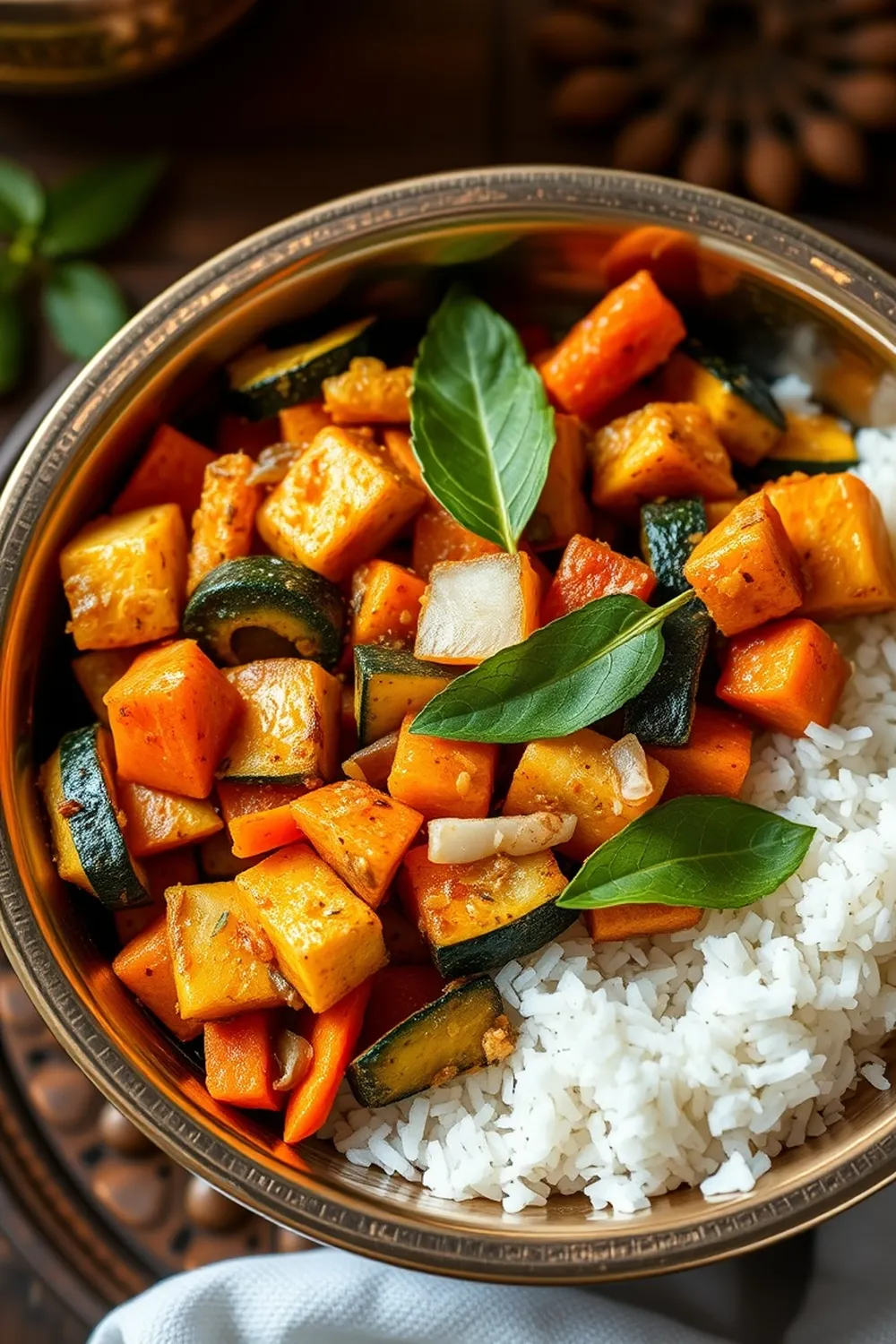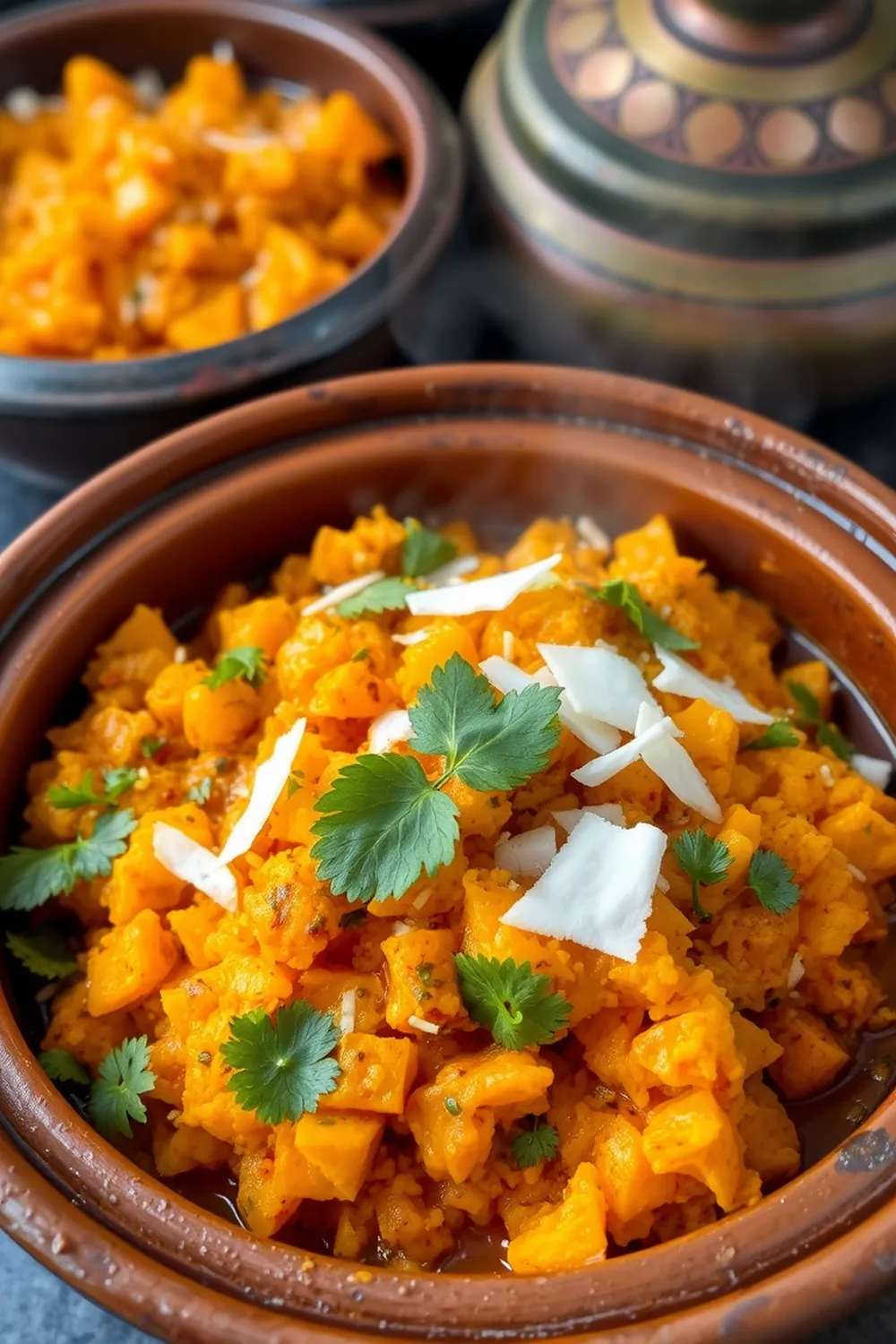
- Wash and grate sweet potatoes, leaving the skin intact.
- Heat 2 tsp ghee in a pan. Add cumin seeds and cook until they crackle.
- Add green chili paste and grated sweet potatoes. Cover and cook on low heat for 5-6 minutes, stirring occasionally.
- Mix in salt, sugar, lemon juice, coconut, peanut powder, and coriander leaves.
- Add the remaining 1 tsp ghee and mix thoroughly.
- Serve immediately while hot for the best texture.
- Calories:220 kcal25%
- Energy:920 kJ22%
- Protein:4 g28%
- Carbohydrates:25 mg40%
- Sugar:8 mg8%
- Salt:200 g25%
- Fat:12 g20%
Last Updated on 6 months ago by Neha Deshmukh
Sweet Potato Sabzi Recipe – Authentic Indian Comfort Food
Hey everyone! If you’re looking for a comforting, flavorful, and surprisingly easy Indian side dish, you have to try this Sweet Potato Sabzi. It’s a dish that instantly reminds me of cozy evenings and the warm, inviting aromas of my grandmother’s kitchen. It’s simple enough for a weeknight, but special enough to impress. Let’s get cooking!
Why You’ll Love This Recipe
This Sweet Potato Sabzi is more than just a recipe; it’s a little slice of Indian home cooking. It’s quick – ready in under 15 minutes – and packed with incredible flavor. The sweetness of the potato is beautifully balanced with a hint of spice, tang, and the richness of ghee. Plus, it’s naturally vegetarian and can easily be made vegan (more on that later!).
Ingredients
Here’s what you’ll need to whip up this delicious sabzi:
- 1 kilogram Sweet Potato
- 2 tablespoons Roasted Peanut coarse powder
- 1 teaspoon Green Chili paste
- 1 tablespoon Fresh Scraped Coconut
- 1 teaspoon Coriander leaves chopped
- ?? teaspoon Lemon juice (about 1-2 tsp, to taste)
- ?? teaspoon Sugar (about ½ – 1 tsp, to taste)
- 3 teaspoons Pure Ghee / Clarified Butter
- ?? teaspoon Cumin Seeds (about ½ tsp)
- Salt to taste
Ingredient Notes
Let’s talk ingredients! A few little things can make a big difference.
- Sweet Potatoes: I prefer using the orange-fleshed sweet potatoes for their natural sweetness and vibrant color.
- Ghee: Don’t skimp on the ghee! It really adds a lovely richness and authentic flavor. If you’re not familiar, ghee is clarified butter, and it has a beautiful nutty aroma.
- Green Chili Paste: This is where you control the heat. Start with less and add more to your liking.
- Peanut Powder: Roasting the peanuts before grinding them adds a wonderful depth of flavor. You can buy it pre-made, or easily make your own.
- Coconut: Freshly scraped coconut is best, but unsweetened desiccated coconut works in a pinch.
Sweet Potato Varieties & Selection
While any sweet potato will work, some are better suited than others. The orange-fleshed varieties (like Beauregard or Garnet) are naturally sweeter and hold their shape well during cooking. Japanese sweet potatoes (Satsumaimo) are also a great choice – they have a slightly chestnutty flavor. Look for firm, smooth sweet potatoes without any blemishes.
The Importance of Ghee in Indian Cooking
Ghee isn’t just a fat; it’s a flavor enhancer! In Indian cooking, ghee is considered sacred and is used in many traditional dishes. It has a high smoke point, making it ideal for sautéing and frying. Plus, it adds a unique nutty aroma and richness that butter simply can’t replicate.
Regional Variations in Sweet Potato Sabzi
Sweet potato sabzi isn’t a one-size-fits-all dish. You’ll find variations across India. Some regions add a pinch of turmeric for color and health benefits. Others might include a touch of garam masala for extra warmth. My family always adds a little extra coconut!
Understanding the Spice Level – Adjusting Green Chili Paste
The amount of green chili paste is entirely up to you. If you’re sensitive to spice, start with ½ teaspoon and taste as you go. You can always add more, but you can’t take it away! Remember, a little goes a long way.
Ingredient Quantities – Finding the Right Balance
The lemon juice and sugar amounts are also flexible. I usually start with 1 teaspoon of lemon juice and ½ teaspoon of sugar, then adjust to balance the sweetness of the sweet potato. Taste and see what you like best!
Step-By-Step Instructions
Alright, let’s get cooking!
- First, wash and grate the sweet potatoes with the skin intact. Don’t peel them – the skin adds extra nutrients and a lovely texture.
- Heat 2 teaspoons of ghee in a pan over medium heat. Once hot, add the cumin seeds and let them crackle. This releases their amazing aroma.
- Add the green chili paste and grated sweet potatoes to the pan. Cover and cook on low flame for 5-6 minutes, stirring occasionally. This allows the sweet potatoes to soften and absorb the flavors.
- Now, it’s time to add the magic! Mix in the salt, sugar, lemon juice, coconut, and peanut powder. Stir well to combine.
- Add the remaining 1 teaspoon of ghee and blend everything thoroughly. This ensures all the flavors are beautifully integrated.
- Serve immediately while hot for the best texture. Trust me, you won’t want to wait!
Expert Tips
Here are a few tips to help you make the perfect Sweet Potato Sabzi:
- Achieving the Perfect Texture: You want the sweet potatoes to be tender but still hold their shape. Don’t overcook them, or they’ll become mushy.
- Preventing Sticking During Cooking: Keep the heat on low and stir frequently to prevent the sweet potatoes from sticking to the pan.
- Balancing Sweet, Spicy, and Tangy Flavors: This is key! Taste as you go and adjust the lemon juice and sugar to your liking.
Variations
Want to switch things up? Here are a few ideas:
- Vegan Sweet Potato Sabzi: Simply substitute the ghee with a plant-based oil like coconut oil or avocado oil.
- Gluten-Free Sweet Potato Sabzi: This recipe is naturally gluten-free!
- Adjusting the Spice Level: Use Kashmiri chili powder for color and mild heat, or add a pinch of cayenne pepper for a fiery kick.
- Festival Adaptations (e.g., Navratri): During Navratri, some families avoid onion and garlic. This recipe is perfect as is, as it doesn’t require either!
Serving Suggestions
This Sweet Potato Sabzi is incredibly versatile. It’s delicious served as a side dish with:
- Roti or chapati (Indian flatbread)
- Dal (lentil soup)
- Rice
- Yogurt
Storage Instructions
Leftovers can be stored in an airtight container in the refrigerator for up to 2 days. Reheat gently in a pan or microwave. The texture might change slightly, but it will still be delicious!
FAQs
Let’s answer some common questions:
What type of sweet potato works best for this sabzi?
Orange-fleshed sweet potatoes are my go-to, but Japanese sweet potatoes are also fantastic.
Can I make this sabzi ahead of time?
It’s best enjoyed fresh, but you can grate the sweet potatoes ahead of time and store them in the fridge.
How can I adjust the sweetness of the sabzi?
Add more or less sugar, or a touch of jaggery (unrefined cane sugar) for a deeper sweetness.
Is it possible to roast the sweet potatoes instead of cooking them in a pan?
Yes! You can roast them at 200°C (400°F) for about 20-25 minutes, then add them to the pan with the spices.
What can I substitute for ghee in this recipe?
Coconut oil or avocado oil are great vegan alternatives.
Can this sabzi be made with other root vegetables?
Absolutely! Carrots, beets, or parsnips would all work well.
Enjoy! I hope this Sweet Potato Sabzi becomes a new favorite in your kitchen. Let me know how it turns out in the comments below!



Neha Deshmukh
Neha holds a B.A. in History with a focus on Indian and world history, including ancient, medieval, and modern periods. At RecipesOfIndia.org — the world’s largest database of Indian recipes — she combines her love for food and history by exploring how India’s past has shaped its culinary traditions.