- Prepare the leaven by mixing starter, water, bread flour, and rye flour. Let ferment for 4-5 hours, or until doubled in size.
- Autolyse the white dough (45 minutes) and turmeric dough (30 minutes) separately by mixing the flours with water.
- Incorporate the leaven into both doughs. Add salt and the remaining water 30 minutes after mixing.
- Perform stretch and folds every hour for 2 hours to strengthen the gluten structure.
- Laminate the doughs together into layered sheets, sprinkle with nigella seeds, then perform two coil folds.
- Pre-shape the dough into a round boule, rest for 15 minutes, then final shape and place in a floured proofing basket.
- Cold-proof the dough in the refrigerator for 12-14 hours to develop flavor and texture.
- Preheat the Dutch oven to 500°F (260°C). Score the dough and bake covered for 15 minutes.
- Reduce the heat to 450°F (232°C). Bake uncovered for 15-20 minutes, or until a deep golden crust forms.
- Cool completely on a wire rack before slicing to preserve the bread's structure.
- Calories:138 kcal25%
- Energy:577 kJ22%
- Protein:5 g28%
- Carbohydrates:28 mg40%
- Sugar:1 mg8%
- Salt:274 g25%
- Fat:1 g20%
Last Updated on 6 months ago by Neha Deshmukh
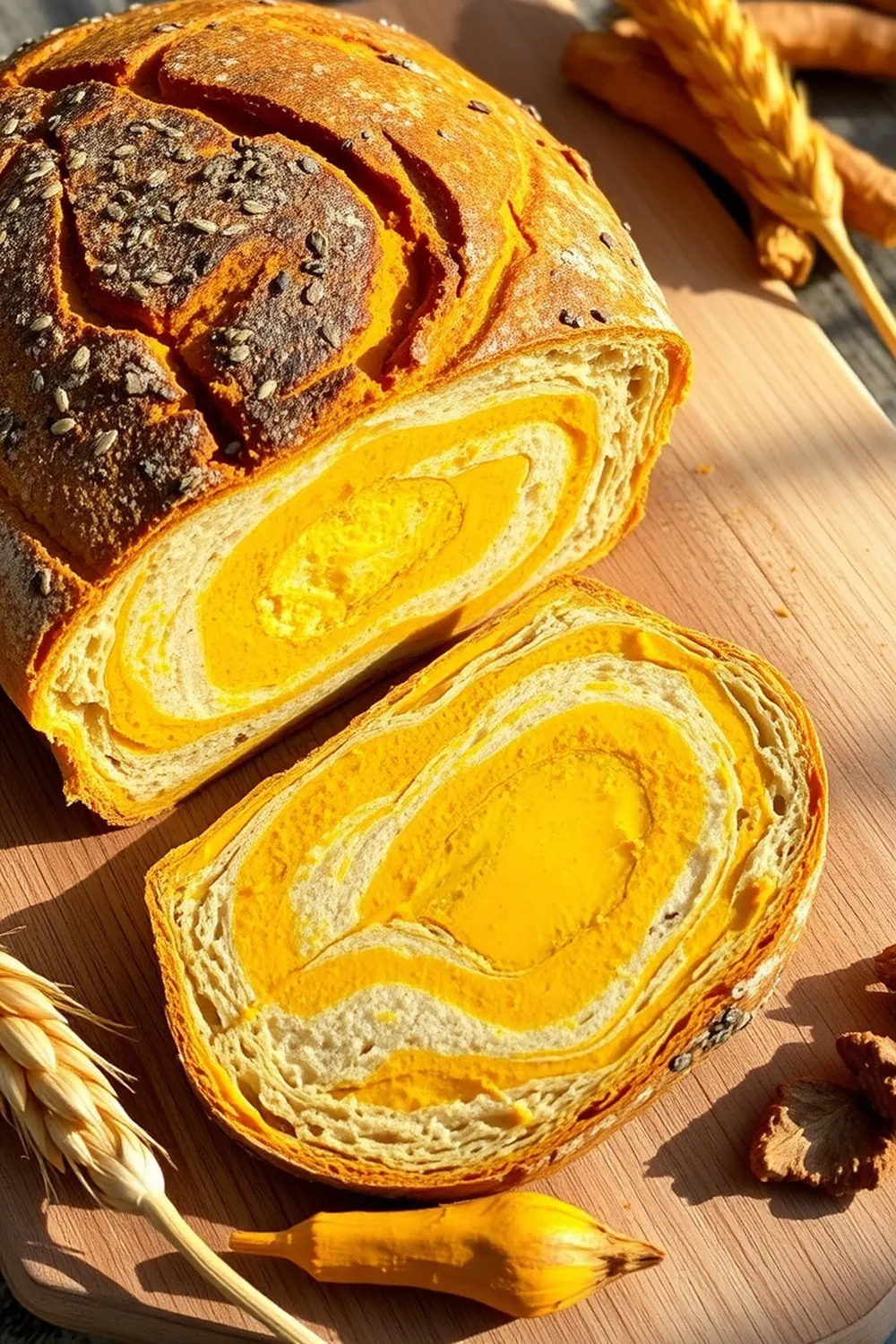
Turmeric & Rye Sourdough Bread Recipe – Artisan Loaf with Nigella Seeds
Introduction
There’s just something magical about the smell of freshly baked sourdough, isn’t there? It fills the house with warmth and a comforting aroma. I’ve been experimenting with sourdough for years, and this Turmeric & Rye Sourdough is one of my absolute favorites. The earthy rye, the subtle warmth of turmeric, and the delightful pop of nigella seeds… it’s a flavor combination that’s both comforting and exciting. It’s a bit of a project, yes, but trust me – the reward is so worth it. Let’s get baking!
Why You’ll Love This Recipe
This isn’t your average loaf of bread. It’s a beautiful, artisan-style sourdough with a gorgeous golden hue and a complex flavor profile. Here’s what makes it special:
- Unique Flavor: The combination of rye, turmeric, and nigella seeds creates a truly unforgettable taste.
- Beautiful Color: Turmeric lends a stunning golden color to the crumb.
- Healthy & Nutritious: Sourdough is easier to digest, and rye flour adds extra fiber.
- Satisfyingly Crusty: The Dutch oven method guarantees a perfectly crisp crust.
Ingredients
Here’s what you’ll need to create this masterpiece:
- 15g sourdough starter (active and bubbly!)
- 40g bread flour
- 10g rye flour
- 50g water
- 175g bread flour
- 15g rye flour
- 10g spelt flour
- 15g leavain
- 4g salt
- 168.8g water
- 175g bread flour
- 15g rye flour
- 10g spelt flour
- 15g leavain
- 4g salt
- 168g water
- 2g turmeric powder
- ?? tablespoon Kalonji (Nigella seeds)
Ingredient Notes
Let’s talk ingredients! A few tips to ensure success:
- Sourdough Starter: Your starter needs to be active and doubled in size before using. I feed mine twice a day for a couple of days before baking for best results.
- Rye Flour: There are different types of rye flour – light, medium, and dark. I prefer medium rye for this recipe, as it provides a good balance of flavor and texture.
- Spelt Flour: Spelt flour adds a lovely nutty flavor and a slightly softer texture. If you can’t find it, whole wheat flour is a good substitute (see FAQs!).
- Turmeric: Use good quality turmeric powder for the best color and flavor. The color can vary depending on the brand, so adjust the amount to your liking.
- Kalonji (Nigella Seeds): These little seeds are a game-changer! They have a unique, slightly peppery flavor that complements the turmeric and rye beautifully. You can find them at Indian grocery stores or online. Don’t skip these if you can help it!
Step-By-Step Instructions
Alright, let’s get down to baking!
- Prepare the Leaven: In a small bowl, mix the 15g sourdough starter, 40g bread flour, 10g rye flour, and 50g water. Cover and let ferment for 4-5 hours, or until doubled in size.
- Autolyse the Doughs: This is a crucial step! In separate bowls, combine 175g bread flour with 168.8g water (white dough) and 15g rye flour, 10g spelt flour, and 168g water (turmeric dough). Mix until just combined, cover, and let rest. The white dough needs 45 minutes, the turmeric dough 30 minutes.
- Incorporate the Leaven: Add the prepared leaven to both doughs. After 30 minutes, add the 4g salt to each dough, followed by the remaining water. Mix well.
- Strengthen the Gluten: Perform stretch and folds every hour for 2 hours. This develops the gluten structure and gives the bread its lovely chewiness.
- Laminate & Coil Fold: Gently laminate both doughs together into layered sheets. Sprinkle generously with nigella seeds, then perform two coil folds.
- Pre-Shape & Proof: Pre-shape each dough into a round boule. Let rest for 15 minutes, then final shape and place in a well-floured proofing basket.
- Cold Proof: Cover the basket and refrigerate for 12-14 hours. This slow fermentation develops incredible flavor and texture.
- Bake: Preheat your Dutch oven to 500°F (260°C). Carefully remove the dough from the basket, score it artistically (I love a simple cross!), and bake covered for 15 minutes.
- Finish Baking: Reduce the heat to 450°F (232°C) and bake uncovered for another 15-20 minutes, or until the crust is deep golden brown.
- Cool: Let the bread cool completely on a wire rack before slicing. This is so important – it allows the crumb to set properly.
Expert Tips
A few things I’ve learned along the way:
- Fermentation is Key: Pay attention to your dough! Fermentation times will vary depending on your kitchen temperature.
- Dough Handling: Be gentle with the dough. Avoid overworking it.
- Scoring: Scoring allows the bread to expand properly in the oven. Experiment with different patterns!
- Dutch Oven Magic: The Dutch oven creates a steamy environment, resulting in a beautifully crusty loaf.
Variations
- Vegan Adaptation: This recipe is naturally vegan! Just ensure your sourdough starter is vegan-friendly (no honey).
- Gluten-Free Adaptation: While challenging, you can experiment with gluten-free flour blends. A blend of rice flour, tapioca starch, and potato starch might work well, but the texture will be different.
- Spice Level Adjustment: Feel free to adjust the amount of turmeric to your liking. A little goes a long way!
- Festival Adaptation: In India, breads are often enjoyed during festivals like Diwali and Holi. This loaf would be a beautiful addition to any festive spread.
Serving Suggestions
This bread is delicious on its own, but it also pairs beautifully with:
- A simple smear of butter or ghee.
- Your favorite cheese.
- A hearty soup or stew.
- A traditional Indian curry.
Storage Instructions
Store the bread in a paper bag at room temperature for up to 3 days. For longer storage, slice and freeze.
FAQs
- What is the best way to maintain a sourdough starter? Feed it regularly! I usually feed mine once a day if kept at room temperature, or once a week if stored in the refrigerator.
- Can I substitute spelt flour with whole wheat flour? Yes, absolutely! Whole wheat flour will give a slightly denser texture.
- What does turmeric contribute to the flavor and texture of the bread? Turmeric adds a subtle warmth and a beautiful golden color. It doesn’t drastically alter the texture.
- How can I achieve a more open crumb structure? Proper hydration, gluten development, and a good proofing time are key.
- What is the significance of using both bread flour and rye flour in this recipe? Bread flour provides structure, while rye flour adds flavor and moisture.
- Can I use a different type of seed instead of Kalonji? Poppy seeds or sesame seeds would be good substitutes, but they won’t have the same unique flavor.
- How does cold proofing affect the bread’s flavor? Cold proofing allows the flavors to develop and deepen.
- What is autolyse and why is it important? Autolyse is a resting period where you mix flour and water. It helps to hydrate the flour and develop gluten, resulting in a more tender crumb.



Neha Deshmukh
Neha holds a B.A. in History with a focus on Indian and world history, including ancient, medieval, and modern periods. At RecipesOfIndia.org — the world’s largest database of Indian recipes — she combines her love for food and history by exploring how India’s past has shaped its culinary traditions.