- Soak rice in water for 20-30 minutes. Cook until fully done, then drain.
- Fry 1 cup onions in oil until golden brown. Add cashews, raisins, and curry leaves. Remove and set aside.
- In the same oil, fry cinnamon, cloves, and cardamom pods. Add remaining onions, ginger-garlic paste, and green chilies.
- Add coriander powder, fennel powder, pepper powder, red chili powder, and turmeric powder. Sauté briefly.
- Mix in vegetables and peas. Pour in coconut milk and water. Simmer until vegetables soften.
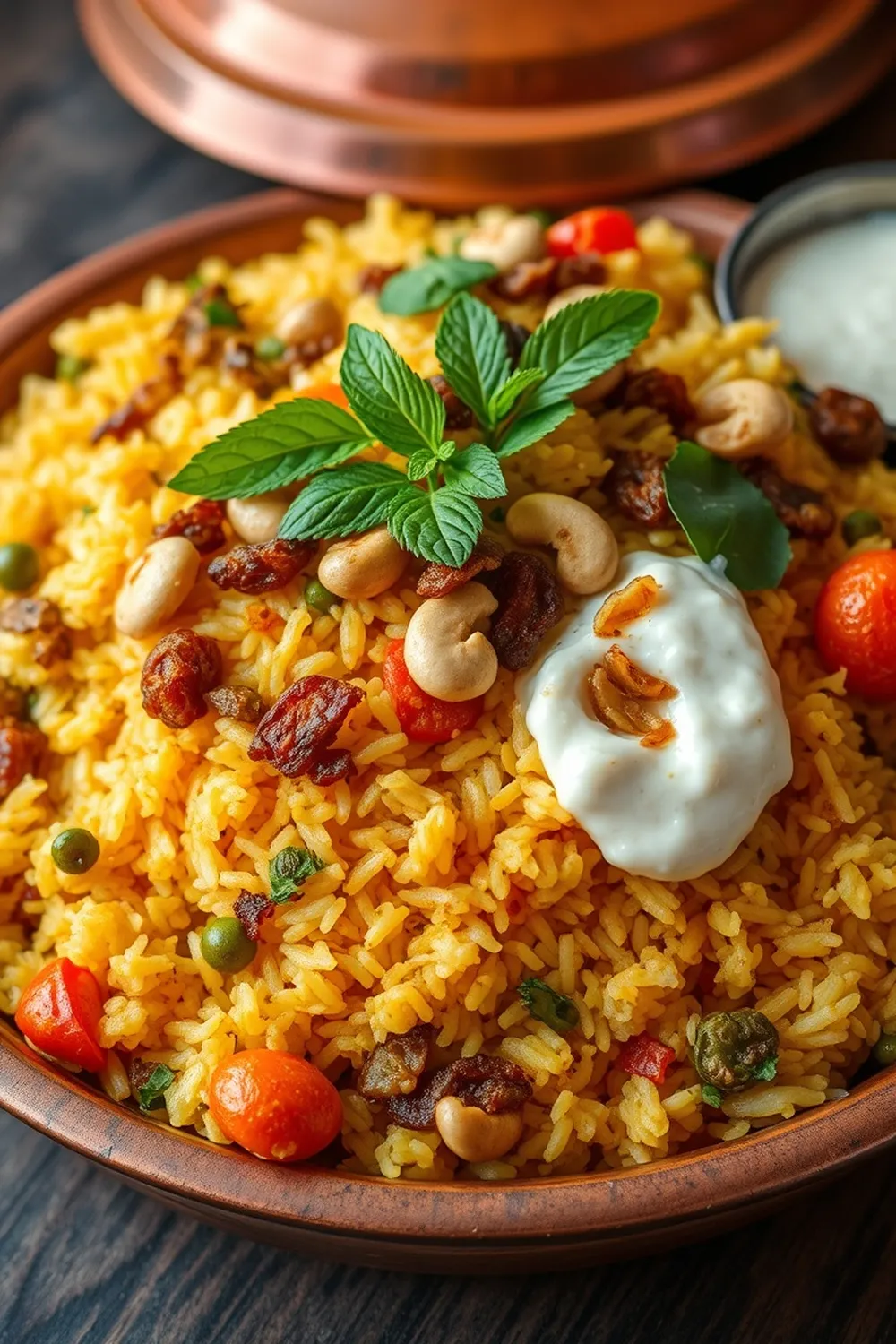
- Layer cooked rice and vegetable gravy in a greased dish. Top with fried onion mixture, mint, coriander, and saffron.
- Cover and bake at 200°C for 25-30 minutes. Serve hot with raita or salad.
- Calories:450 kcal25%
- Energy:1882 kJ22%
- Protein:8 g28%
- Carbohydrates:65 mg40%
- Sugar:6 mg8%
- Salt:200 g25%
- Fat:18 g20%
Last Updated on 6 months ago by Neha Deshmukh
Vegetable Biryani Recipe – Coconut Milk & Saffron Rice Delight
Hey everyone! If you’re anything like me, a good biryani is pure comfort food. It’s the kind of dish that just feels special, perfect for a weekend treat or a festive gathering. I’m so excited to share my take on Vegetable Biryani – a fragrant, flavorful delight made with coconut milk and a touch of saffron. It’s a little bit of work, but trust me, every single bite is worth it!
Why You’ll Love This Recipe
This Vegetable Biryani isn’t your average recipe. The coconut milk adds a beautiful creaminess and subtle sweetness that balances the spices perfectly. Plus, the saffron infuses the rice with a gorgeous color and aroma. It’s a truly special dish that’s sure to impress. It’s also surprisingly versatile – feel free to swap in your favorite veggies!
Ingredients
Here’s what you’ll need to create this delicious Vegetable Biryani:
- 2 cups Kaima Rice or Basmati Rice
- 5-6 tablespoons Oil (Coconut Oil or Neutral Oil)
- 1.75 cups Sliced Onions
- 0.25-0.33 cup Cashews
- 0.25 cup Raisins
- 2 sprigs Curry Leaves
- 2 inch Cinnamon Stick
- 7-8 Cloves
- 4-5 Green Cardamoms
- 1 tablespoon Ginger-Garlic Paste
- 2 Green Chilies (chopped)
- 1 teaspoon Coriander Powder
- 1 teaspoon Fennel Powder
- 0.5 teaspoon Black Pepper Powder
- 0.25-0.5 teaspoon Red Chili Powder
- 0.25-0.5 teaspoon Turmeric Powder
- 2 cups Mixed Vegetables (Eggplant, Potato, Carrots, Peas)
- 2 cups Thick Coconut Milk
- 0.5-1 tablespoon Lemon Juice
- 0.5 tablespoon Chopped Mint Leaves
- 0.5 tablespoon Chopped Coriander Leaves
- 12-15 strands Saffron
Ingredient Notes
Let’s talk ingredients! A few little tips can make a big difference:
Kaima Rice vs. Basmati Rice: What’s the Difference? Traditionally, Kaima rice is used for biryani, giving it a unique texture. But good quality Basmati rice works wonderfully too! Just make sure it’s aged Basmati for the best results.
The Importance of Coconut Oil in South Indian Biryani: Coconut oil adds a distinct South Indian flavor that’s just divine. If you don’t have it, a neutral oil like sunflower or vegetable oil will work, but the coconut oil really elevates the dish.
Understanding Curry Leaves: Flavor and Regional Variations: Curry leaves are a staple in South Indian cooking. They have a unique, slightly citrusy aroma. You can find them fresh or frozen at most Indian grocery stores. Don’t skip them – they add so much flavor!
Spice Blend Breakdown: Coriander, Fennel & More: The spice blend is the heart of any biryani. Don’t be afraid to adjust the amounts to your liking. Fennel powder adds a lovely sweetness, while coriander powder provides a warm, earthy base.
Saffron: Quality and Usage Tips: A little saffron goes a long way! Look for good quality saffron strands for the best color and aroma. Soak them in a tablespoon of warm milk or water for about 20 minutes before adding them to the biryani. This helps release their flavor and color.
Step-By-Step Instructions
Alright, let’s get cooking!
- First, soak the rice in water for 20-30 minutes. This helps it cook evenly. Then, cook the rice until about 70-80% done – it should still have a slight bite. Drain it well and set aside.
- Now, heat 5-6 tablespoons of oil in a large, heavy-bottomed pot. Fry 1 cup of sliced onions until they’re golden brown and crispy. Add in the cashews, raisins, and curry leaves. Fry for a minute or two until the cashews are lightly browned and the raisins plump up. Remove this mixture and set it aside – this is our beautiful garnish!
- In the same oil, add a cinnamon stick, 7-8 cloves, and 4-5 green cardamoms. Let them sizzle for a moment to release their fragrance. Then, add the remaining onions and sauté until softened. Add 1 tablespoon of ginger-garlic paste and 2 chopped green chilies. Sauté for another minute until fragrant.
- Time for the spice powders! Add 1 teaspoon of coriander powder, 1 teaspoon of fennel powder, 0.5 teaspoon of black pepper powder, 0.25-0.5 teaspoon of red chili powder, and 0.25-0.5 teaspoon of turmeric powder. Sauté briefly – about 30 seconds – being careful not to burn the spices.
- Add 2 cups of mixed vegetables and peas. Pour in 2 cups of thick coconut milk and about 1 cup of water. Bring to a simmer, cover, and cook until the vegetables are tender – about 10-15 minutes.
- Now for the layering! In a greased baking dish, start with a layer of the cooked rice. Top with the vegetable gravy. Repeat the layers, ending with a layer of rice.
- Sprinkle the fried onion mixture, chopped mint leaves, chopped coriander leaves, and saffron strands over the top. Drizzle with 0.5-1 tablespoon of lemon juice.
- Cover the dish tightly with a lid or foil and bake in a preheated oven at 200°C (392°F) for 25-30 minutes.
Let it rest for 5-10 minutes before serving.
Expert Tips
- Don’t overcook the rice! It will continue to cook in the oven.
- Using a heavy-bottomed pot or Dutch oven helps prevent the rice from sticking and ensures even cooking.
- For extra flavor, you can marinate the vegetables in a little yogurt and spice blend before adding them to the gravy.
Variations
Vegan Vegetable Biryani Adaptation: Simply substitute the ghee (if using) with more oil and ensure your coconut milk is vegan-friendly.
Gluten-Free Vegetable Biryani Confirmation: This recipe is naturally gluten-free! Just double-check that your spice powders haven’t been processed in a facility that also handles gluten.
Spice Level Adjustment Guide (Mild, Medium, Hot):
* Mild: Use 0.25 teaspoon of red chili powder.
* Medium: Use 0.5 teaspoon of red chili powder.
* Hot: Use 0.75-1 teaspoon of red chili powder, or add a pinch of cayenne pepper.
Festival Adaptations (e.g., Diwali, Onam): My family loves to make this biryani for special occasions like Diwali and Onam. It’s a festive dish that everyone enjoys!
Serving Suggestions
Serve this Vegetable Biryani hot with a side of raita (yogurt dip) or a simple salad. It’s also delicious with papadums (Indian crispy wafers).
Storage Instructions
Leftover biryani can be stored in an airtight container in the refrigerator for up to 3 days. Reheat gently in the microwave or on the stovetop.
FAQs
What type of rice is best for biryani? Kaima rice is traditional, but good quality aged Basmati rice is a fantastic substitute.
Can I make this biryani ahead of time? You can prepare the vegetable gravy and cook the rice ahead of time. Store them separately and assemble and bake the biryani just before serving.
How can I adjust the spice level of this biryani? Adjust the amount of red chili powder to your liking.
What vegetables can I substitute in this recipe? Feel free to use any vegetables you enjoy! Cauliflower, beans, and bell peppers are all great options.
What is the best way to serve vegetable biryani? Serve hot with raita and a side salad.
Can I use store-bought biryani masala instead of individual spices? While you can, I highly recommend using individual spices for the best flavor. Store-bought masalas often contain fillers and may not have the same freshness.
How do I prevent the rice from sticking to the bottom of the pot? Use a heavy-bottomed pot and ensure there’s enough liquid in the gravy. You can also add a tablespoon of oil to the bottom of the pot before layering the rice.


Neha Deshmukh
Neha holds a B.A. in History with a focus on Indian and world history, including ancient, medieval, and modern periods. At RecipesOfIndia.org — the world’s largest database of Indian recipes — she combines her love for food and history by exploring how India’s past has shaped its culinary traditions.