- Sauté coriander seeds, chana dal, cumin, fenugreek, and red chilies in oil. Add coconut and grind into a paste.
- Sauté onions and tomatoes until soft; set aside.
- Pressure cook mixed vegetables with turmeric and salt for 1-2 whistles.
- Add tamarind extract and cooked black-eyed peas to the vegetables; simmer for 10 minutes.
- Mix in the ground paste, mashed dal, and onion-tomato mixture; cook on low heat for 15 minutes.
- Temper mustard seeds, urad dal, hing, and curry leaves in oil; pour over the kootu.
- Calories:180 kcal25%
- Energy:753 kJ22%
- Protein:8 g28%
- Carbohydrates:25 mg40%
- Sugar:5 mg8%
- Salt:300 g25%
- Fat:7 g20%
Last Updated on 6 months ago by Neha Deshmukh
Vegetable Kootu Recipe – Authentic South Indian Dal & Mixed Veggies
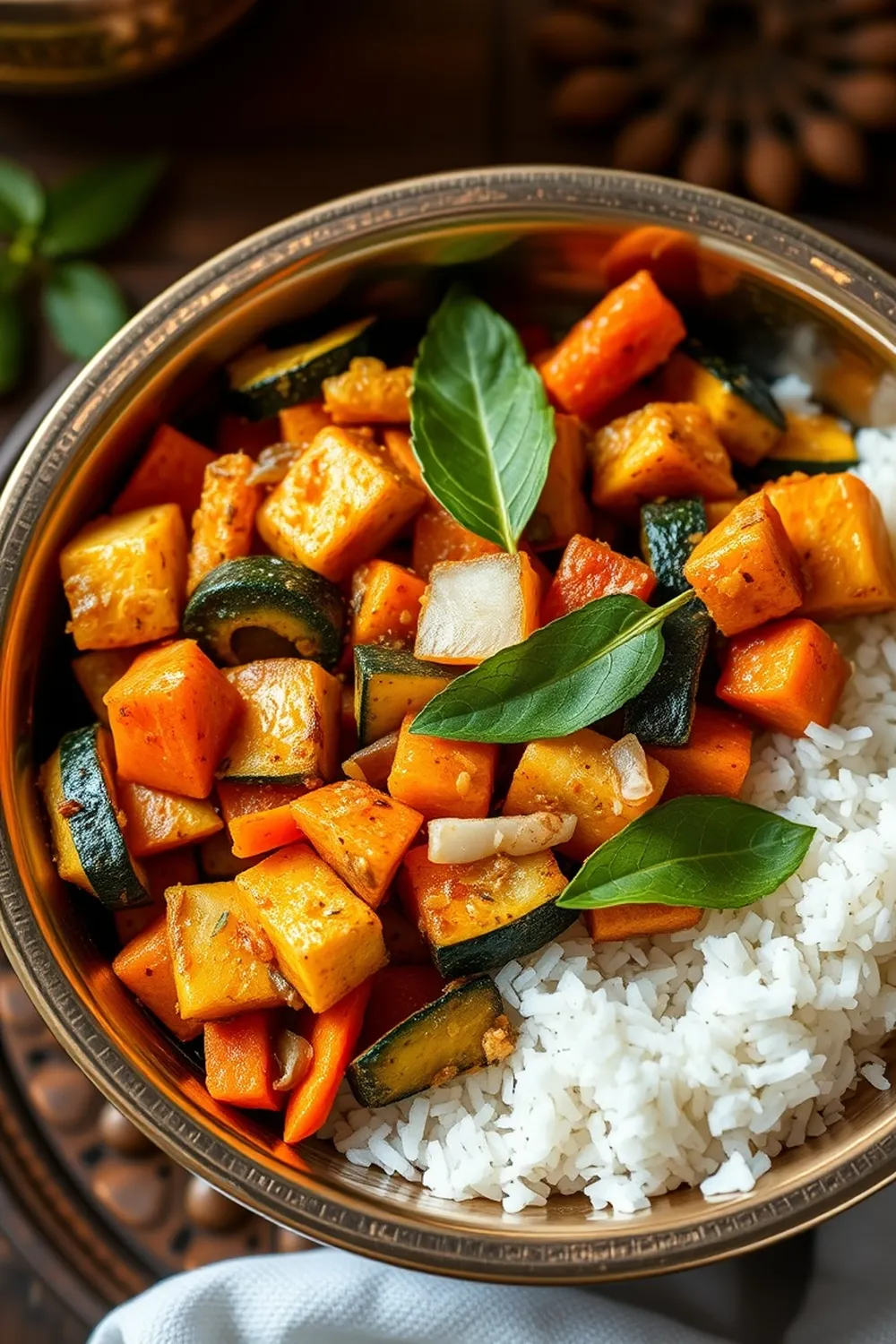
Hey everyone! If you’re anything like me, you absolutely love a good South Indian meal. And today, I’m sharing one of my all-time favorites – Vegetable Kootu. It’s comforting, flavorful, and surprisingly easy to make. I first made this when I was trying to recreate my grandmother’s cooking, and honestly, it’s become a staple in my kitchen ever since. It’s the perfect side dish to rice, roti, or even idli and dosa!
Why You’ll Love This Recipe
This Vegetable Kootu isn’t just another veggie dish. It’s a beautiful blend of lentils, vegetables, and a fragrant spice blend that truly captures the essence of South Indian cuisine. It’s healthy, packed with nutrients, and incredibly satisfying. Plus, it’s a fantastic way to use up any leftover vegetables you have in the fridge!
Ingredients
Here’s what you’ll need to make this delicious Kootu:
- 5 cups Mixed Vegetables (about 600g)
- 1/4 cup Tur Dal (approx. 50g)
- 2 tbsp Black-eyed peas (approx. 30g)
- 1/4 tsp Turmeric powder
- 1 Onion
- 1 big Tomato
- 3 tsp Oil
- 1 tbsp Coriander seeds
- 2 tsp Chana dal
- 1/2 tsp Cumin seeds
- 5 Red Chillies
- 1/4 tsp Fenugreek seeds
- 1/4 cup Grated coconut (approx. 30g)
- 1 tsp Mustard seeds
- 1 tsp Urad dal
- A pinch of Hing (Asafoetida)
- Few Curry leaves
- Small gooseberry sized Tamarind
Ingredient Notes
Let’s talk about a few key ingredients that really make this Kootu special:
- Tamarind: Don’t skip the tamarind! It adds a lovely tanginess that balances the richness of the coconut and spices. I usually soak a small piece (about the size of a gooseberry) in warm water and extract the juice.
- Black-eyed peas (Lobia): These add a wonderful texture and nutty flavor. You can find them at most Indian grocery stores.
- Spice Blend: The combination of coriander, cumin, chana dal, fenugreek, and red chillies is the flavor base for authentic South Indian Kootu. Don’t be afraid to adjust the red chillies to your spice preference!
- Vegetables: Feel free to use whatever vegetables you have on hand. Traditional choices include carrots, beans, potatoes, drumsticks, and eggplant.
Step-By-Step Instructions
Alright, let’s get cooking!
- First, let’s start with the spice paste. Heat the oil in a pan and sauté the coriander seeds, chana dal, cumin seeds, fenugreek seeds, and red chillies until fragrant. Add the grated coconut and sauté for another minute. Let it cool, then grind it into a smooth paste with a little water.
- Next, chop your onion and tomato. In the same pan, sauté the onions until they turn translucent, then add the tomatoes and cook until they soften. Set this onion-tomato mixture aside.
- Now, it’s time to cook the vegetables. Pressure cook the mixed vegetables with turmeric powder and salt with about 1-2 cups of water for 1-2 whistles. If you don’t have a pressure cooker, you can cook them in a pot until tender, but it will take longer.
- Once the vegetables are cooked, add the tamarind extract and the black-eyed peas. Simmer for about 10 minutes, allowing the flavors to meld together.
- Now for the magic! Add the ground spice paste, the mashed tur dal, and the sautéed onion-tomato mixture to the vegetables. Mix well and cook on low heat for about 15 minutes, stirring occasionally. This allows all the flavors to come together beautifully.
- Finally, let’s do the tempering. Heat a little oil in a small pan and add the mustard seeds. Once they splutter, add the urad dal and hing. Sauté for a few seconds, then add the curry leaves. Pour this tempering over the Kootu.
And that’s it! Your Vegetable Kootu is ready to enjoy.
Expert Tips
- Don’t overcook the vegetables – you want them to retain some texture.
- Adjust the amount of water to achieve your desired consistency.
- A good quality coconut really makes a difference in the flavor.
Variations
- My family loves to add a little bit of chopped cilantro (coriander leaves) at the end for a fresh burst of flavor.
- For a richer Kootu, you can add a tablespoon of ghee (clarified butter) while cooking.
- My friend makes a version with spinach and lentils – it’s equally delicious!
Vegan Adaptation
This recipe is naturally vegan! Just ensure the oil you use is plant-based.
Gluten-Free Adaptation
This recipe is also naturally gluten-free.
Spice Level Adjustment (Mild, Medium, Spicy)
- Mild: Reduce the number of red chillies to 2-3.
- Medium: Use 5 red chillies as per the recipe.
- Spicy: Add 7-8 red chillies, or even a pinch of cayenne pepper.
Festival Adaptations (Onam, Pongal)
Kootu is a traditional dish served during Onam and Pongal festivals in South India. It’s often part of a larger, elaborate feast called a sadya.
Serving Suggestions
Vegetable Kootu is best served hot with:
- Steaming rice
- Roti or Paratha
- Idli or Dosa
- Sambar and Rasam
Storage Instructions
Leftover Kootu can be stored in an airtight container in the refrigerator for up to 3 days. Reheat gently on the stovetop or in the microwave.
FAQs
What vegetables are traditionally used in Kootu?
Traditionally, you’ll find vegetables like carrots, beans, potatoes, drumsticks, eggplant, and even plantains in Kootu. But feel free to experiment!
Can I make Kootu ahead of time?
Yes, you can! Kootu actually tastes even better the next day as the flavors have more time to develop.
How do I adjust the consistency of the Kootu?
If the Kootu is too thick, add a little hot water. If it’s too thin, simmer it for a few more minutes to allow it to thicken.
What is the purpose of adding tamarind to Kootu?
Tamarind adds a lovely tangy flavor that balances the richness of the coconut and spices. It’s a key ingredient in authentic South Indian Kootu.
Can I use a different type of dal instead of Tur dal?
While Tur dal is traditional, you can substitute it with Moong dal (yellow split lentils) if you prefer. However, the flavor will be slightly different.


Neha Deshmukh
Neha holds a B.A. in History with a focus on Indian and world history, including ancient, medieval, and modern periods. At RecipesOfIndia.org — the world’s largest database of Indian recipes — she combines her love for food and history by exploring how India’s past has shaped its culinary traditions.