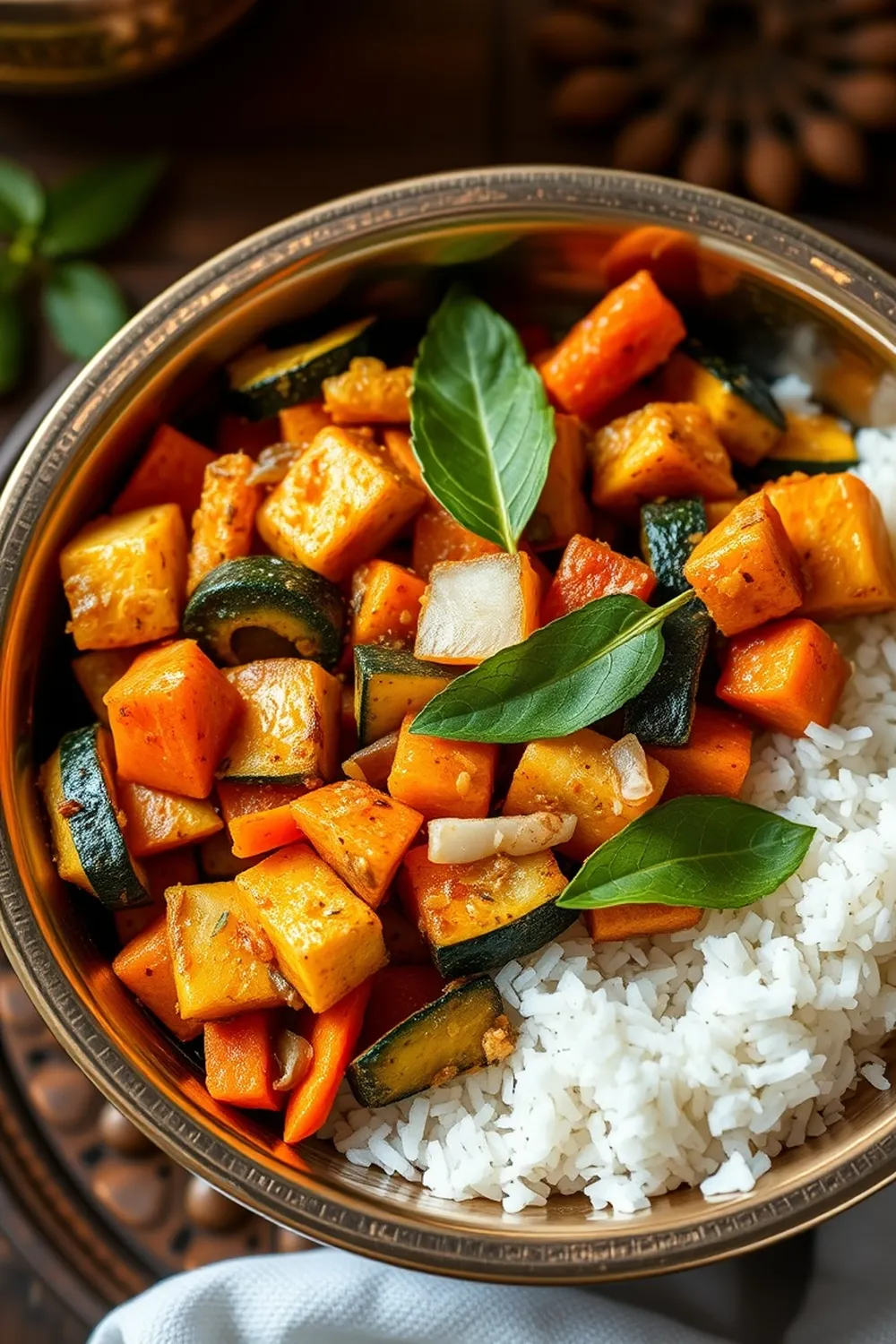
- Boil potatoes, cauliflower, and carrots until tender. Set aside.
- Heat coconut oil in a heavy-bottomed pan. Add mustard seeds and let them splutter. Add chopped onions and one sliced green chili. Sauté until onions turn translucent (about 5 minutes).
- Stir in tomatoes, turmeric powder, cumin powder, coriander powder, ginger-garlic paste, and water. Cook until the mixture thickens and oil separates from the spices.
- Pour in coconut milk and remaining water. Add boiled vegetables, green beans, and bell pepper.
- Add remaining green chilies, salt, sugar, and curry leaves. Simmer until vegetables are fully cooked.
- Mix in grated coconut and chopped coriander leaves. Serve hot with dosa, rice, or bread.
- Calories:320 kcal25%
- Energy:1338 kJ22%
- Protein:6 g28%
- Carbohydrates:35 mg40%
- Sugar:7 mg8%
- Salt:450 g25%
- Fat:18 g20%
Last Updated on 5 months ago by Neha Deshmukh
Vegetable Stew Recipe – Coconut Milk & Potato Curry
Hey everyone! If you’re anything like me, you’re always on the lookout for a comforting, flavorful dish that’s also packed with veggies. This Vegetable Stew, swimming in creamy coconut milk and fragrant spices, is exactly that. I first made this when I was craving something warm and nourishing, and it’s been a family favorite ever since. It’s a beautiful blend of textures and tastes – tender vegetables, a gentle spice, and that lovely coconut aroma. Let’s get cooking!
Servings: 4
Cooking Time: 35 minutes
Preparation Time: 30 minutes
Difficulty: Medium
Why You’ll Love This Recipe
This Vegetable Stew isn’t just delicious; it’s incredibly versatile. It’s perfect as a side dish with fluffy rice or warm dosas, but honestly, it’s hearty enough to enjoy on its own with some crusty bread. Plus, it’s a fantastic way to sneak in extra vegetables – even picky eaters love it! The coconut milk adds a richness that balances the spices beautifully, creating a truly satisfying meal.
Ingredients
Here’s what you’ll need to create this flavorful stew:
- 3 tablespoons coconut oil
- ½ teaspoon mustard seeds
- 1 cup chopped onion
- 1 cup chopped tomatoes
- 1 cup green bell pepper, chopped
- 1 teaspoon turmeric powder
- 1 teaspoon cumin powder
- 1 teaspoon coriander powder
- 1 teaspoon ginger-garlic paste
- 1 cup water
- 1 cup coconut milk
- 1 cup boiled potatoes, cubed
- 1 cup boiled cauliflower florets
- 1 cup french cut beans
- ½ cup chopped carrots
- 2 sliced green chillies (adjust to your spice preference!)
- ½ teaspoon salt (or to taste)
- ½ teaspoon sugar (balances the flavors beautifully)
- 1 sprig curry leaves
- ½ cup grated coconut
- ¼ cup chopped coriander leaves
Ingredient Notes
Let’s talk ingredients! A few little tips can make a big difference.
Coconut Oil: There are so many varieties! I prefer using virgin coconut oil for its lovely aroma, but refined coconut oil works just as well if you want a more neutral flavor. About 3 tablespoons (45ml) is perfect for this recipe.
Mustard Seeds: These tiny seeds pack a punch! Black mustard seeds are most common in South Indian cooking. You’ll notice they pop and splutter when heated – that’s how you know they’re ready.
Spices (Turmeric, Cumin, Coriander): Freshness is key here. If your spices have been sitting in the cupboard for ages, they’ll lose their potency. I like to buy whole spices and grind them myself when possible, but good quality pre-ground spices work great too.
Coconut Milk: Full-fat coconut milk will give you the richest, creamiest stew. Light coconut milk is a good option if you’re watching your calories, but the flavor won’t be quite as intense. You can even make your own coconut milk at home if you’re feeling ambitious! About 1 cup (240ml) is what we need.
Curry Leaves: These fragrant leaves are a staple in South Indian cuisine. They have a unique, slightly citrusy flavor. If you can’t find fresh curry leaves, you can sometimes find them frozen. A sprig is all you need to infuse the stew with that authentic aroma.
Step-By-Step Instructions
Alright, let’s get cooking!
- First, boil your potatoes, cauliflower, and carrots until they’re tender but still hold their shape. Set them aside – we’ll add them later.
- Heat the coconut oil in a heavy-bottomed pan over medium heat. Once hot, add the mustard seeds. Let them splutter and pop – this usually takes about 30 seconds.
- Add the chopped onions and sliced green chillies. Sauté until the onions turn translucent and softened, about 5 minutes.
- Now, stir in the chopped tomatoes, turmeric powder, cumin powder, coriander powder, and ginger-garlic paste. Add the water and cook until the mixture thickens and the oil starts to separate from the spices – this usually takes about 8-10 minutes. This is where the magic happens!
- Pour in the coconut milk and the remaining water. Add the boiled potatoes, cauliflower, green beans, and bell pepper.
- Add the remaining green chillies, salt, sugar, and curry leaves. Bring to a simmer and cook until the vegetables are fully cooked and tender, about 10-15 minutes.
- Finally, stir in the grated coconut and chopped coriander leaves. Give it a good mix and serve hot!
Expert Tips
- Don’t overcrowd the pan when sautéing the onions. Cook them in batches if necessary to ensure they brown evenly.
- Adjust the amount of green chillies to your liking. If you prefer a milder stew, remove the seeds from the chillies before slicing.
- For a richer flavor, you can add a tablespoon of cashew paste along with the coconut milk.
Variations
This recipe is a great base for experimentation!
Vegan Adaptation: This recipe is already naturally vegan! Just double-check your coconut milk doesn’t have any sneaky additives.
Spice Level Adjustment: My family likes a medium spice level, but you can easily adjust it. For a mild stew, use only one green chilli or omit them altogether. For a hot stew, add an extra chilli or a pinch of cayenne pepper.
Regional Variations: In Kerala, they often add small cubes of pumpkin or yam to the stew. In Tamil Nadu, you might find a touch of tamarind paste for a tangy flavor.
Festival Adaptations: This stew is often made during Onam and Pongal in South India, as part of the elaborate festive meals.
Serving Suggestions
This Vegetable Stew is incredibly versatile. Here are a few ideas:
- Serve with steaming hot rice for a comforting meal.
- Pair it with fluffy dosas or idlis for a classic South Indian breakfast.
- Enjoy it with roti or naan for a delicious and satisfying dinner.
- A dollop of yogurt on the side can add a cooling contrast to the spices.
Storage Instructions
Leftovers can be stored in an airtight container in the refrigerator for up to 3 days. Reheat gently on the stovetop or in the microwave.
FAQs
What type of potatoes work best in this vegetable stew?
I prefer using waxy potatoes like red potatoes or Yukon Gold, as they hold their shape well during cooking. Russet potatoes can work too, but they might fall apart a bit.
Can I use frozen vegetables in this recipe?
Yes, you can! Just add the frozen vegetables during the last 5-10 minutes of cooking time.
How can I adjust the thickness of the stew?
If the stew is too thick, add a little more water or coconut milk. If it’s too thin, simmer it for a few more minutes to allow it to reduce.
What is the best way to store leftover vegetable stew?
Store in an airtight container in the refrigerator for up to 3 days.
Can this stew be made ahead of time?
Yes! You can make the stew a day or two in advance. The flavors will actually develop even more overnight.
What is the significance of curry leaves in South Indian cooking?
Curry leaves are considered sacred in South India and are believed to have medicinal properties. They add a unique flavor and aroma to dishes and are often used in tempering (seasoning with hot oil).



Neha Deshmukh
Neha holds a B.A. in History with a focus on Indian and world history, including ancient, medieval, and modern periods. At RecipesOfIndia.org — the world’s largest database of Indian recipes — she combines her love for food and history by exploring how India’s past has shaped its culinary traditions.